Road to Hana Itinerary for Couples: A Realistic One-Day Maui Drive
The Road to Hana is one of Maui’s most memorable drives, but it is easy to turn it into an exhausting checklist. Between waterfalls, rainforest, beaches, food stands, coastal viewpoints, and hiking trails, there are far more possible stops than most couples can comfortably fit into one day.
This Road to Hana itinerary takes a more realistic approach. It focuses on a handful of distinct experiences, leaves room for lunch and unexpected delays, and gives you a choice between a relaxed afternoon and a longer hiking variation. The goal is not to stop everywhere. It is to enjoy East Maui without spending the entire day watching the clock.
Road to Hana Itinerary at a Glance
Use this schedule as a planning framework rather than a fixed timetable. Your reserved entry time at Waiʻānapanapa State Park should determine how you arrange the morning.
| Approximate Time | Plan |
|---|---|
| 6:30–7:00 a.m. | Leave Pāʻia |
| 7:15–8:15 a.m. | Twin Falls, if parking and access are available |
| 9:00–10:00 a.m. | Keʻanae Peninsula |
| Late morning | Quick roadside food stop |
| Late morning or midday | Waiʻānapanapa State Park during your reserved time slot |
| Early afternoon | Hāna for lunch and a break |
| Afternoon | Hāmoa Beach or Kīpahulu and the short Kūloa Point Trail |
| Mid-to-late afternoon | Begin the return toward Pāʻia |
The drive from Kahului to Hāna is only about 52 miles, but the Hāna Highway has 620 curves and 59 bridges. The drive alone can take roughly two to four hours before sightseeing is added, which is why a selective itinerary works better than trying to collect every possible stop.
Before You Go: Reservations and Road Preparation
Reserve Waiʻānapanapa Before Building Your Schedule
Waiʻānapanapa State Park is the one stop that should shape the rest of your itinerary rather than fit around it.
Non-Hawaiʻi residents currently need advance reservations for entry, and visitors arriving by car also need parking reservations. As of August 2026, the Hawaiʻi Division of State Parks lists nonresident admission at $5 per person and parking for a noncommercial vehicle at $10. Park hours are 7:00 a.m. to 6:00 p.m.
Your reservation is tied to a particular visit period, so plan the stops before Waiʻānapanapa around that window rather than assuming you can arrive whenever you reach the park. Check the official reservation system again shortly before your trip in case procedures or fees change.
Check Conditions Before Leaving
Weather and road conditions can change quickly in East Maui. Rain can affect trails, streams, waterfalls, and sections of the highway, while construction or road damage can alter access beyond Hāna.
Check current park and roadway notices on the morning of your drive. During heavy rain or flash-flood conditions, stay out of streams and do not assume a swimming area is safe simply because other visitors are entering the water.
Prepare Before Pāʻia
Begin with enough fuel for the day and download navigation, reservation confirmations, and any information you may need offline. Cell service becomes less dependable along parts of the route.
As a couple, it also helps to divide responsibilities. The driver can concentrate on the road while the passenger manages navigation, reservation times, photos, and upcoming stops.
1. Start Early in Pāʻia
Pāʻia makes a convenient starting point for the drive. Have breakfast, pick up water or snacks, and try to be heading east around 6:30 or 7:00 a.m.
If you are staying in Wailea, Kāʻanapali, or another part of Maui farther from the North Shore, account for the additional drive before you reach Pāʻia.
An early start gives you flexibility later when parking is full, a trail takes longer than expected, or you decide that one particular stop deserves more time.
2. Visit Twin Falls If Access Is Available
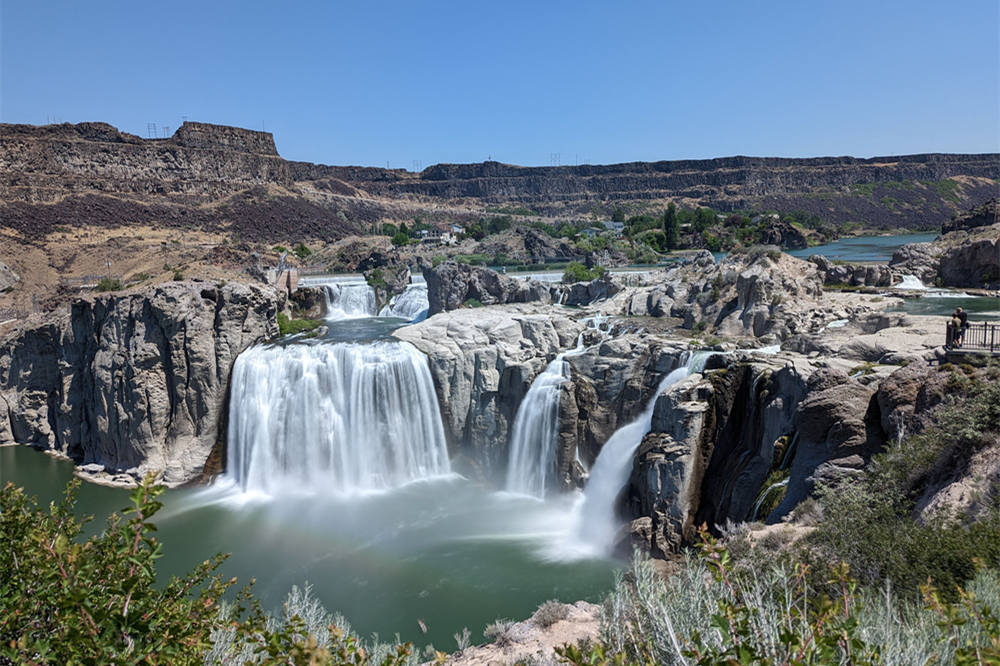
Twin Falls at Wailele Farm is an appealing first nature stop because it appears early in the drive and offers a quick introduction to East Maui’s tropical landscape.
It is also a stop where flexibility matters. Twin Falls currently has only 55 paid parking spaces, costing $10 per car, with parking available on a first-come basis. Reservations are not accepted, and parking along Hāna Highway or nearby roads is prohibited.
Out-of-state visitors should also note that the first Saturday of each month is currently reserved for Hawaiʻi residents.
If the designated lot is full or you are traveling on a restricted day, continue your itinerary rather than waiting along the highway. There will be plenty of other scenery ahead.
If you do stop, about 45 minutes to an hour is enough for most one-day itineraries.
3. Take a Scenic Break at Keʻanae Peninsula
Keʻanae provides something different from the waterfall stops along the highway. The peninsula combines traditional kalo fields, a small East Maui community, dramatic lava-rock shoreline, and wide Pacific views.
Keʻanae Park works well for a short walk and a break from the car. Treat the shoreline as a scenic stop rather than a swimming destination; Maui County specifically describes it as unsuitable for swimming.
Allow roughly 30 to 45 minutes if your Waiʻānapanapa reservation permits. This is also a good place to decide whether you want another food stop before continuing toward the state park.
4. Pick Up a Roadside Snack
Fruit stands, banana bread, baked goods, and other small food stops are part of the character of the Road to Hana, but they do not need to become separate destinations.
Choose one that appeals to you and pick up something light for the road. Hours and availability can vary, so it is better to stay flexible than organize the entire morning around a particular food stand.
Save the longer meal break for Hāna, where you will appreciate time out of the car.
5. Make Waiʻānapanapa State Park a Major Stop
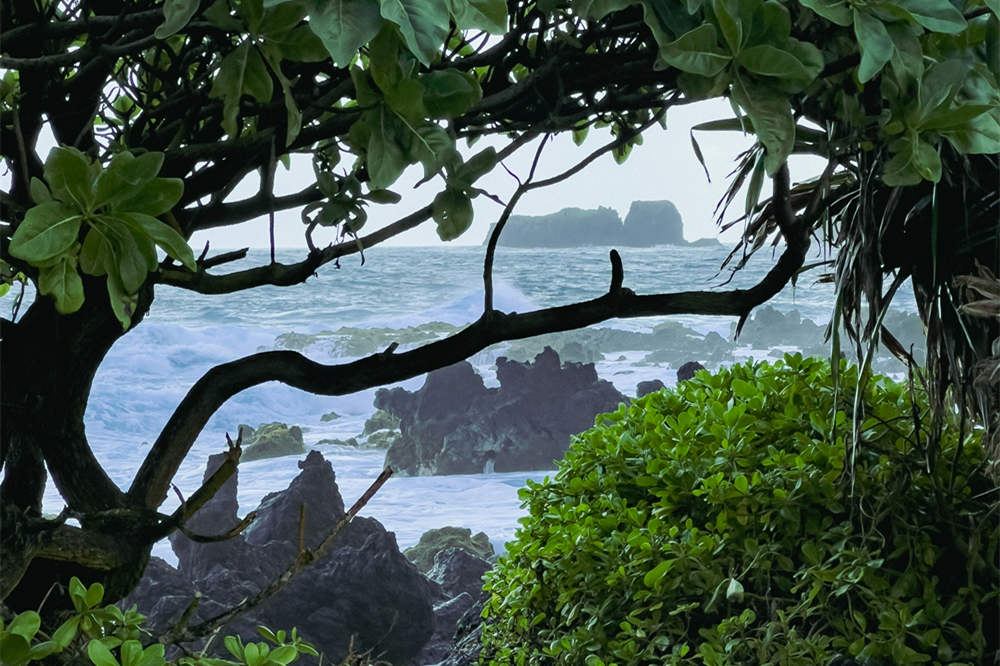
Waiʻānapanapa State Park is one of the most distinctive places on this itinerary and deserves more than a quick photograph.
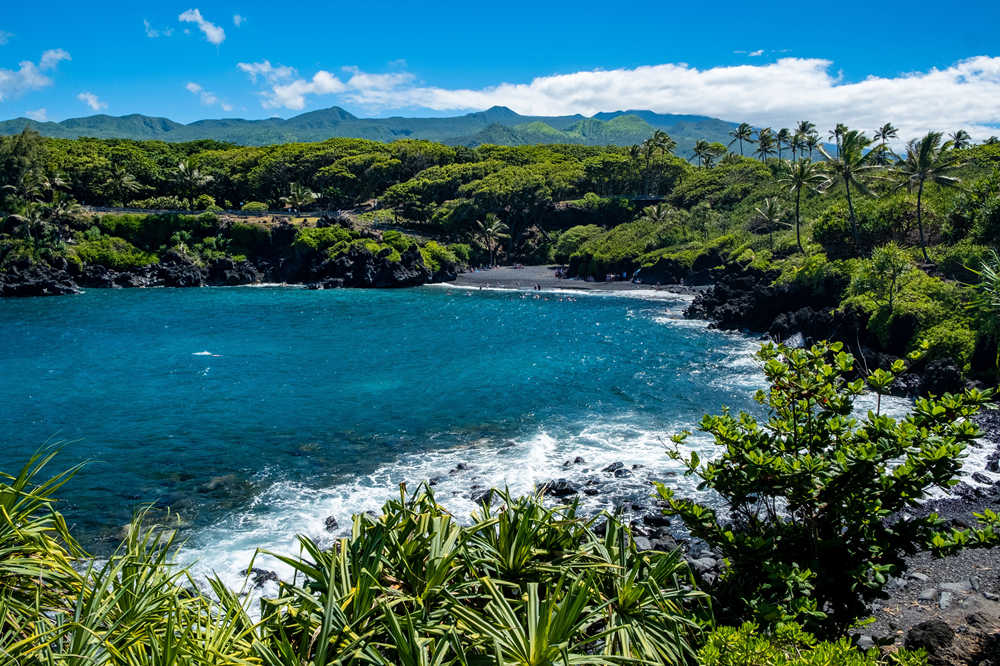
The volcanic coastline includes a small black-sand beach, sea stacks, blowholes, a natural stone arch, coastal vegetation, and walking opportunities. After a morning dominated by rainforest and winding road, the landscape feels dramatically different.
Stay within your reserved entry period and use that time to explore rather than immediately thinking about the next roadside attraction.
For many couples, Waiʻānapanapa is a better place to spend meaningful time than several minor stops combined.
6. Stop in Hana for Lunch
Once you reach Hāna, take an actual break. Find lunch, stretch your legs, use the restroom, and give the driver some time away from the wheel.
The town works as the decision point for the rest of the day. Look at the time, weather, and how both of you feel before deciding how much farther to continue.
From here, most couples should choose between a relaxed beach afternoon and a shorter visit to Kīpahulu. The full Pīpīwai Trail is better treated as a separate, more demanding version of the itinerary.
Choose Your Afternoon
Option 1: Hāmoa Beach for a Relaxed Afternoon
Hāmoa Beach is the better choice if you want the second half of the day to feel slower.
After hours of driving and sightseeing, spending time near Hāna gives you a chance to stop moving. Walk the beach, enjoy the scenery, and check ocean conditions before entering the water.
This version is particularly suitable for couples who are prone to motion sickness, prefer beaches to hiking, or simply do not want every hour of the day scheduled.
When you have had enough beach time, begin the return along the same route toward Pāʻia.
Option 2: Continue to Kipahulu and Walk the Kuloa Point Trail
If you would rather continue beyond Hāna, drive to the Kīpahulu District of Haleakalā National Park.
For a normal one-day Road to Hana itinerary, the short Kūloa Point Trail is easier to fit than the full Pīpīwai Trail. The loop is about half a mile and provides coastal views as well as viewpoints over ʻOheʻo Gulch.
The Pools of ʻOheʻo can currently be viewed from the trail, but the National Park Service states that they are not accessible for swimming.
As of August 2026, the standard Haleakalā National Park entrance fee is $30 per private vehicle and is valid for three days, covering both the Kīpahulu and Summit districts. Check current fees before traveling.
Want to Hike the Pipiwai Trail? Make It a Longer-Day Variation
The Pīpīwai Trail is one of the highlights of Kīpahulu, but it should not be casually added to the standard afternoon itinerary.
The National Park Service lists the trail at four miles round trip with about 800 feet of elevation gain. The route passes Makahiku Falls viewpoints and a bamboo forest before reaching the Waimoku Falls viewing area two miles from the trailhead.
If the Pīpīwai Trail is a priority, modify the day around it. A sensible version would be to shorten Twin Falls, limit food and roadside stops, keep Keʻanae brief, visit Waiʻānapanapa during your reserved period, have a simple lunch, and continue toward Kīpahulu.
Do not assume you can follow the full relaxed itinerary and then add a four-mile hike at the end without creating a very long day.
For couples who really want time on the trail without watching the clock, spending a night in Hāna and visiting Kīpahulu the following morning is the more comfortable option.
Plan Your Return Before the Afternoon Gets Away From You
Before leaving Hāna or Kīpahulu, think about the entire drive that remains—not simply the next attraction.
Your return time should account for weather, driver fatigue, remaining daylight, traffic, and where you are staying that night. Couples returning all the way to West or South Maui still have substantial driving after reaching Pāʻia.
What to Cut First If You Are Behind Schedule
- Minor roadside viewpoints: you will encounter scenic views throughout the drive.
- Additional waterfall stops: seeing several similar waterfalls adds less value than spending longer at one good stop.
- Extra food stops: keep one snack stop and one proper meal.
- The longer afternoon activity: choose Hāmoa, Kūloa Point, or Pīpīwai according to the time you actually have.
Protect the time needed for the return drive rather than trying to recover a delayed schedule by driving faster.
Should You Drive the Back Road From Hana?
This itinerary recommends returning the way you came rather than automatically continuing around Maui through the remote road beyond Kīpahulu.
Conditions on the southeastern section can be affected by weather, construction, road damage, and rental-car policies, making it unsuitable for a fixed evergreen itinerary.
There is also a specific issue to know about in 2026. As of August 2026, Maui County is closing Hāna Highway to through traffic at Kālepa Point between mile markers 38 and 39 from 8:30 a.m. to 3:30 p.m. Monday through Friday while rockfall-protection work is underway. The county announced that the weekday closure was expected to continue for several months.
Because projects and road conditions can change, check current Maui County notices and your rental agreement before considering any route beyond Kīpahulu.
Is It Better to Stay Overnight in Hana?
A day trip works well when you have limited time on Maui and do not want to change accommodations. With selective stops, you can still experience rainforest scenery, Keʻanae, Waiʻānapanapa, Hāna, and one afternoon activity.
An overnight stay is better for couples who care more about pace than efficiency. You can let the journey to Hāna fill the first day, enjoy the town without immediately preparing for the return drive, and visit Kīpahulu the following morning.
This is particularly worthwhile when the Pīpīwai Trail is high on your list. Hiking it on the second day makes it a destination in its own right rather than something squeezed into the final hours of an already long drive.
The tradeoff is the additional accommodation cost and the inconvenience of moving hotels. For some couples that is worthwhile; for others, a carefully planned day trip is simpler.
Road to Hana Driving Tips for Couples
- Let the passenger handle navigation. The driver should be watching the highway rather than searching for the next stop on a phone.
- Park only where parking is permitted. Do not leave part of the vehicle protruding into Hāna Highway for a photograph.
- Allow faster local traffic to pass when it is safe to do so.
- Respect private property. Skip waterfalls, trails, or swimming areas that do not clearly welcome visitors.
- Stay out of streams during heavy rain or flash-flood conditions.
- Use established visitor sites. East Maui is home to working communities, not simply a sightseeing corridor.
- Consider a permitted tour if neither partner wants to drive. Both of you can enjoy the scenery while someone familiar with the road handles the difficult sections.
The Road to Hāna Code of Conduct also asks visitors to use designated parking, avoid unsigned sites on or beyond private property, stay on established paths, and respect the land, plants, wildlife, and local community.
What to Pack for the Road to Hana
Keep the packing list practical rather than bringing everything you might conceivably use.
- Water
- Easy snacks
- Light rain layer
- Comfortable shoes with traction
- Swimsuit and towel if visiting a beach
- Sun protection
- Motion-sickness supplies if needed
- Phone charger or power bank
- Offline maps
- Downloaded reservation confirmations
Leave valuables at your accommodation whenever possible rather than visibly storing them in a parked rental car.
Is the Road to Hana Worth It for Couples?
The Road to Hana is a great fit for couples who enjoy scenic drives, waterfalls, tropical landscapes, photography, hiking, beaches, and flexible road-trip days. It is less appealing if both of you dislike long drives, one partner is especially uncomfortable on winding roads, or your ideal Maui day involves staying in one place and relaxing.
The most enjoyable version is usually not the itinerary with the most stops. Leave early, give Waiʻānapanapa enough time, take a real break in Hāna, and choose an afternoon that matches your energy rather than somebody else’s checklist.
That way, the Road to Hana feels like a day spent exploring East Maui together—not a race to reach every mile marker before turning around.