
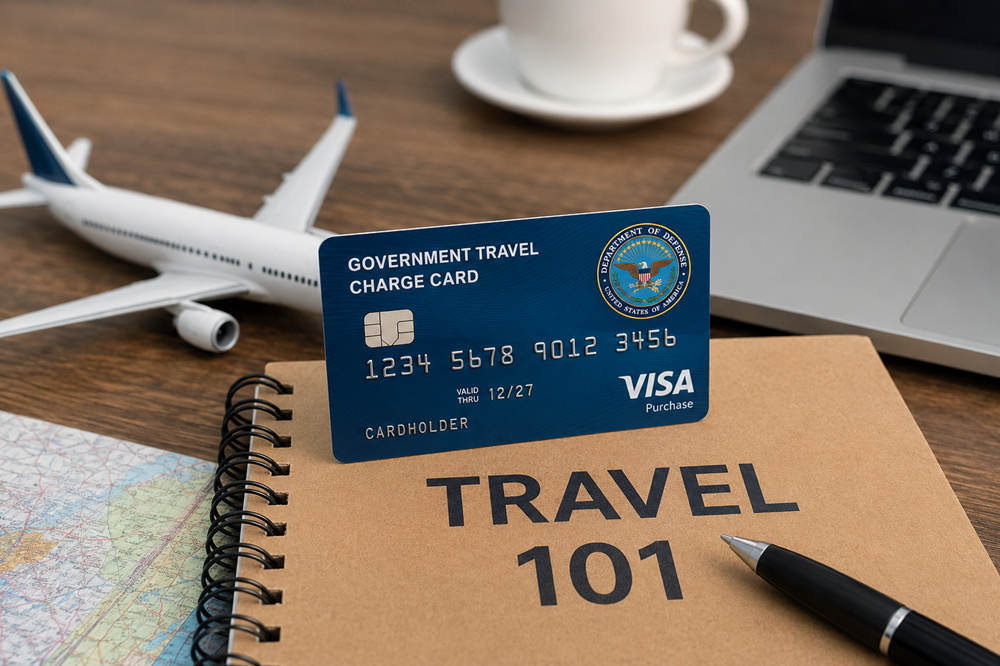
Travel Card 101 Answers: What Government Travelers Need to Know
Travel Card 101 is the mandatory training course for people who receive and use a Government Travel Charge Card, commonly called a GTCC. It explains how to obtain the card, which travel expenses belong on it, how reimbursement reaches the account, and when the cardholder must pay the balance.
This guide explains the ideas behind common Travel Card 101 questions rather than reproducing an unofficial answer key. Course wording and government travel policies can change, so unusual expenses should be checked against the latest regulations or discussed with an Agency Program Coordinator.
Terminology note: Current GTCC regulations use Department of War, or DoW, while some existing Defense Travel Management Office pages and training materials still use Department of Defense, or DoD.
What Is Travel Card 101?
The official course is called Travel Card Program (Travel Card 101). It is a self-paced online class available through TraX, the Defense Travel Management Office training application inside Passport.
The course covers three main stages of card ownership:
- Obtaining and activating a GTCC
- Using the card during official travel
- Paying and managing the account after travel
Travel Card 101 is mandatory when a person receives a GTCC for the first time. Cardholders must also complete refresher training and update their Statement of Understanding every three years. The course normally takes about 60 minutes, and its completion certificate can be retrieved through TraX.
Travel Card 101 is different from DTS 101. Travel Card 101 explains cardholder rules, while DTS training teaches travelers how to prepare authorizations, vouchers, and other documents in the Defense Travel System.
Core Travel Card 101 Answers
Many assessment questions test whether the traveler understands the purpose of the card, the different account types, and the cardholder’s personal responsibilities.
What Is the Purpose of the GTCC?
The GTCC provides an approved method for paying costs connected with official government travel. It reduces the need for travelers to place transportation, lodging, meals, and other mission-related expenses on a personal credit card.
The card is only a payment method. A transaction appearing on the GTCC does not automatically mean the expense is reimbursable. The travel authorization, applicable Component guidance, and the Joint Travel Regulations determine what the government will repay.
What Is an Individually Billed Account?
An Individually Billed Account, or IBA, is issued to one specific traveler. The card is not transferable and generally cannot be used to pay another person’s expenses.
The cardholder receives a monthly billing statement and is responsible for paying the full undisputed amount by the due date. That obligation continues even when a voucher is delayed or reimbursement has not yet reached the account.
What Is a Centrally Billed Account?
A Centrally Billed Account, or CBA, is managed by a government organization rather than an individual traveler. It may be used for certain official reservations when a traveler does not have an IBA or when organizational procedures require centrally billed transportation.
The government is responsible for paying a CBA. Transportation accounts and unit accounts are the two main CBA types, and each is managed according to the organization’s internal procedures. More details are available on the official Centrally Billed Accounts page.
What Is the Difference Between Standard and Restricted Cards?
Standard and restricted cards have the same general purpose, but restricted accounts normally begin with lower spending and cash-access limits.
A standard account is generally issued when an applicant meets the program’s creditworthiness requirements. A restricted card may be issued when the applicant does not meet the standard threshold or declines the soft credit check but successfully completes the required alternate creditworthiness evaluation.
Restricted status does not prevent official travel. An Agency Program Coordinator may arrange an appropriate temporary limit when authorized mission expenses exceed the account’s normal limit.
What Can Be Charged to the GTCC?
Unless an exemption applies, travelers generally use the GTCC for authorized costs related to official travel. Depending on the orders and applicable policy, these may include:
- Commercial airfare or other authorized transportation
- Lodging during official travel
- An authorized rental vehicle
- Fuel for the authorized rental vehicle
- Meals while in an official travel status
- Approved incidental expenses
- Necessary ATM withdrawals for official expenses that cannot be paid directly by card
A traveler should review the authorization before departure rather than assuming that every expense at the destination is official. Optional upgrades, personal itinerary changes, and costs created for convenience may not be reimbursable.
When a Card Charge Is Not Reimbursable
A charge can sometimes appear on the GTCC without qualifying for government reimbursement. This most often happens when a non-reimbursable incidental charge is included within an otherwise valid travel bill.
Current GTCC regulations allow certain reasonable hotel-related expenses to remain on the card when they are part of the room bill. Examples may include an in-room movie, a personal telephone call, an exercise fee, or a beverage.
A rental company may also charge tolls, citations, or related processing fees to the GTCC under the rental agreement. Some of those costs may not be reimbursable, but the cardholder must still monitor the account and pay the charges on time.
The important distinction is simple: acceptance by the card vendor does not guarantee reimbursement by the government.
What Purchases Are Prohibited?
The GTCC is not a general personal credit card. Examples of misuse include:
- Personal or household shopping
- Gambling and adult entertainment
- Leisure expenses incurred during personal leave
- Cash withdrawals unrelated to official travel
- ATM withdrawals made more than three working days before departure without an authorized need
- Using the card to satisfy a government-related debt
- Separate tickets, rooms, meals, or rental vehicles for an unauthorized companion
A merchant may successfully process a prohibited purchase. The approval of the transaction does not make the purchase acceptable under government travel policy.
Before, During, and After Official Travel
Cardholder responsibilities continue through the entire travel process. Each stage has a different purpose.
Before the Trip
After receiving the card, verify its receipt and establish a PIN. Before departure, confirm that the account is open, the card information in DTS is current, and the available limit is sufficient for the authorized trip.
Review the authorization so you know which transportation, lodging, and other expenses belong to the official itinerary. Contact the APC before departure when an extended or unusually expensive trip may require a temporary limit adjustment.
During the Trip
Use the GTCC for appropriate official-travel charges and keep the documentation needed for the voucher. Itemized hotel folios, rental agreements, and transportation receipts provide more useful records than slips showing only a total.
Check the account for unfamiliar transactions, duplicate charges, incorrect amounts, and unexpected fees. When an authorized purchase is declined, contact the card vendor or APC instead of repeatedly attempting the transaction.
Use a separate payment method for personal purchases. Separating the expenses when they occur is easier than trying to divide a combined transaction after the trip.
After the Trip
Submit the travel voucher within five working days after completing official travel. Replace estimates from the authorization with the actual dates, rates, and reimbursable expenses.
Use split disbursement so the applicable travel reimbursement is sent directly to the GTCC account. Review the amount carefully because meals, ATM withdrawals, and miscellaneous charges may not always be included automatically.
After reimbursement is processed, compare the voucher, statement, split-disbursement payment, credits, and any personal payments. The cardholder must pay every remaining undisputed balance by the statement due date, regardless of the reimbursement status.
How to Dispute an Incorrect Charge
When a statement contains a questionable transaction, first contact the merchant and try to resolve the problem directly.
If the merchant cannot correct it, submit a formal dispute through the card vendor’s online account system. A paper dispute form may be used when an online dispute is not possible.
The dispute must be filed within 60 days of the billing statement on which the erroneous charge first appeared. Formally disputed amounts generally do not age during the investigation, but all other undisputed charges must still be paid.
Using the GTCC When Traveling With a Spouse or Partner
A spouse or partner may accompany a cardholder on an official trip, but traveling together does not normally make the companion’s expenses official.
Sharing a Hotel Room
The GTCC may be used for the authorized traveler’s lodging bill. An additional cost associated with spousal occupancy may remain on the card when it is inherent to the same hotel folio, although the added amount may not be reimbursable.
A separately booked room, optional upgrade, companion package, or independently billed personal service should use a personal payment method. Keep the itemized hotel folio so the official and personal amounts can be identified.
Paying for Meals
Ask for separate restaurant checks whenever possible. The traveler can pay the appropriate official-travel expense with the GTCC while the spouse or partner uses a personal payment method.
A companion’s meal should not be placed on the IBA as a separate purchase. A limited exception may apply when a meal charge is inseparable from an authorized lodging bill, but that does not make the additional amount reimbursable.
Adding Personal Leave to an Official Trip
Official travel may sometimes be combined with personal leave, but costs created by the leisure portion of the trip should not be placed on the GTCC.
Personal costs may include:
- Extra vacation hotel nights
- Tourist attractions and entertainment
- Meals during the leave period
- Leisure transportation
- Optional rental-vehicle upgrades
- Additional airfare caused by a personal itinerary change
Separate the official and personal dates before booking whenever possible. The traveler assumes the financial risk of personal arrangements if the official trip is canceled or changed.
Booking Transportation for a Companion
An IBA generally cannot be used to buy a spouse’s or partner’s airline ticket simply because the couple is taking the same flight.
An exception may apply when the companion is an authorized dependent traveling under qualifying orders, such as certain permanent-change-of-station arrangements allowed by Component policy. Without that authorization, the companion’s ticket should be booked and paid for separately.
How to Access Travel Card 101
Travel Card 101 is available through TraX. The general process is:
- Sign in to Passport.
- Select TraX from the Passport homepage.
- Choose Training from the TraX menu.
- Search for Travel Card Program (Travel Card 101).
- Launch and complete the course.
- Open Completed Training to view or print the certificate.
If the course does not appear, review the roles selected under My Roles. TraX uses those role selections to determine which classes appear in the available-training inventory.
Completed course certificates are stored in the Completed Training area. The official DTMO eLearning page provides current instructions for accessing TraX and retrieving certificates.
Where to Verify a Travel Card Answer
Different sources govern different parts of an official trip. Use the source that matches the question:
- GTCC Regulations: Card use, billing, training, account management, split disbursement, and misuse
- Joint Travel Regulations: Travel allowances and reimbursement eligibility
- Component guidance: Service- or organization-specific procedures
- Agency Program Coordinator: Account status, limits, applications, and local card rules
- Approving official or travel office: Authorization and voucher questions
- Card vendor: Statements, payments, declined transactions, and disputes
The APC is usually the best first contact for a card-specific problem. Questions involving mixed official and personal travel should be resolved before the card is used whenever possible.
Final Takeaway
The most useful Travel Card 101 answers come from understanding the cardholder’s responsibilities. Use the GTCC for appropriate official-travel expenses, keep personal purchases separate, retain the required documentation, submit the voucher promptly, verify split disbursement, and pay every undisputed charge by the statement due date.
Remember that a transaction may be permitted on the card without being reimbursable. When a spouse or partner joins the trip, separate their expenses unless current orders and Component policy specifically authorize dependent travel.