25 Travel Missions for Couples Inspired by Travel Town
A memorable trip does not always require a packed itinerary. A few playful challenges can encourage you to explore unfamiliar streets, taste something new, and notice details you might otherwise miss.
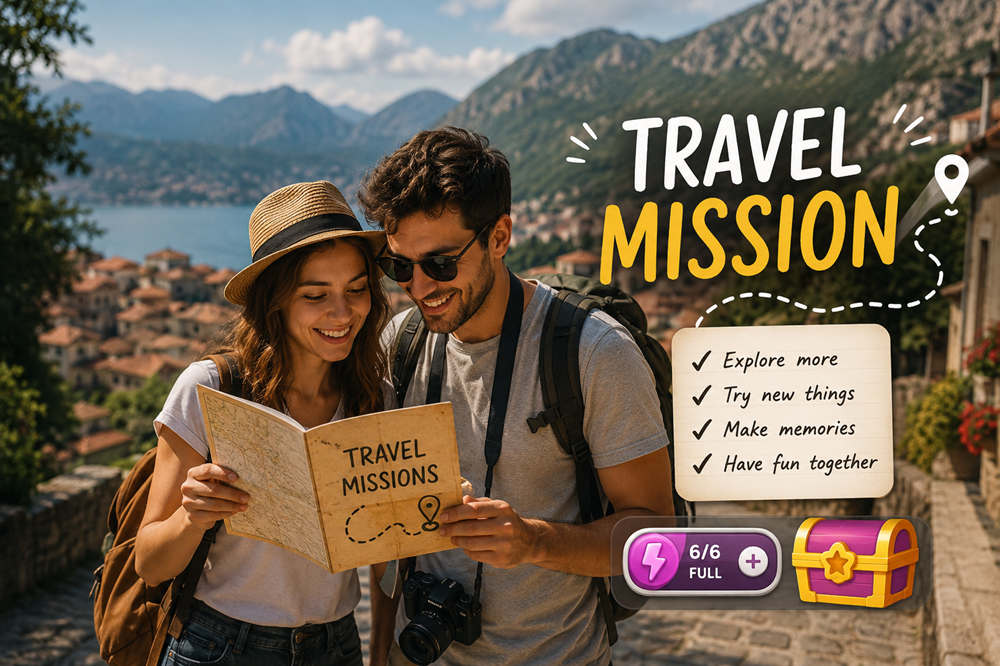
The idea is loosely inspired by the mobile game Travel Town. In its Travel Mission, players collect Event Energy, complete orders, move through stages, and unlock rewards. This couples version brings that structure into the real world, replacing virtual tasks with experiences you can complete together.
“Travel Town free energy” may belong to the game, but it raises a useful question for an actual trip: how much time and energy do you want to spend exploring today?
How to Set Up Your Couples Travel Mission
Choose several missions that suit your destination, budget, weather, and physical energy. You can select them before leaving home or decide each morning based on how the day feels.
- Start with six energy tokens. This is your shared allowance for the day.
- Give each mission a cost. Easy challenges use one token, moderate challenges use two, and demanding challenges use three.
- Choose together. Each partner can select one mission, with the remaining tokens spent on a shared choice.
- Keep a combined score. Work as one team rather than competing against each other.
- Save a small reminder. A photograph, ticket, receipt, journal entry, or postcard can mark a completed mission.
The rules are only there to make decisions easier. Missions can be changed or skipped whenever the weather, mood, or schedule shifts.
Exploration Missions
These challenges help you look beyond the main attractions and experience more of the destination’s everyday character.
1. Take the Most Interesting Turn
Begin in a walkable area without choosing a complete route. At each intersection, follow the street that looks more inviting, whether it has unusual architecture, trees, small shops, or an unexpected view. Set a time limit so you can return comfortably.
2. Find a Place That Was Not on Your Itinerary
Look for a courtyard, public garden, small museum, quiet square, waterfront path, or historic building that neither of you planned to visit. Spend enough time there to discover why it caught your attention.
3. Explore One Stop Farther
When using a train, tram, bus, or ferry, continue one stop beyond the neighborhood you already know. Walk around for at least 30 minutes before returning, after checking that the route and area are suitable.
4. Find the Oldest Place You Can Enter
Search for a historic market, station, church, library, café, or public building. Learn what it was originally used for and identify one feature that has survived from an earlier period.
Local Food Missions
Food missions introduce regional flavors without requiring every meal to become an elaborate restaurant search.
5. Share a Dish That Is New to Both of You
Choose a local dish or ingredient neither partner has tried. Share one portion, then compare what you noticed about its flavor, texture, or preparation.
6. Build a Market Picnic
Visit a market, bakery, grocery store, or produce stand and assemble a picnic within a fixed budget. Choose items made or grown in the region, then take them to a park, beach, or public space where picnicking is permitted.
7. Find a Regional Dessert
Look for a pastry, frozen treat, sweet drink, or celebration food associated with the area. Learn which local ingredient or tradition makes it distinctive before sharing it.
8. Create a Three-Stop Tasting Walk
Choose three small items from three places within the same neighborhood. You might begin with a savory snack, continue with a local drink, and finish with dessert.
Photo and Memory Missions
Rather than collecting dozens of similar pictures, these missions produce a few personal records of the trip.
9. Photograph the Same Place Two Ways
Stand in the same general location and take separate photographs without discussing your ideas first. Compare the results afterward to see which details, colors, or movements each person noticed.
10. Find an Accidental Heart
Look for a naturally occurring heart shape in a leaf, shadow, cloud, stone, reflection, doorway, or plate of food. The shape should already be there rather than arranged for the photograph.
11. Make a Ten-Second Travel Film
Record one short clip that captures the atmosphere of the day. Focus on natural movement and sound, such as waves, a passing tram, a market stall, street musicians, or the preparation of a meal.
12. Send a Postcard to Your Future Selves
Write about one specific moment you want to remember rather than summarizing the entire vacation. Mail the postcard home or keep it sealed to open on a future anniversary.
Connection Missions
These challenges create room for conversation when navigation, sightseeing, and practical decisions have begun to dominate the trip.
13. Plan a Surprise Hour
Take turns arranging one hour for the other person. It might include a café, bookshop, garden, scenic walk, gallery, or another simple experience within an agreed budget and travel radius.
14. Take a Phone-Free Walk
Choose a safe, clearly marked route and put both phones away for 30 minutes. Keep one accessible for directions or emergencies, but avoid messages, photographs, and social media.
15. Find Something That Represents Your Partner
During the day, privately choose a place, object, artwork, color, or view that reminds you of your partner. Reveal your choices later and explain the connection.
16. Share the Day’s Most Unexpected Moment
At the end of the evening, each person names one moment that surprised them. It could be a conversation, meal, mistake, performance, view, or unplanned discovery.
Adventure Missions
Adventure can mean trying something unfamiliar without requiring extreme activities or unnecessary risks.
17. Follow a Route Suggested by a Local
Ask a hotel employee, guide, host, or shopkeeper to suggest a short walk they personally enjoy. Follow the route without adding major tourist attractions and notice what makes the area meaningful to someone who lives there.
18. Try a Beginner-Friendly Local Activity
Book an activity connected to the destination that welcomes beginners. Possibilities include a cooking lesson, dance class, craft workshop, guided paddle, cycling route, or introductory climbing session.
19. Take an Unplanned Half-Day Trip
Choose a nearby town, island, park, or coastal area that can be visited comfortably in half a day. Confirm transportation and opening hours, but leave decisions about food, walking routes, and stops until you arrive.
20. Let a Coin Choose Between Two Good Options
Select two activities you would both genuinely enjoy, then use a coin toss to settle the decision. This works well for choices such as a museum or garden, two neighborhoods, or a coastal walk and an old-town route.
21. Complete a Local Trail
Follow a marked walking, cycling, heritage, food, or public art trail from beginning to end. Choose a route suited to your available time and ability, with room for breaks along the way.
Budget Travel Missions
These ideas make financial limits part of the challenge and show that a meaningful date does not always require an expensive reservation.
22. Plan a Date Under a Fixed Amount
Agree on a limit in the local currency and create an activity within it, including transportation, food, and admission. One partner can choose what to do while the other selects what to eat.
23. Spend an Afternoon at Free Attractions
Build a route around parks, beaches, public art, markets, viewpoints, free galleries, historic streets, or cultural spaces without admission fees. Confirm access before leaving, since some places are free only at certain times.
24. Find a Meaningful Souvenir Below Your Limit
Set a modest price ceiling and choose one item that represents a specific part of the trip. A postcard, small print, local spice, secondhand book, ornament, or transit token may feel more personal than a generic souvenir.
25. Spend One Day Without a Taxi or Rideshare
Use walking, cycling, trains, buses, trams, or ferries for a full sightseeing day. Choose this mission only where pedestrian routes or public transportation make it practical.
A Simple Energy, Points, and Rewards System
After choosing your missions, use one system for both energy costs and scoring:
- Easy mission: One energy token and 10 points
- Moderate mission: Two energy tokens and 20 points
- Bold mission: Three energy tokens and 35 points
- Three mission categories in one day: 20 bonus points
- An unexpected kind gesture: 15 bonus points
Unused energy does not need to carry over. Spending fewer tokens can simply mean you needed a slower day.
Choose rewards that add to the trip rather than turning the challenge into a serious competition:
- 50 points: Share a favorite snack or dessert.
- 100 points: Enjoy a slow morning without scheduled sightseeing.
- 150 points: Plan a special meal or modest shared experience.
- 200 points: Choose a photograph to print after returning home.
The rewards can also be free. Returning to a favorite place, watching the sunset, sleeping late, or spending an hour by the hotel pool may be exactly what the trip needs.
How to Create Missions for Any Destination
Begin with the characteristics that make the destination distinctive, then turn each one into a specific action.
In a historic city, you might search for an old inscription, traditional workshop, hidden courtyard, or former city gate. At the coast, missions could involve walking part of a shoreline trail, finding a quiet beach, watching fishing boats return, or trying a regional seafood dish.
A general plan such as “visit the market” becomes more engaging when changed to “find three ingredients grown in this region.” Instead of simply walking through the old town, challenge yourselves to locate the oldest doorway on one street. Clear objectives make familiar activities feel more purposeful.
Keep the Challenge Safe and Flexible
Choose missions that respect both partners’ health, budget, comfort, and physical ability. Check official information when an activity involves trails, water, unfamiliar transportation, changing weather, or limited opening hours.
Either partner should be able to replace a mission without pressure. You can shorten a route, lower its energy cost, or choose a gentler version of the same idea.
Most importantly, do not let the score control the vacation. The mission has worked when it creates curiosity, laughter, connection, or a story worth remembering.
Choose the Missions That Fit Your Trip
You do not need to complete all 25 challenges. Select five or six that suit the destination and leave enough room for rest and spontaneous discoveries. The energy tokens provide a little structure, but the experiences you did not expect may become the greatest rewards.