How Couples Can Manage Travel Expenses and Split Trip Costs Fairly
Sharing a trip does not automatically make every expense easy to divide. One person may book the flights, the other may pay for meals, and several hotel deposits or card charges may not settle until after the trip ends.
A simple travel expense system gives both partners a clear view of the budget without turning the vacation into an accounting project. Before leaving, agree on what the trip can cost, how shared purchases will be divided, and where each payment will be recorded. That preparation makes it easier to enjoy spontaneous plans without creating confusion later.
Agree on a Realistic Trip Budget
Start with the maximum amount each person can comfortably contribute—not the price of an ideal itinerary found online. A trip is only affordable when both partners can cover their share without relying on money needed for regular bills, emergency savings, or other financial commitments.
Next, talk about priorities. One person may prefer a central hotel that reduces transportation time, while the other would rather choose simpler accommodation and spend more on restaurants or activities. Neither preference is automatically better, but the budget should reflect what matters to both travelers.
Estimate the major costs first:
- Flights, trains, fuel, or other long-distance transportation
- Accommodation and resort or destination fees
- Local transportation
- Meals and drinks
- Tours, tickets, and activities
- Travel insurance and required documents
Add a separate allowance for unexpected costs such as additional baggage, a missed connection, a last-minute taxi, or a change in plans. This reserve should not be treated as extra everyday spending money.
Before making nonrefundable bookings, decide what can be reduced if the estimate exceeds the limit. That might mean shortening the trip, changing neighborhoods, choosing fewer paid activities, or traveling during a less expensive period.
Choose a Fair Way to Split Travel Costs
Fair does not always mean dividing every bill exactly in half. The right approach depends on each person’s available budget, income, travel preferences, and existing financial arrangements.
Split Shared Costs Equally
A 50/50 division is straightforward when both partners have similar budgets and are comfortable with the same level of spending. It also works well when nearly every major purchase benefits both travelers equally.
Contribute Different Percentages
Couples with significantly different incomes or discretionary budgets may prefer a proportional split. One person could cover 60 percent of the shared costs while the other covers 40 percent.
This arrangement can make a trip accessible to both partners without forcing the lower-budget traveler to spend beyond their comfort level. Agree on the percentages before booking rather than renegotiating them after expensive purchases have been made.
Take Responsibility for Different Categories
One person might pay for accommodation while the other handles meals, transportation, and activities. This method can reduce the number of repayments, but only when the expected category totals are reasonably balanced.
Compare the estimates first. The phrase “I will cover the food” can represent a very different amount on a self-catering road trip than on a week built around restaurant reservations.
Use a Shared Trip Fund
Each person can contribute an agreed amount to a separate travel fund before departure. Shared purchases then come from that money rather than alternating between personal accounts.
The fund might be held in a dedicated account, a digital wallet, or another clearly separated part of the couple’s savings. The important point is that both travelers know how much is available and which expenses it covers.
Keep Some Purchases Personal
Not every travel expense needs to be shared. Souvenirs, clothing, solo activities, spa services, premium drinks, and optional upgrades can remain the responsibility of the person who chooses them.
Discuss ambiguous expenses in advance. For example, if one partner wants a more expensive room than the other considers necessary, the couple might share the cost of the standard option while that partner pays the difference for the upgrade.
A Simple Cost-Splitting Example
Suppose a couple sets a shared budget of $4,000 and agrees on a 60/40 division. One partner contributes $2,400, and the other contributes $1,600.
The shared fund covers accommodation, transportation, joint meals, and activities they choose together. During booking, one partner requests a room upgrade costing an additional $180. Because the upgrade is a personal preference rather than part of the original plan, that partner pays the extra $180 separately.
This approach keeps the agreed trip affordable while still allowing either traveler to spend personal money on optional extras.
Set Up the Expense System Before Departure
After choosing a budget and splitting method, decide how expenses will be classified and recorded. Keep the system simple enough to use throughout the trip.
Useful spending categories include:
- Transportation
- Accommodation
- Food and drinks
- Activities and admission
- Tips and service charges
- Personal purchases
- Unexpected expenses
Every entry should also show who paid and whether the purchase is shared or personal. For complicated trips, it can help to label transactions by status:
- Paid: The charge is complete and included in the trip total.
- Pending: The transaction has appeared but may still change.
- Refundable: Some or all of the money is expected to return.
- Reimbursed: A partner, insurer, or provider has already repaid it.
Assign responsibility for major reservations as well. If one person books the hotel and the other handles transportation, both should still have access to confirmations, cancellation terms, and payment records.
Track Spending Without Interrupting the Trip
A travel expense system is useful only when both partners will maintain it. Choose one shared location for entries rather than keeping separate notes that must be combined later.
For each purchase, record:
- The amount and currency
- What the purchase was for
- Who paid
- Whether it was shared or personal
- How it should be divided
Small cash payments are easiest to record immediately because they are often forgotten. Card purchases can usually be added during a brief evening check.
Review the remaining budget at natural points in the itinerary, such as after changing destinations or halfway through the trip. A check-in is meant to guide upcoming choices, not criticize money that has already been spent.
If transportation has cost more than expected, the couple might choose a free attraction instead of a paid tour. If spending is comfortably below the plan, they may decide that a special dinner now fits the budget.
It can also help to set a limit for unplanned shared purchases. Either person might approve small expenses independently, while a larger purchase requires a quick conversation first.
Manage Cards, Cash, and Foreign Currency
International travel can make the recorded price different from the amount that eventually reaches a card statement. Exchange rates, ATM charges, merchant conversion services, and foreign transaction fees can all affect the final cost.
Use One Base Currency
Choose a home currency for the overall budget, usually the currency used by the couple’s primary bank accounts. Record the local purchase amount when useful, but also enter its value in the base currency so the running total remains meaningful.
The final card charge may differ slightly from an estimate made at the time of purchase. Use the posted statement amount during the post-trip review.
Recognize Dynamic Currency Conversion
A card terminal or ATM may offer to complete a foreign transaction in the traveler’s home currency instead of the local currency. This is known as dynamic currency conversion. The displayed home-currency total includes a conversion rate and may include additional fees.
Choosing the local currency generally allows the card network and issuer to perform the conversion instead. Read the screen carefully and review the disclosed rate before accepting a home-currency charge.
Check Card Fees Before Traveling
A card can charge a foreign transaction fee even when a purchase is displayed in the traveler’s home currency. Under U.S. consumer-credit rules, such fees may apply to transactions made abroad, purchases processed by a foreign merchant, and some transactions completed in U.S. dollars.
Check the terms for each card the couple plans to carry. The Consumer Financial Protection Bureau maintains a searchable collection of general credit card agreements, although the issuing bank should provide the terms that apply to a specific account.
Avoid Counting Cash Twice
Treat an ATM withdrawal as money transferred into the trip’s cash supply, not as the final purpose of the spending. Record the purchases as the cash is used.
For example, withdrawing the equivalent of $200 and later recording $200 of cash purchases should produce $200 in spending—not $400. ATM operator charges, bank fees, and conversion fees should be entered separately because they are genuine expenses.
Separate Holds From Final Charges
Hotels and rental companies may place temporary holds on a card. Do not treat the entire hold as a completed expense unless it becomes a final charge.
Keep deposits, pending refunds, canceled reservations, and travel credits separate from settled purchases. Note who paid originally so returned money can be assigned correctly.
Choose a Tracking Method Both Partners Will Use
The best tool is not necessarily the one with the longest feature list. It is the one both travelers can update without confusion.
For Calculating Who Owes Whom
Splitwise records shared expenses and maintains a balance between participants. Its official guidance says expenses can be divided equally, by exact amounts, by percentages, or by shares. That flexibility suits couples who alternate payments or use an unequal division.
tricount also tracks, divides, and settles shared expenses. It may suit travelers who mainly want a straightforward record of who paid and what remains to be settled.
For Monitoring the Overall Budget
TravelSpend is centered on travel budgeting. It can track trip spending, handle multiple currencies, and show balances for shared expenses. This type of tool is useful when staying within the total budget matters more than reimbursing each purchase immediately.
For Custom Planning
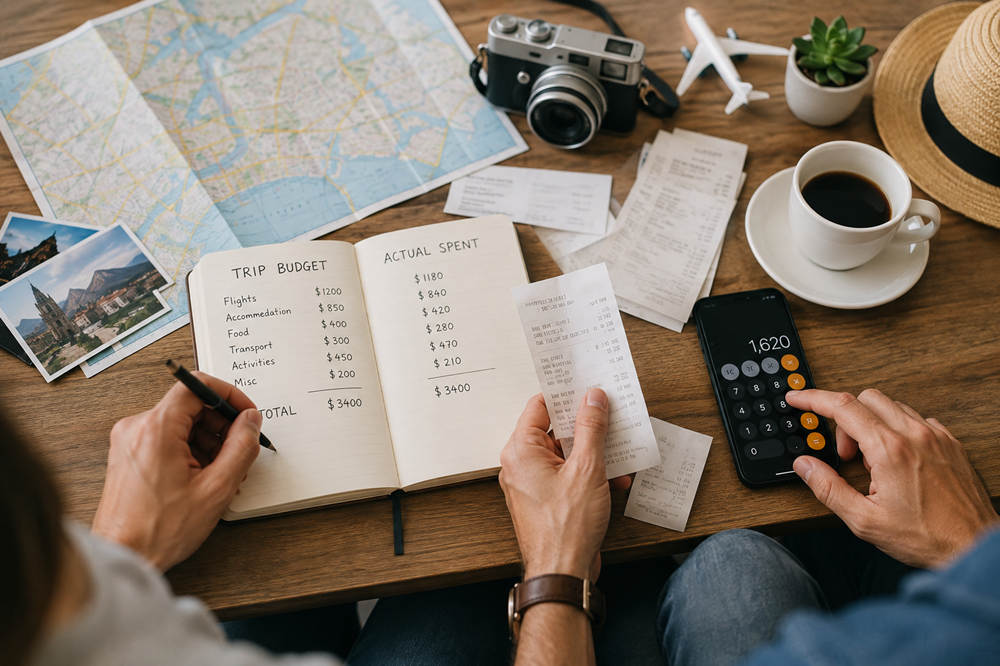
A shared spreadsheet works well for longer or more complicated trips. Couples can create their own categories, separate prepaid bookings from daily spending, and compare estimated costs with actual charges.
The tradeoff is convenience. A spreadsheet may be less comfortable to update during a busy travel day, particularly on a phone.
For a Short, Simple Trip
A shared note may be enough for a weekend with only a few purchases. List the amount, payer, and purpose, then calculate the balance after returning.
App features, free-plan limits, and subscription options can change, so check the current details before choosing a platform.
Settle the Final Balance After Returning
Do not calculate the final amount immediately after arriving home. Give pending card charges, hotel holds, and expected refunds time to update.
When the transactions have settled:
- Compare the shared record with card and bank activity.
- Correct duplicate, missing, or incorrectly categorized purchases.
- Replace estimated currency conversions with posted amounts.
- Remove personal purchases from the shared calculation.
- Confirm that refunds and released deposits reached the correct account.
- Calculate what each person should have contributed.
- Settle the remaining difference with one clear payment.
Finally, compare the actual total with the original budget. Focus on information that will improve the next trip. Accommodation may have matched the estimate while local transportation, tips, or baggage fees were higher than expected.
The review should refine future planning rather than become an argument about every individual decision.
Pre-Trip Expense Checklist for Couples
- Set a maximum budget that works for both travelers.
- Choose a 50/50, proportional, category-based, or shared-fund arrangement.
- Define which expenses are shared and which remain personal.
- Add a separate allowance for unexpected costs.
- Decide who will make each major reservation.
- Choose one expense-tracking method.
- Select a base currency for international trips.
- Check card terms, foreign transaction fees, and ATM charges.
- Set a limit for discussing unplanned shared purchases.
- Decide when to review the budget during the trip.
- Wait for pending transactions before settling the final balance.
A Clear System Leaves More Room for the Trip
Managing travel expenses as a couple is not about watching each other’s purchases. It is about making the financial side of the trip visible, fair, and predictable. Agree on the budget, choose a division that fits your circumstances, and use one simple record throughout the trip. With those decisions made early, money is less likely to distract from the experience you planned together.