Best Coastal Towns in Italy: 12 Seaside Escapes
Italy’s coast is filled with places that look irresistible in photographs, but its seaside destinations do not all provide the same kind of holiday.
Some are ideal for long beach days. Others reward couples who prefer historic streets, coastal hikes, boat excursions, fishing harbors, or evenings overlooking the water. A dramatic cliffside village may involve hundreds of steps, while a famous cove may be much smaller and more crowded than photographs suggest.
This guide introduces 12 of Italy’s best coastal towns and seaside communities, from Liguria and Tuscany to Puglia, Calabria, Sicily, and Sardinia.
They are not ranked from best to worst. Each destination is matched to the experience it offers, helping couples choose according to their interests, mobility, budget, transportation plans, and preferred pace.
Planning note: Ferry schedules, hiking access, beach services, parking restrictions, and attraction hours change by season. Verify essential details through official tourism, park, municipal, and transportation sources shortly before traveling.
Italy’s Best Coastal Towns at a Glance
| Destination | Region | Best for | Best used as | Suggested stay |
|---|---|---|---|---|
| Porto Venere | Liguria | History, harbor views, and boat trips | Ligurian base or Cinque Terre companion | 1–2 nights |
| Vernazza | Liguria | Cinque Terre scenery and hiking | Area base or day visit | 2–3 nights in the area |
| Castiglione della Pescaia | Tuscany | Sandy beaches and a medieval upper town | Independent beach stay | 2–3 nights |
| Sirolo | Marche | Adriatic views, coves, and nature | Conero Riviera base | 2–3 nights |
| Positano | Campania | Luxury, romance, and dramatic scenery | Amalfi Coast base | 2–3 nights |
| Procida | Campania | Colorful fishing villages and island pace | Island escape | 1–2 nights |
| Sperlonga | Lazio | Sandy beaches and whitewashed streets | Independent stop between Rome and Naples | 1–2 nights |
| Polignano a Mare | Puglia | Cliffs, viewpoints, and sea caves | Short stay or Puglia base | 1–2 nights |
| Otranto | Puglia | History and Adriatic swimming | Salento base | 2–3 nights |
| Tropea | Calabria | Clear water and cliff-edge views | Beach-focused stay | 2–3 nights |
| Cefalù | Sicily | Beach and historic center | Independent stay or Palermo side trip | 2–3 nights |
| Castelsardo | Sardinia | Fortified coastal scenery | Northern Sardinia road-trip stop | 1–2 nights |
The suggested stay lengths are editorial recommendations, not fixed rules. Couples planning a slower beach holiday can comfortably spend longer in Castiglione della Pescaia, Sirolo, Otranto, Tropea, or Cefalù.
How to Choose the Right Italian Coastal Town
Choose Vernazza when hiking and classic Cinque Terre scenery matter more than conventional beach space.
Choose Positano when the hotel, terrace view, restaurants, and romantic atmosphere are central to the trip—and the budget can support them.
Choose Castiglione della Pescaia, Sperlonga, Tropea, or Cefalù when you want a historic town combined with a genuine beach holiday.
Choose Sirolo for protected Adriatic landscapes, cliff-backed coves, and a quieter nature-focused experience.
Choose Polignano a Mare for a compact, photogenic stay built around cliffs, viewpoints, and boat trips rather than a spacious sandy beach.
Choose Procida for a slower island atmosphere shaped by several connected villages rather than one concentrated resort town.
Porto Venere, Liguria
Best for: Historic coastal scenery, steep stone lanes, and boat trips
Porto Venere lies south of the Cinque Terre on the Gulf of La Spezia. Its colorful harborfront, medieval lanes, churches, fortifications, and offshore islands give it more historical depth than a simple beach resort.
The town forms part of the UNESCO-listed landscape that includes the Cinque Terre and the islands of Palmaria, Tino, and Tinetto. Visitors can walk to the Church of San Pietro, explore the lanes beneath Doria Castle, and take boats toward Palmaria.
What to Do
- Walk along the harbor.
- Visit the Church of San Pietro.
- Explore the lanes below Doria Castle.
- See the rocky shoreline near Byron’s Grotto.
- Take a boat around Palmaria.
- Follow a marked coastal path when conditions permit.
Beach and Sea Access
Porto Venere has rocky and pebbly swimming areas rather than one broad sandy beach. It is a better choice for scenery, history, boats, and short swims than for an uninterrupted resort-style beach day.
Mobility Note
The internal lanes can be narrow, uneven, and steep. Couples with reduced mobility should confirm whether their accommodation can be reached directly by vehicle and how many stairs lie between the harbor and the entrance.
Best Way to Include It
Spend one or two nights here, or use Porto Venere as a quieter companion to several days in the Cinque Terre. The town does not have a central railway station, so reaching it generally involves a bus, boat, taxi, or car connection from La Spezia.
Vernazza, Liguria
Best for: Iconic Cinque Terre views and coastal hiking
Vernazza is one of the most recognizable Cinque Terre villages. Colorful houses descend toward a small harbor while vineyards, terraces, and steep paths rise above the settlement.
The harbor, Church of Santa Margherita d’Antiochia, Doria Castle area, narrow lanes, and hillside viewpoints can fill several hours. The wider experience comes from exploring Vernazza as part of the protected Cinque Terre landscape rather than treating it as an isolated photo stop.
What to Do
- Explore the harbor early in the morning.
- Walk to an authorized viewpoint.
- Visit the Doria Castle area.
- Hike toward Monterosso or Corniglia when trails are open.
- Try local wine and Ligurian seafood.
- Stay overnight to experience the village outside peak daytime hours.
How the Five Villages Differ
- Vernazza: Classic harbor-and-village composition
- Monterosso: Best conventional beach space
- Manarola: Famous cliffside views and evening photography
- Corniglia: Quieter and elevated above the sea
- Riomaggiore: Dramatic harbor and southern entry point
Current Trail Planning
Trail access can change because of rain, landslides, maintenance, or crowd management. During some especially busy dates, the national park introduces temporary one-way rules on sections such as Monterosso–Vernazza. Check the official Cinque Terre trail network and current notices before choosing a direction.
Some popular routes require a Cinque Terre Trekking Card. The card currently covers access to specified trails and services, while the Train Card adds rail travel. Requirements and inclusions can change, so compare the current Cinque Terre Card options before purchasing.
Main Limitation
Vernazza is small, heavily visited, and offers limited conventional beach space. Stay in one Cinque Terre base for several nights rather than moving luggage between villages.
Castiglione della Pescaia, Tuscany
Best for: Sandy beaches, a medieval hill town, and a relaxed Tuscan seaside stay
Castiglione della Pescaia brings together two distinct areas. The lower town contains shops, restaurants, and the seafront, while the fortified historic center climbs the hill toward the castle.
The upper village is enclosed by old walls and offers broad views over the town and surrounding Maremma landscape. Beaches such as Ponente and Roccamare give the destination a stronger beach-holiday identity than many of Italy’s rocky coastal villages.
What to Do
- Walk through the lower town and harbor.
- Climb into the fortified historic center.
- Enjoy the view from the castle area.
- Spend a full day on the sandy coast.
- Explore nearby Maremma landscapes.
- Visit Cala Violina or other regional beaches with proper access planning.
Beach and Sea Access
This is one of the guide’s better choices for couples who want broad beach areas rather than a small cove or rock platform. The surrounding Gulf of Follonica is known for sandy shores, pine-backed coastal scenery, and clear water.
Mobility Note
The lower town is easier to navigate, but reaching the historic center requires climbing. Couples can enjoy the beach and waterfront without walking every lane of the upper village.
Best Way to Include It
Stay two or three nights and combine it with southern Tuscany, the Maremma countryside, or a longer driving itinerary. A car offers flexibility for nearby beaches and inland towns, although parking and restricted areas should be checked in advance.
Sirolo, Marche
Best for: Adriatic panoramas, cliff-backed beaches, and protected nature
Sirolo sits above the Conero Riviera, separated from the water by pine forest and Mediterranean vegetation. Its medieval center contains a panoramic terrace overlooking the Adriatic, while beaches lie below the cliffs.
Urbani, San Michele, and Sassi Neri provide different combinations of pebbles, coves, free sections, and managed beach facilities. Due Sorelle Beach is known for the twin rock stacks offshore and is reached by sea rather than by an ordinary road.
What to Do
- Explore the medieval center.
- Visit the main panoramic terrace.
- Spend time at Urbani or San Michele Beach.
- Walk an official trail in Conero Park.
- Take a boat excursion along the protected coast.
- Visit neighboring Numana for additional beaches and services.
Beach and Sea Access
Some beaches are reached by paths, seasonal shuttles, or boats. Couples should confirm how they will return uphill, especially after a long day in the sun. Italia.it notes that summer shuttles connect the center with some beaches, while several smaller coves are accessible only from the sea.
Mobility Note
Sirolo’s center is elevated above the coast. The viewpoints are easier to enjoy than many of the beaches, which may require descents, climbs, or transport.
Best Way to Include It
Use Sirolo as a two- or three-night base for the Conero Riviera. It suits couples who want coastal scenery and nature more than nightlife or an intensely urban atmosphere.
Positano, Campania
Best for: A luxurious and visually dramatic Amalfi Coast escape
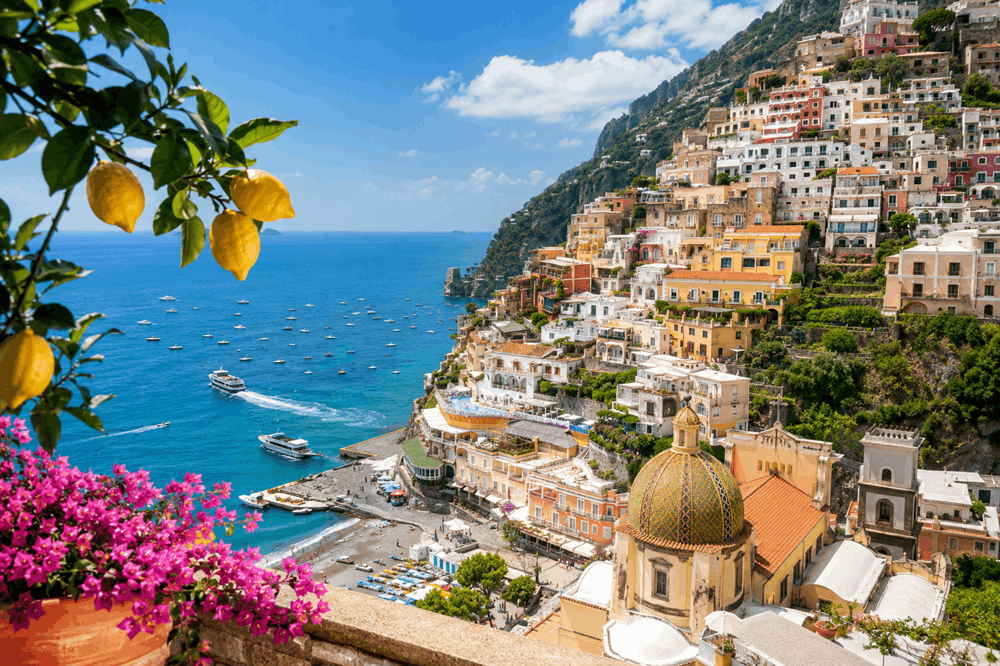
Positano appears to cascade down the mountainside toward the Tyrrhenian Sea. Its pastel buildings, beaches, tiled dome, boutiques, terraces, and offshore views make it one of Italy’s defining coastal destinations.
The town sits within the UNESCO-listed Amalfi Coast landscape, where settlements, citrus terraces, vineyards, cliffs, and small bays occupy the narrow space between the mountains and sea.
What to Do
- Walk through the lanes before the largest daytime crowds arrive.
- Spend time at Spiaggia Grande or another accessible beach.
- Take a boat excursion along the coast.
- Visit Amalfi, Ravello, or nearby Praiano.
- Hike the Path of the Gods with proper route planning.
- Reserve a terrace dinner overlooking the sea.
Mobility Note
Positano is steep and physically demanding. Long staircases are unavoidable at many hotels, restaurants, and viewpoints. Confirm whether a porter, taxi, or hotel shuttle can reach your accommodation before arriving with luggage.
Main Limitation
It is expensive, crowded in high season, and affected by slow road traffic. Ferries can be more pleasant than road transport when operating, but sea conditions and seasonal schedules can interrupt them.
Best Way to Include It
Stay at least two nights when the budget allows. A rushed midday visit gives couples the crowds and stairs without much of the atmosphere that makes the town appealing.
Procida, Campania
Best for: Colorful fishing villages and a slower island rhythm
Procida is an island and municipality rather than one compact coastal town, but its connected seaside villages make it a natural fit in this guide.
Marina Grande is the primary arrival point, Marina Corricella is the colorful fishing village most visitors recognize, Terra Murata occupies the island’s historic high ground, and Chiaiolella provides another harbor and beach area.
What to Do
- Walk around Marina Corricella.
- Climb toward Terra Murata.
- Explore Marina Grande.
- Visit Chiaiolella and nearby beaches.
- Use local buses, bicycles, or electric transport where practical.
- Stay overnight after many day visitors return to Naples.
Mobility Note
Marina Corricella is car-free and reached by sea or by stairways. Terra Murata also requires a climb, so travelers with limited mobility should investigate transportation and accommodation access carefully.
Main Limitation
The island’s roads can feel narrow and busy, while moving luggage through hilly neighborhoods may be inconvenient.
Best Way to Include It
Spend one or two nights and combine Procida with Naples, Ischia, or another part of Campania. It works best as a genuine island stay rather than a rushed checklist stop.
Sperlonga, Lazio
Best for: Sandy beaches paired with a whitewashed old town
Sperlonga’s historic center sits on a rocky spur above long beaches extending along both sides of the headland.
The old town’s white walls, arches, terraces, and narrow streets create a Mediterranean atmosphere, while the coast offers more conventional beach space than most Ligurian villages. The nearby archaeological museum and remains linked to the Villa of Tiberius add a historical reason to stay beyond the beach.
What to Do
- Explore the elevated historic center.
- Spend a full day on the sandy beach.
- Walk to the town’s viewpoints.
- Visit the archaeological museum.
- Continue toward Gaeta.
- Have dinner in the old town after sunset.
Mobility Note
The beachfront area is easier to navigate than the upper historic center, which contains slopes, stairs, and narrow lanes.
Best Way to Include It
Sperlonga works well as a one- or two-night break between Rome and Naples. It is particularly suitable for couples who want a true beach stop without committing to the prices and transportation demands of the Amalfi Coast.
Polignano a Mare, Puglia
Best for: Clifftop views, sea caves, and a compact short stay
Polignano a Mare rises above limestone cliffs on the Adriatic. Its white historic center contains balconies, narrow streets, and terraces looking directly over the sea.
The famous Lama Monachile cove sits beneath a bridge near the old town, while small-boat excursions reveal caves and rock formations that cannot be appreciated fully from land.
What to Do
- Explore the old town early in the day.
- Visit several sea-facing terraces.
- Cross the bridge above Lama Monachile.
- Take a small-boat cave tour.
- Walk the waterfront near the Domenico Modugno statue.
- Stay for dinner after many daytime visitors leave.
Beach and Sea Access
Lama Monachile is visually striking but small. It can become extremely crowded during warm weather, and Italy’s official tourism guide recommends arriving early in summer.
Couples seeking long sandy beach days should explore the wider Puglian coast rather than treating this cove as a spacious resort beach.
Best Way to Include It
One night is enough for the main sights, although two nights work when using Polignano as a base for Monopoli, Bari, Ostuni, or nearby inland towns.
Otranto, Puglia
Best for: A manageable historic center with Adriatic swimming nearby
Otranto combines a compact old town, waterfront, cathedral, castle, and access to clear Adriatic water.
Its cathedral and Aragonese Castle provide meaningful cultural interest, while nearby beaches and coves make it a stronger swimming base than Polignano a Mare.
What to Do
- Walk the waterfront and historic center.
- Visit Otranto Cathedral.
- Explore the Aragonese Castle.
- Swim at nearby beaches.
- Continue along the coast toward Porto Badisco.
- Use the town as a base for eastern Salento.
Beach and Sea Access
The immediate waterfront provides sea views, but couples wanting more space may need to travel beyond the center to nearby beaches.
Best Way to Include It
Stay two or three nights and combine Otranto with Lecce, Gallipoli, Santa Maria di Leuca, or a broader Puglia road trip.
Tropea, Calabria
Best for: Clear water, long beach days, and cliff-edge views
Tropea stands above the Tyrrhenian Sea on Calabria’s Coast of the Gods. Its historic center occupies the cliff top, while beaches spread below and the sanctuary of Santa Maria dell’Isola creates the town’s signature coastal view.
The town combines sightseeing with genuine beach time more successfully than many compact cliff villages. Nearby Capo Vaticano also supports boat trips, snorkeling, and further coastal exploration.
What to Do
- Explore the historic center.
- Visit cliff-edge viewpoints.
- Walk toward Santa Maria dell’Isola.
- Spend a full day on the beach.
- Take a boat or snorkeling excursion.
- Visit nearby Capo Vaticano.
Mobility Note
The upper town and beaches are separated by a considerable elevation change. Confirm the route between your accommodation and the water before booking.
What to Eat
Tropea’s sweet red onion is one of the area’s best-known ingredients. Calabrian menus also feature seafood, pasta, preserved vegetables, chile-based products, and regional desserts.
Best Way to Include It
Stay two or three nights and combine it with Capo Vaticano or a longer Calabria journey. A continuation toward Sicily should be treated as a proper transport stage rather than a casual side trip.
Cefalù, Sicily
Best for: A sandy beach directly beside a historic town
Cefalù offers one of the most complete coastal experiences in Italy.
Its medieval streets, Norman cathedral, old fishing port, long town beach, restaurants, and La Rocca backdrop allow couples to alternate between sightseeing and swimming without changing destinations.
What to Do
- Visit Cefalù Cathedral.
- Explore the medieval lanes.
- Relax on the main beach.
- Walk around the old port.
- Climb La Rocca when the weather and your fitness permit.
- Stay for sunset and dinner.
Beach and Sea Access
The main beach contains both free and managed sections, giving couples more flexibility than a tiny cove or harbor swimming area.
Main Limitation
Cefalù is one of Sicily’s best-known day trips and can become crowded in summer. Parking close to the historic center may also be inconvenient.
Best Way to Include It
Spend two or three nights, or combine it with Palermo and northern Sicily. Staying overnight gives enough time for both the beach and the old town.
Castelsardo, Sardinia
Best for: A fortified medieval town above the sea
Castelsardo rises above Sardinia’s northern coast, with stone buildings and narrow streets climbing toward a castle on the promontory.
The old town contains lanes, steps, small squares, churches, viewpoints, and connections to local basket-making traditions. Its appeal is the fortified coastal profile rather than immediate access to one major town beach.
What to Do
- Climb through the medieval center.
- Visit the castle and museum spaces.
- Photograph the town from a coastal viewpoint.
- Learn about local craft traditions.
- Visit beaches outside the historic center.
- Continue along northern Sardinia’s coast.
Mobility Note
The old town is steep and paved with uneven surfaces. Couples with limited mobility can enjoy the lower harbor and distant viewpoints but may find the upper lanes challenging.
Best Way to Include It
Treat Castelsardo as a one- or two-night stop within a dedicated northern Sardinia itinerary, potentially combined with Alghero, Sassari, Stintino, or other coastal areas.
Suggested Coastal Italy Itineraries
Italy’s coastline is too extensive to cover sensibly in one short trip. Choose one region or one connected stretch of coast.
Liguria: Four to Six Days
- Porto Venere
- One Cinque Terre base
- La Spezia, Levanto, or another nearby transport base
Use trains, boats, buses, and walking rather than moving a rental car between tightly constrained villages.
Tuscany and Lazio: Five to Seven Days
- Castiglione della Pescaia
- The Maremma coast
- Sperlonga
- Optional continuation to Rome or Naples
This route works best by car, although returning a vehicle before entering a major city may simplify the trip.
Marche: Three to Four Days
- Sirolo
- Numana
- Conero Park
- Optional Ancona or inland Marche stop
Use Sirolo as one base rather than changing hotels between nearby coastal communities.
Campania: Five to Seven Days
- Positano or another Amalfi Coast base
- Naples
- Procida
Do not attempt to combine the Amalfi Coast, Capri, Procida, Pompeii, and Naples in one or two days. Travel is slower than the map suggests.
Puglia: Five to Seven Days
- Polignano a Mare
- Monopoli or Bari
- Lecce
- Otranto
- Additional Salento beaches
A car creates flexibility outside the main railway corridor, but restricted-traffic zones require advance planning.
Calabria and Sicily: Seven to Ten Days
- Tropea
- Capo Vaticano
- A dedicated travel day
- Cefalù
- Palermo
Avoid planning an important tour or reservation immediately after the Calabria-to-Sicily transfer.
Northern Sardinia: Five to Seven Days
- Castelsardo
- Alghero
- Stintino
- Inland or archaeological stops
Sardinia deserves its own journey rather than being added hurriedly to a mainland itinerary.
When to Visit Coastal Italy
Late Spring
May and June are strong starting points for couples who want long daylight, open restaurants, walking weather, and an active coastal atmosphere.
The sea may still feel cool, particularly in northern Italy.
Peak Summer
July and August bring the greatest beach energy but also the heaviest pressure on rooms, roads, trains, ferries, parking, and famous coves.
Reserve important accommodation and transportation well ahead.
Early Autumn
September and early October can offer warm water and a slower atmosphere, although ferry frequency and seasonal services gradually decrease.
Rain and rough-sea days remain possible.
Winter
Many towns remain worthwhile for food, architecture, and scenery, but the experience will not resemble a summer beach holiday. Boat services, beach establishments, and seasonal restaurants may be limited.
Understanding Italian Beaches
Italy’s coastal towns may offer:
- Fine sand
- Pebbles
- Rock platforms
- Small coves
- Harbor swimming
- Paid beach establishments
- Free public sections
- Beaches reached by stairs, paths, shuttles, or boats
Before booking accommodation, check:
- Shoreline type
- Walking distance
- Number of stairs
- Free versus managed access
- Shade
- Swimming conditions
- Accessibility
- Whether advance reservations are expected
A hotel described as “near the beach” may still sit far above it.
Do You Need a Car?
Liguria
A car is often unnecessary and may become a burden. Trains, boats, buses, and walking connect many important destinations.
Tuscany and Lazio
A car is useful for combining beaches, smaller towns, archaeological sites, and rural accommodation.
Amalfi Coast and Procida
Road traffic and parking can make driving stressful. Ferries, buses, local transfers, and walking may be more practical.
Marche and Puglia
A car provides flexibility for smaller beaches and inland towns, although Sirolo has seasonal beach shuttles and major Puglian towns have some rail connections.
Calabria, Sicily, and Sardinia
A car usually offers the most freedom, but couples staying within one well-connected destination may manage without one.
Always investigate limited-traffic zones before driving into historic centers.
Accessibility and Physical Demands
The most demanding destinations in this guide include:
- Porto Venere
- Vernazza
- Sirolo’s beaches
- Positano
- Marina Corricella and Terra Murata
- Tropea’s upper town
- Castelsardo
Before reserving a hotel, ask:
- Can a taxi reach the entrance?
- Are there steps before reception?
- Is there an elevator?
- How far is the beach?
- Is luggage assistance available?
- Can local boats accommodate mobility needs?
- Does the advertised sea view require a steep climb?
A “five-minute walk” can involve a serious incline.
Responsible Coastal Travel
Italy’s famous seaside communities experience significant pressure during peak periods.
Travel more thoughtfully by:
- Using marked paths
- Respecting closures and one-way trail rules
- Avoiding fenced or private land
- Following swimming warnings
- Reducing disposable plastics
- Respecting residents’ homes and entrances
- Avoiding love locks and graffiti
- Not jumping from unmanaged cliffs
- Using licensed boats and activity operators
- Spending money in locally operated businesses
The Cinque Terre National Park notes that trails may be limited or closed for weather, maintenance, safety, or high-traffic management. A valid card grants access and services but does not replace safety rules.
Frequently Asked Questions
Which Town Has the Best Beach?
For a conventional sandy-beach holiday, consider Castiglione della Pescaia, Sperlonga, Tropea, or Cefalù.
Sirolo and Otranto are strong choices for beautiful water and varied coves, although reaching the best beaches may require additional transport.
Is Positano or Cinque Terre Better for Couples?
Choose Positano for luxury hotels, terrace dining, and Amalfi Coast boat trips.
Choose the Cinque Terre for village-to-village travel, trains, vineyards, and hiking.
Which Towns Work Without a Car?
Vernazza, Cefalù, Positano, Porto Venere, and Procida can be visited using combinations of rail, ferries, buses, and walking.
Whether the trip feels convenient depends heavily on luggage and accommodation location.
Is Polignano a Mare Worth Staying Overnight?
Yes. One night allows couples to see the old town in the morning and evening without relying entirely on the busiest daytime period.
Which Destination Best Combines a Beach and Historic Center?
Cefalù, Sperlonga, Castiglione della Pescaia, and Tropea provide particularly strong combinations.
Which Town Is Best for Hiking?
Vernazza and the wider Cinque Terre offer the most famous village-to-village network.
Sirolo and Conero Park are excellent for protected Adriatic landscapes, while Porto Venere and the Amalfi Coast also offer notable routes.
Always check live trail conditions.
Are Italian Beaches Free?
Italy has both free public beaches and paid beach establishments. The balance differs from town to town.
Managed facilities may provide loungers, umbrellas, showers, changing areas, food, and other services.
How Many Coastal Towns Should You Visit in One Week?
Two or three bases within one connected region are usually enough.
Trying to combine Liguria, the Amalfi Coast, Puglia, Sicily, and Sardinia in one week will produce more transport time than coastal enjoyment.
Final Thoughts
Italy’s best coastal town depends on what you want from the sea.
Choose Vernazza for an active Cinque Terre experience. Choose Positano for luxury and romance. Choose Sirolo for protected Adriatic scenery. Choose Castiglione della Pescaia, Sperlonga, Tropea, or Cefalù for a beach beside a historic town. Choose Polignano a Mare for clifftop drama and Procida for island pace.
The strongest itinerary does not collect the largest number of famous places.
It gives you time to swim, walk, eat, take a boat, watch the waterfront change in the evening, and understand how each community relates to its coast.
Choose one region, stay longer than the day-trippers, and allow the journey to feel like a seaside holiday rather than a race around Italy.