Best Cuisines in the World: 12 Food Cultures to Try
What is the best cuisine in the world?
There is no objective answer. Food preferences are shaped by family, culture, migration, memory, dietary needs, and the individual meals people happen to experience.
A simple bowl of noodles at a busy market may be more memorable than an expensive tasting menu. A family recipe may carry more meaning than a globally famous dish. Even travelers visiting the same destination can leave with completely different culinary impressions.
That does not make the topic meaningless. Certain food cultures are especially rewarding to explore because of their regional diversity, distinctive techniques, ingredient knowledge, street-food traditions, and connection to everyday life.
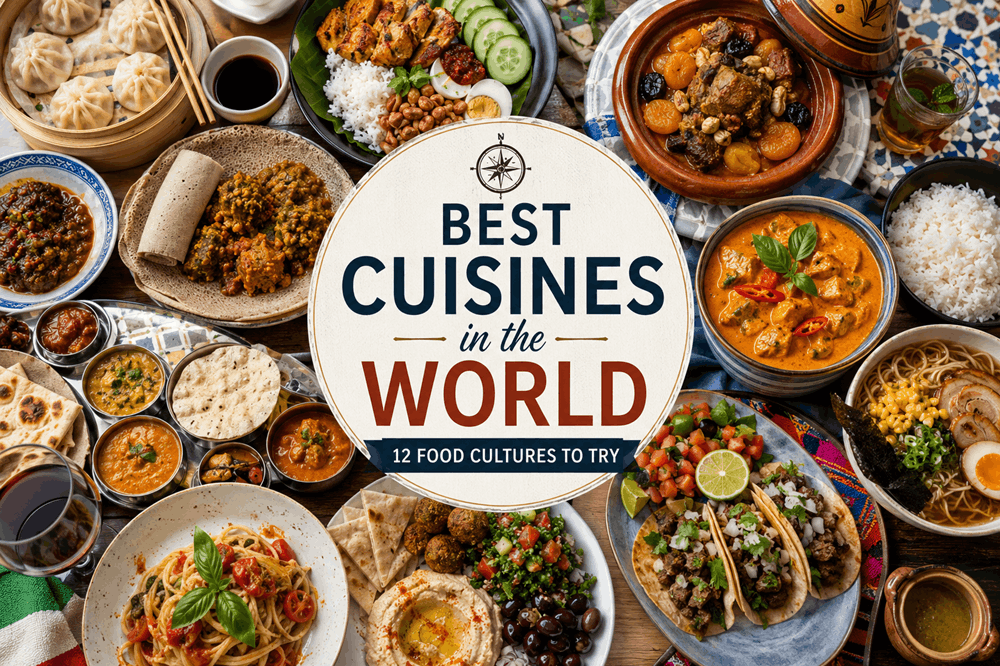
This guide introduces 12 outstanding cuisines worth traveling for. They appear alphabetically rather than in order of quality.
We use familiar national labels to make the guide easy to navigate, while recognizing that ingredients, dishes, and cooking traditions frequently cross modern borders and belong to regional, Indigenous, religious, and diaspora communities.
How These Cuisines Were Selected
The selection considers:
- Regional variation
- Distinctive ingredients and techniques
- Everyday and celebratory foods
- Street food and accessible local meals
- Links to agriculture, fishing, migration, religion, and ritual
- Vegetarian and meat-based traditions
- Influence beyond the place of origin
- The quality of the food-travel experience
No list of 12 cuisines can represent the world’s full culinary diversity.
Greek, Korean, Vietnamese, Lebanese, Georgian, Nigerian, Senegalese, Malaysian, Spanish, Portuguese, Brazilian, Sri Lankan, and many other food cultures could support equally compelling journeys.
Cuisine Is More Than a List of Dishes
A cuisine also includes:
- Farming and fishing practices
- Markets and seasonal ingredients
- Food-preservation methods
- Cooking tools
- Skills passed through families
- Religious and festive meals
- Hospitality customs
- The way people gather and share food
UNESCO describes traditional Mexican cuisine as a complete cultural system involving farming, ritual, culinary skills, community participation, and foundational foods such as maize, beans, and chile. (ICH UNESCO)
Japanese washoku similarly encompasses knowledge, preparation, social customs, and respect for nature rather than one group of restaurant dishes. (ICH UNESCO)
UNESCO’s recognition of the French gastronomic meal focuses on celebration, togetherness, presentation, taste, and the structure of a shared occasion. (ICH UNESCO)
These examples show why meaningful culinary travel requires more than checking famous foods off a list.
Twelve Cuisines at a Glance
| Cuisine | Strongest appeal | Accessible starting points |
|---|---|---|
| Chinese | Regional variety and specialized techniques | Dumplings, noodles, tofu, roast meats |
| Ethiopian | Communal dining, injera, stews, and coffee culture | Injera with a mixed platter |
| French | Regional products, markets, bakeries, and meal traditions | Bread, cheese, pastries, regional dishes |
| Indian | Vast regional range and sophisticated spice systems | A regional thali or rice meal |
| Indonesian | Island diversity, spice pastes, sambal, and rice plates | Nasi campur, satay, soto |
| Italian | Ingredient-led cooking and strong local identities | Regional pasta, bread, rice, or pizza |
| Japanese | Seasonality, precision, fermentation, and specialization | Teishoku, noodles, sushi |
| Mexican | Maize traditions, chiles, sauces, and street food | Tacos, tamales, mole, pozole |
| Moroccan | Slow cooking, spices, bread, tea, and hospitality | Tagine, couscous, harira |
| Peruvian | Coastal, Andean, Amazonian, and migrant influences | Ceviche and a regional cooked dish |
| Thai | Fresh herbs and balanced sour, salty, sweet, and spicy flavors | Curry, noodles, soup, salad |
| Turkish | Breakfast, bread, vegetables, grilling, and shared plates | Breakfast, meze, regional kebabs |
1. Chinese Cuisine
Why It Stands Out
“Chinese cuisine” covers an enormous range of climates, ingredients, techniques, and regional preferences.
Meals may be built around wheat or rice, freshwater fish or coastal seafood, delicate broths or powerful chile pastes. Steaming, braising, roasting, stir-frying, smoking, fermenting, and cold preparation all play important roles.
China’s official tourism platform presents its cuisine as stretching from street-side snacks to refined banquets and as part of the philosophy and rhythm of everyday life. (Travel China)
Regional Variation
Sichuan cooking is known for chiles, fermented bean pastes, aromatics, and the numbing effect of Sichuan pepper. Guangdong has strong traditions of seafood, soups, steaming, roast meats, and dim sum.
Northern wheat-growing areas are rich in noodles, dumplings, buns, and pancakes. Eastern regions include freshwater ingredients, careful braises, and dishes balancing savory and gentle sweetness.
Five Foods to Explore
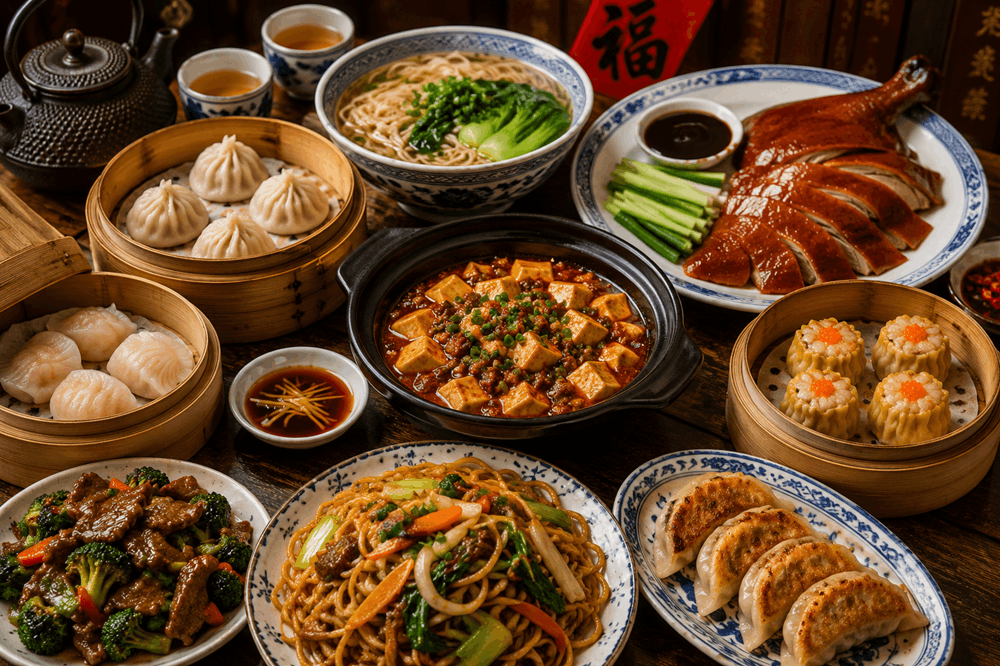
- Jiaozi dumplings
- Mapo tofu
- Beijing roast duck
- Dim sum
- A locally specific noodle dish
Where to Experience It
Visit Chengdu for Sichuan food, Guangzhou for Cantonese cooking, Beijing for northern dishes, and Xi’an for wheat-based specialties.
Shanghai, Yunnan, Fujian, Hangzhou, and the far northwest offer entirely different culinary perspectives.
Useful Travel Tip
Do not expect one restaurant—or one overseas Chinese community—to represent every part of China.
Diaspora cuisines often document migration, available ingredients, local customers, and changing family traditions rather than serving as failed copies of food in China.
2. Ethiopian Cuisine
Why It Stands Out
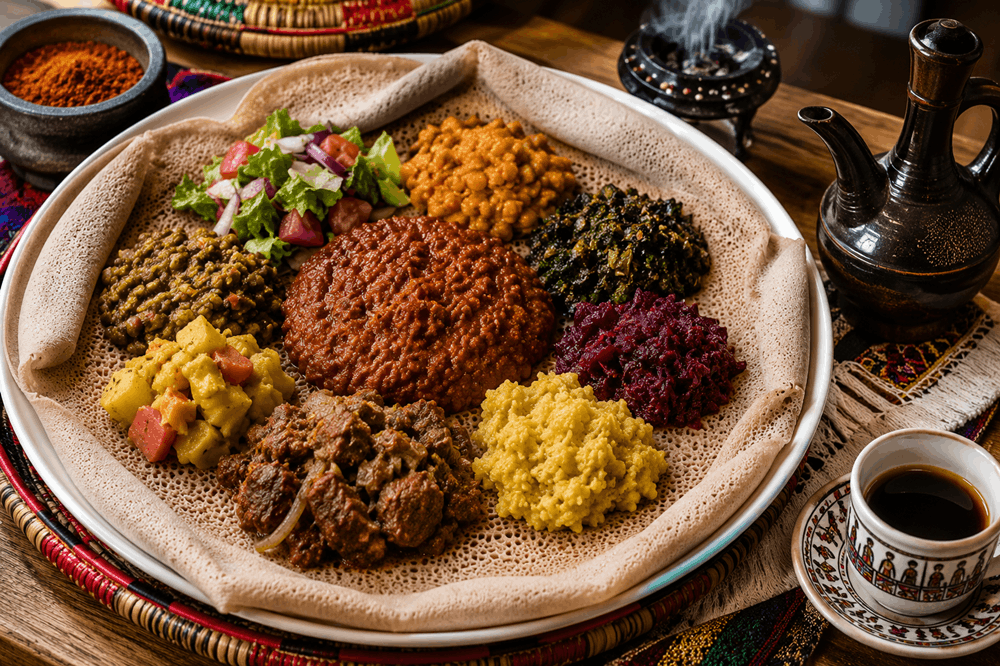
Ethiopian meals are often communal, with stews, legumes, vegetables, and meats arranged on a large sheet of injera.
The fermented flatbread acts as food, plate, and utensil. Diners tear pieces from the edge and use them to gather the dishes in the center.
Visit Ethiopia highlights injera, spicy stews, coffee traditions, and the country’s cultural diversity as defining parts of the visitor experience. (Visit Ethiopia)
Regional Variation
Food differs among Ethiopia’s many ethnic, linguistic, and religious communities.
Fasting traditions observed by many Ethiopian Orthodox Christians have encouraged a broad range of lentil, chickpea, vegetable, and leafy-green dishes. Regional spice levels, grains, meats, and preparation styles also vary.
Five Foods to Explore
- Injera with a mixed platter
- Doro wat
- Shiro
- Misir wat
- Tibs
Vegetarian travelers can look for a beyaynetu, an assortment of plant-based fasting dishes served over injera.
Where to Experience It
Addis Ababa offers the broadest restaurant selection. Lalibela, Gondar, Harar, and regional towns can introduce travelers to different food customs and hospitality traditions.
Useful Cultural Tip
Wash your hands before a shared meal, eat with the right hand when following traditional customs, and take food primarily from the section directly in front of you.
Coffee also has a major social role. Ethiopia has been preparing a nomination file for possible future UNESCO recognition of its traditional coffee ceremony, but the ceremony is not currently an inscribed element on UNESCO’s Representative List. (UNESCO)
3. French Cuisine
Why It Stands Out
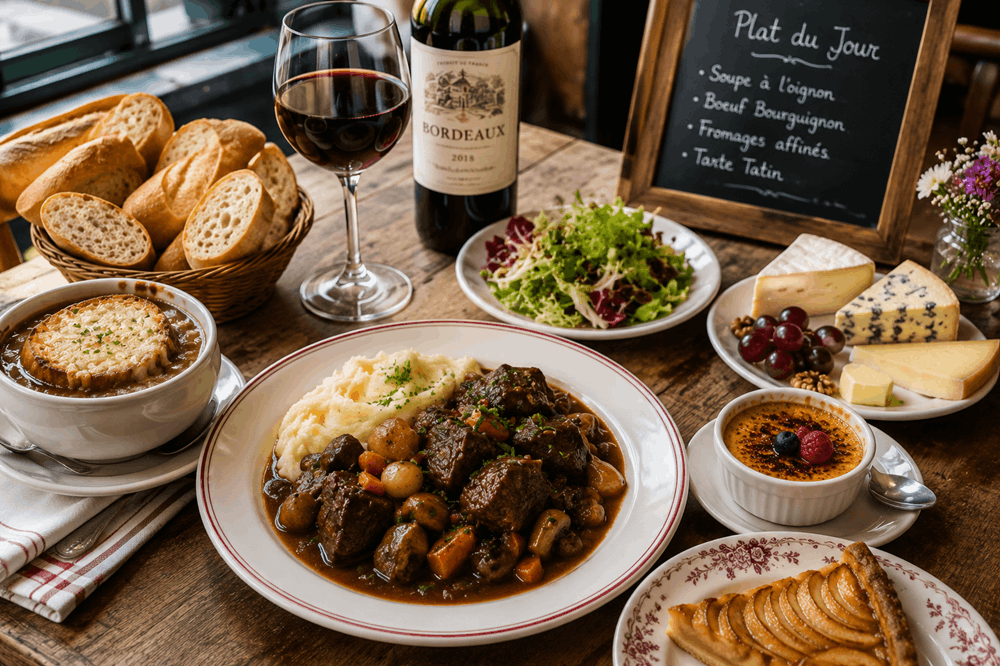
French cuisine is often reduced to fine dining, elaborate sauces, and luxury ingredients. Everyday food is much broader.
Bakeries, markets, cheese shops, neighborhood bistros, seafood traditions, vegetable dishes, preserved meats, and regional desserts are all important parts of the experience.
UNESCO recognizes the French gastronomic meal as a social practice involving celebration, shared pleasure, the selection of food and drink, table presentation, and the sequence of a meal. (ICH UNESCO)
Regional Variation
Provence draws on olive oil, herbs, vegetables, and Mediterranean seafood. Brittany is associated with buckwheat galettes, butter, shellfish, crêpes, and cider.
Southwestern France has strong duck, bean, and preserved-meat traditions. Alsace reflects historical links with Central Europe, while Alpine regions emphasize cheese, potatoes, and hearty mountain food.
Five Foods to Explore
- Fresh bread with regional cheese
- Bouillabaisse
- A Breton buckwheat galette
- Cassoulet
- A seasonal bakery pastry
Where to Experience It
Paris offers extraordinary range, but Lyon, Marseille, Strasbourg, Toulouse, Brittany, Normandy, Burgundy, and the Alpine regions provide more concentrated access to particular traditions.
Useful Travel Tip
Combine one special restaurant with bakeries, markets, cheese shops, and casual regional meals.
A picnic assembled from bread, cheese, fruit, and a local dessert can be as revealing as formal dining.
4. Indian Cuisine
Why It Stands Out
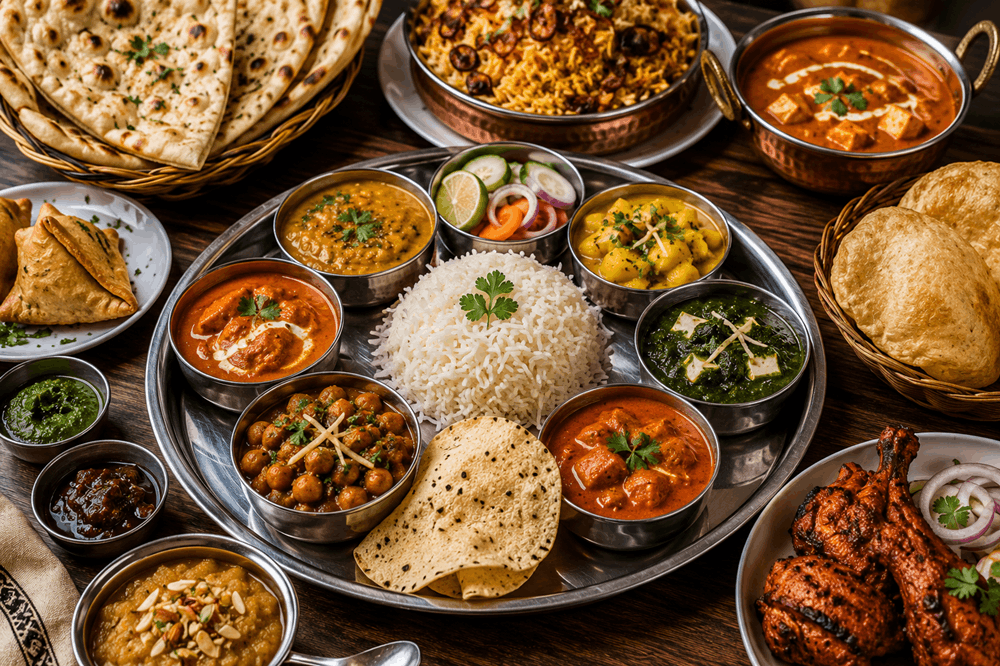
Indian cuisine encompasses numerous regional, religious, climatic, agricultural, and linguistic traditions.
Rice, wheat, millet, lentils, dairy, coconut, mustard oil, seafood, meats, fermented batters, pickles, and spice blends are used very differently across the country.
India’s official tourism portal illustrates this regional depth through food guides covering places as different as Tamil Nadu, Mumbai, Arunachal Pradesh, Odisha, Madhya Pradesh, and Puducherry. (Incredible India)
Regional Variation
Northern regions include wheat breads, legumes, dairy, kebabs, and slow-cooked meat dishes.
Southern traditions make extensive use of rice, fermented batters, coconut, tamarind, seafood, curry leaves, and regionally specific spice combinations. Western India ranges from Gujarati vegetarian food to Goan seafood and pork dishes.
Eastern and northeastern regions add freshwater fish, mustard, rice, millet, fermented ingredients, sweets, and culinary traditions often overlooked in simplified summaries of Indian food.
Five Foods to Explore
- Dosa
- A regional thali
- Biryani
- Dal
- Chaat
Where to Experience It
Delhi, Lucknow, Hyderabad, Chennai, Kerala, Mumbai, Kolkata, Goa, Gujarat, Rajasthan, and the Northeast all offer distinctive culinary journeys.
Useful Travel Tip
Do not treat “curry” as a complete description of Indian food.
Vegetarian travelers have extensive options, but strict vegans should still ask about ghee, dairy, eggs, and shared cooking surfaces.
5. Indonesian Cuisine
Why It Stands Out
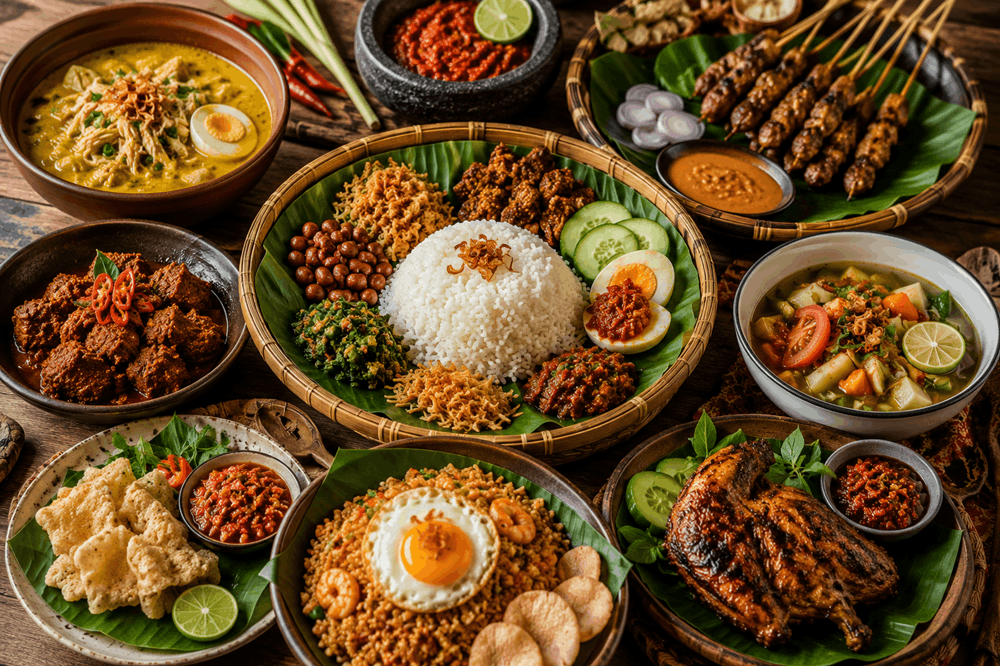
Indonesia’s huge archipelago contains hundreds of ethnic communities and a remarkable range of local food traditions.
Rice, noodles, coconut, peanuts, fermented soy, seafood, spice pastes, fresh herbs, and sambal appear in countless combinations. Techniques include grilling, frying, steaming in leaves, slow braising, and pounding ingredients into aromatic pastes.
Indonesia’s official tourism site emphasizes that dishes and flavors vary substantially by region and reflect the archipelago’s cultural diversity. (Visit Indonesia)
Regional Variation
West Sumatran cooking is known for richly spiced dishes, coconut, and the restaurant tradition commonly called Padang food.
Java includes sweet-savory dishes, soups, snacks, and rice meals. Bali has ceremonial foods, spice mixtures, pork dishes, and satay lilit. Sulawesi, Maluku, Papua, and other regions contribute seafood, sago, grilled foods, and highly localized ingredients.
Five Foods to Explore
- Rendang
- Gado-gado
- Soto
- Satay
- Nasi campur
Where to Experience It
Jakarta brings many regional communities together. Padang is central to West Sumatran food, while Yogyakarta and Solo provide strong introductions to Javanese traditions.
Bali is accessible for first-time visitors, but its food should not be treated as representative of the whole country.
Useful Travel Tip
Sambal can be served separately, mixed into a dish, or used as part of the cooking process.
Ask about the heat level before ordering rather than assuming every Indonesian dish is intensely spicy.
6. Italian Cuisine
Why It Stands Out
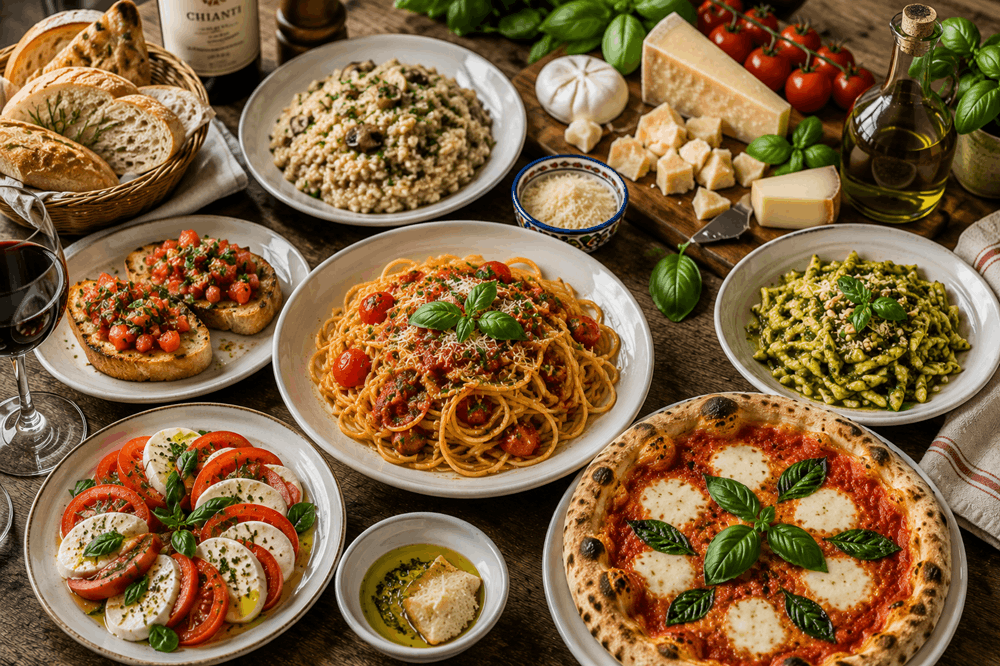
Italian cooking often relies on a small number of carefully selected ingredients, but simplicity does not mean uniformity.
Local landscapes, agriculture, climate, trade, and history have produced strong regional identities. Pasta shapes, cheeses, breads, grains, seafood, cooking fats, and meat traditions can change within a few hours of travel.
Italy’s official tourism portal describes the country as having “thousands of cuisines,” shaped by regional landscapes and cultural history. (Italia.it)
UNESCO Recognition
In 2025, UNESCO inscribed “Italian cooking, between sustainability and biocultural diversity” on its Representative List of the Intangible Cultural Heritage of Humanity.
The recognition focuses on communal culinary knowledge, artisanal techniques, respect for ingredients, anti-waste practices, and the transmission of skills and memories—not on one fixed national menu. (ICH UNESCO)
Regional Variation
Northern areas feature more rice, polenta, butter, mountain cheese, and freshwater ingredients. Central Italy includes strong pasta, bean, bread, roast, and cured-meat traditions.
Southern cooking makes extensive use of durum-wheat pasta, tomatoes, vegetables, olive oil, chiles, citrus, and seafood. Sicily and Sardinia have distinct island traditions shaped by their own histories.
Five Foods to Explore
- A regional pasta
- Risotto
- Neapolitan pizza
- Polenta with a local accompaniment
- A regional dessert
Where to Experience It
Emilia-Romagna, Naples, Sicily, Piedmont, Liguria, Tuscany, Rome, Puglia, and the Alpine regions each require a different eating strategy.
Italia.it provides a useful regional food-and-wine guide. (Italia.it)
Useful Travel Tip
Ask what belongs to the region you are visiting instead of ordering the same famous pasta everywhere.
7. Japanese Cuisine
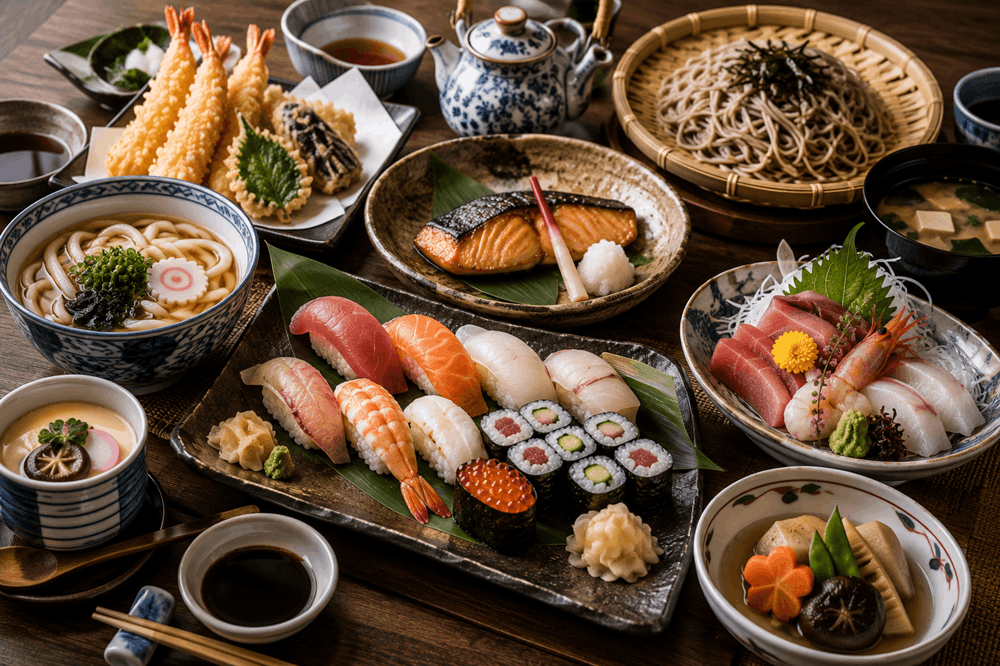
Why It Stands Out
Japanese food culture rewards attention to season, texture, temperature, presentation, specialized craft, and the natural character of ingredients.
It includes home cooking, noodle shops, grilled skewers, seafood, Buddhist vegetarian food, fermentation, sweets, formal multicourse dining, and Japanese adaptations of Western dishes.
The Japan National Tourism Organization presents Japanese cuisine through nine regions and all 47 prefectures, highlighting the importance of highly local specialties. (Japan Travel)
Regional Variation
Hokkaido is known for seafood, dairy, potatoes, and cold-weather dishes. Osaka has strong casual-food traditions, including okonomiyaki and takoyaki.
Kyoto is associated with seasonal cooking, tea, tofu, vegetables, and kaiseki. Okinawan cuisine reflects the islands’ subtropical environment and Ryukyuan heritage, while Kyushu has important pork, noodle, hot-pot, and shochu traditions.
Five Foods to Explore
- Sushi
- Regional ramen
- Soba or udon
- Okonomiyaki
- Teishoku
Where to Experience It
Tokyo offers exceptional variety. Osaka, Kyoto, Hokkaido, Fukuoka, Okinawa, and smaller regional cities provide more direct access to localized specialties.
Useful Travel Tip
Follow the atmosphere of the restaurant rather than applying one rule everywhere.
Arrive on time for reservations, learn basic chopstick etiquette, and contact small restaurants in advance when serious allergies are involved.
8. Mexican Cuisine
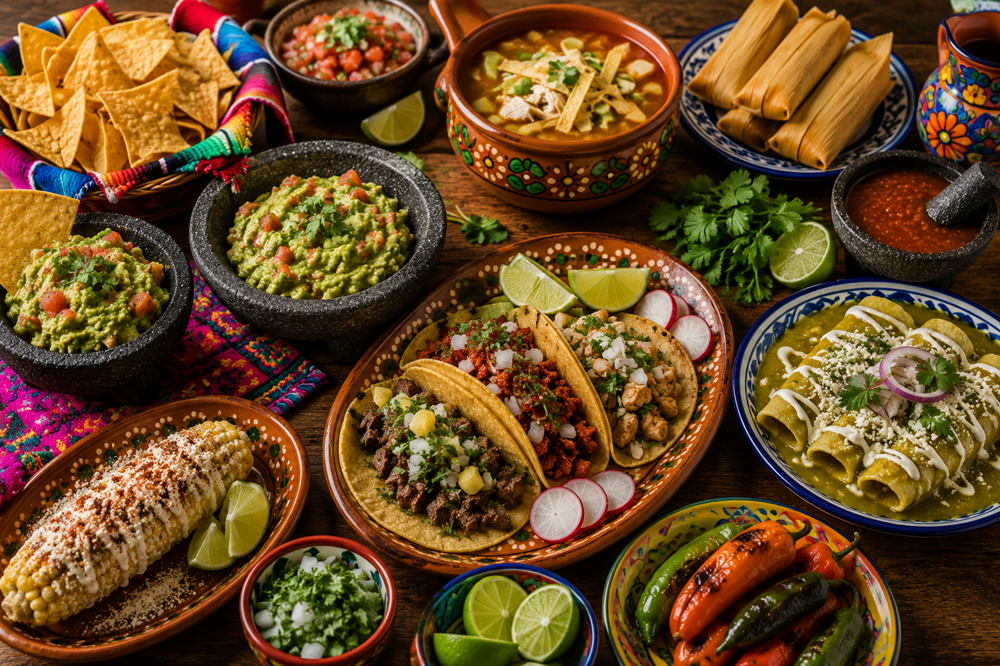
Why It Stands Out
Mexican cuisine combines Indigenous agricultural knowledge, maize processing, beans, chiles, herbs, seeds, cacao, market cooking, street food, and influences introduced through trade and colonization.
UNESCO describes traditional Mexican cuisine as a cultural model encompassing the whole food chain—from planting and harvesting to nixtamalization, grinding, cooking, ritual, and shared meals. (ICH UNESCO)
Regional Variation
Oaxaca is known for maize dishes, moles, herbs, chocolate, and strong market traditions. Yucatán cooking includes achiote, citrus, pit cooking, and Maya influences.
Puebla has its own moles and celebratory dishes. Northern Mexico features flour tortillas, grilled meats, wheat traditions, and cheeses, while coastal states contribute seafood and tropical ingredients.
Five Foods to Explore
- A locally specific taco
- Tamales
- Mole
- Pozole
- Cochinita pibil
Where to Experience It
Mexico City brings regional foods together in markets, street stalls, neighborhood restaurants, bakeries, and contemporary dining.
Oaxaca, Puebla, Yucatán, Veracruz, Guadalajara, Baja California, and northern Mexico provide very different culinary experiences. Mexico’s official tourism site presents food alongside regional, Indigenous, and cultural travel. (Visit Mexico)
Useful Travel Tip
Chile contributes aroma, smoke, fruitiness, color, and depth as well as heat.
Tex-Mex and other diaspora cuisines are distinct food traditions with their own migration histories. They should not be confused with every form of cooking in Mexico, but they are not automatically illegitimate.
9. Moroccan Cuisine
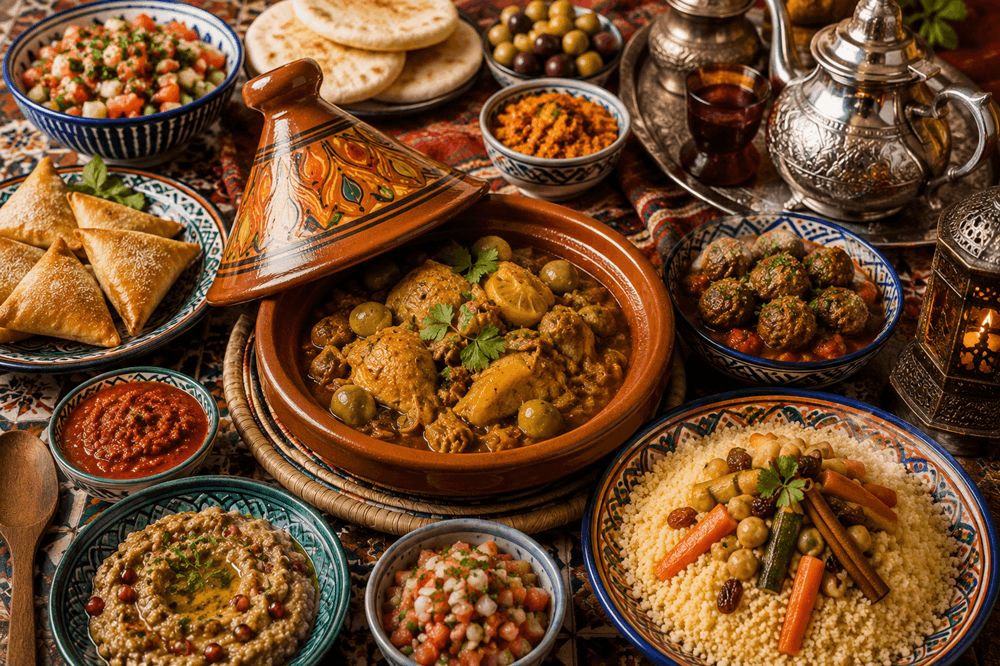
Why It Stands Out
Moroccan cooking reflects Amazigh, Arab-Andalusian, Jewish, Mediterranean, Saharan, and regional influences.
Bread, grains, preserved ingredients, vegetables, dried fruits, nuts, meats, spices, pastries, and mint tea all play major roles. Sweet and savory flavors frequently appear together, while hospitality is central to the experience.
Morocco’s official tourism organization highlights couscous, tagine, pastilla, rfissa, pastries, tea, and the country’s multicultural culinary traditions. (Visit Morocco)
Regional Variation
Fez is associated with elaborate urban cooking and refined sweet-savory combinations. Marrakech offers markets, street food, slow-cooked dishes, and influences from southern trade routes.
Coastal cities feature seafood, while mountain, desert, and Amazigh communities use grains, breads, herbs, dairy, and preserved foods in locally specific ways.
Five Foods to Explore
- Tagine
- Couscous
- Pastilla
- Harira
- Rfissa
Where to Experience It
Fez and Marrakech are major culinary destinations, but Essaouira, Tangier, Casablanca, the Atlas region, and smaller towns provide different foods and dining styles.
Useful Cultural Tip
Shared meals often unfold slowly. Follow your host’s lead, use the section of a central dish nearest to you, and understand that offering tea may be an act of hospitality rather than a simple beverage order.
10. Peruvian Cuisine
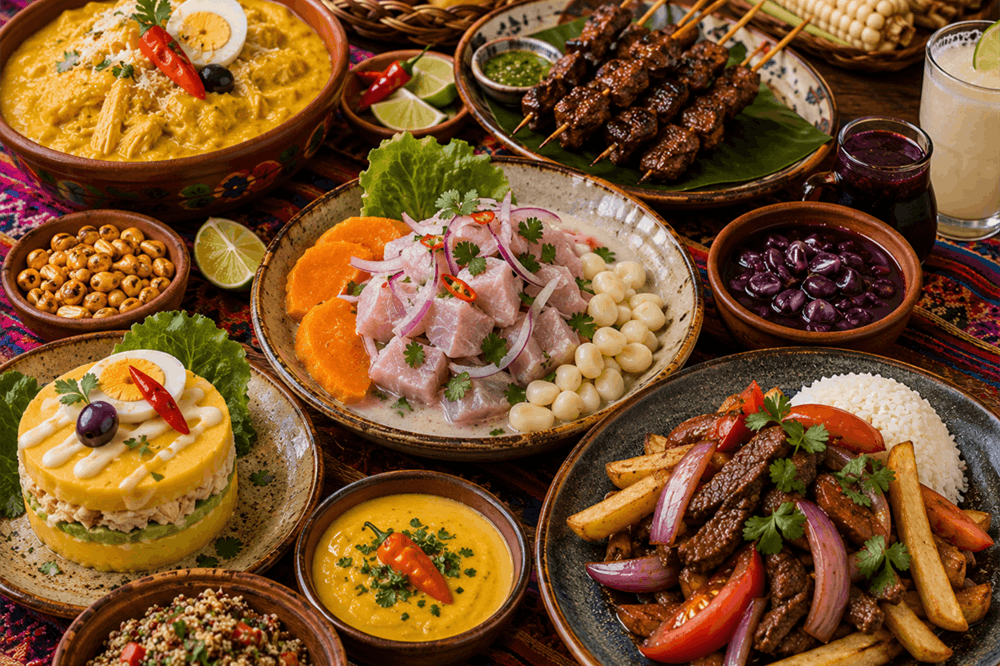
Why It Stands Out
Peruvian food reflects the Pacific coast, Andes, Amazon, Indigenous civilizations, European colonization, African heritage, and later Chinese and Japanese migration.
Potatoes, maize, seafood, chiles, grains, herbs, fruits, beans, and high-altitude crops appear differently across the country.
Peru’s official tourism organization describes the cuisine as the result of environmental variety, centuries of cultural exchange, and regional ingredients. (Peru Travel)
Regional Variation
The coast is associated with seafood, ceviche, rice dishes, Afro-Peruvian food, chifa, and Nikkei cooking.
The Andes contribute potatoes, maize, quinoa, peppers, roasted meats, and high-altitude ingredients. Amazonian traditions use freshwater fish, yuca, plantains, fruits, and cooking in leaves.
Five Foods to Explore
- Ceviche
- Lomo saltado
- Causa
- Anticuchos
- Ají de gallina
UNESCO’s English-language entry on Peruvian ceviche connects its preparation and consumption to fishing, farming, traditional cooks, family knowledge, daily meals, festivities, and social gatherings. (ICH UNESCO)
Where to Experience It
Lima offers coastal classics, markets, chifas, Nikkei food, neighborhood restaurants, and contemporary dining.
Cusco and the Sacred Valley introduce Andean ingredients. Arequipa is known for picanterías, while the northern coast and Amazon offer very different culinary environments.
Useful Travel Tip
Ceviche contains raw fish. Choose a reputable establishment with careful seafood handling.
Travelers advised to avoid raw seafood should select one of Peru’s many cooked regional dishes instead.
11. Thai Cuisine
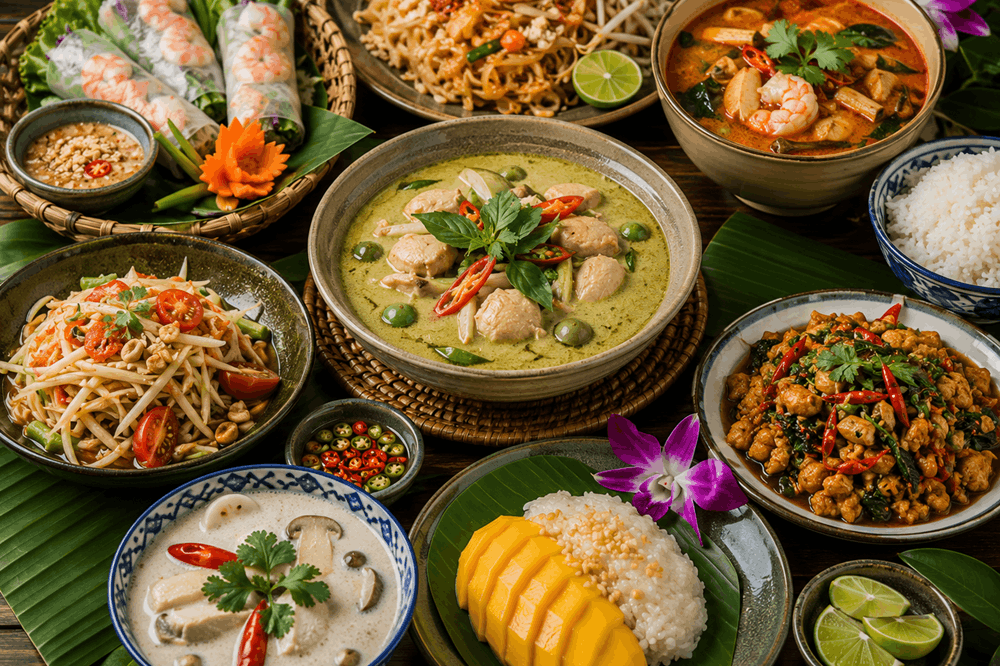
Why It Stands Out
Thai cooking is often described through the balance of sour, salty, sweet, bitter, aromatic, and spicy elements.
Fresh herbs, chile pastes, fermented sauces, coconut, lime, tamarind, rice, noodles, vegetables, seafood, and grilled meats appear differently across the country.
The Tourism Authority of Thailand’s food-travel projects emphasize local dishes and community-linked specialties across multiple regions rather than presenting Thai food as one uniform menu. (Tourism Authority of Thailand)
Regional Variation
Central Thai cuisine includes curries, stir-fries, soups, and urban or royal traditions.
Northern food features herbal sausages, sticky rice, chile dips, and Lanna influences. Northeastern Isan cooking is known for grilled foods, sticky rice, fermented flavors, herbs, and salads.
Southern Thai food frequently includes seafood, turmeric, coconut, strong spice, and Chinese and Muslim influences.
Five Foods to Explore
- Tom yum
- Som tam
- Khao soi
- Pad kra pao
- Mango sticky rice
Where to Experience It
Bangkok offers the broadest range. Chiang Mai is an accessible introduction to northern food, while Isan provinces provide regional salads, grilled meats, and sticky rice.
Phuket, Songkhla, and other southern destinations reveal different curries, seafood, and multicultural traditions.
Useful Travel Tip
“Not spicy” has no universal definition.
Ask whether chile is in the paste, broth, garnish, or dipping sauce, especially when you have a low tolerance.
12. Turkish Cuisine
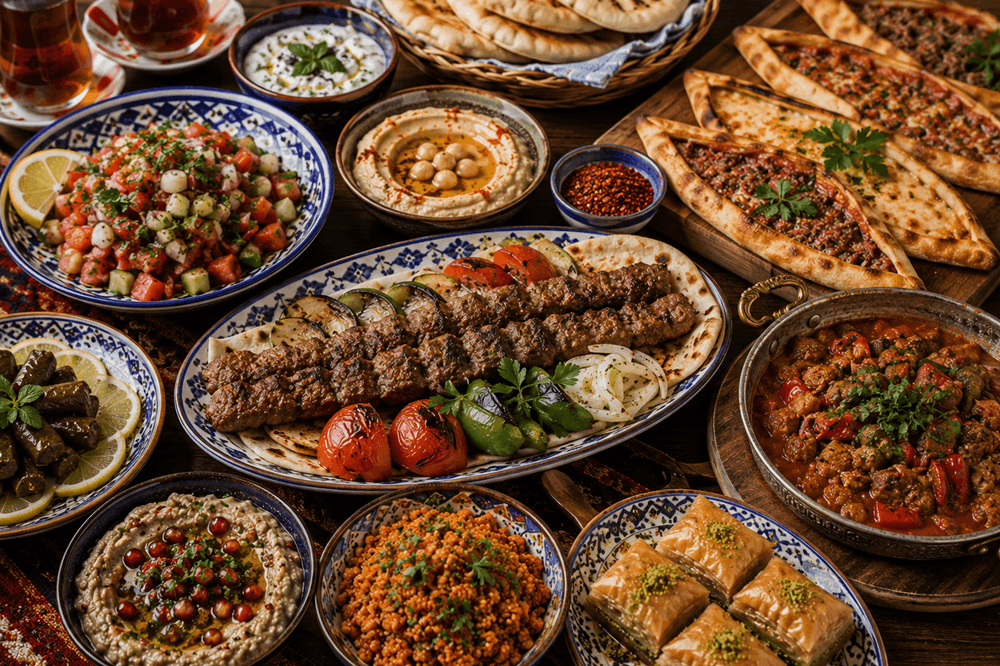
Why It Stands Out
Turkish cuisine combines breads, grains, vegetables, olive oil, yogurt, grilled meats, stuffed dishes, pastries, soups, sweets, and an unusually rich breakfast culture.
Its traditions reflect Anatolian geography, Ottoman history, Central Asian connections, Mediterranean and Aegean ingredients, and exchanges with the Balkans, Caucasus, and Middle East.
GoTürkiye emphasizes local produce, inherited recipes, traditional techniques, regional food cultures, and efforts to reduce waste. (Go Türkiye)
Regional Variation
The Aegean coast is known for olive oil, herbs, vegetables, and seafood.
The Black Sea region uses corn, greens, anchovies, and local dairy products. Southeastern cities such as Gaziantep and Şanlıurfa are renowned for kebabs, breads, pistachios, spices, and sweets.
Central and eastern Anatolia contribute dumplings, grains, stews, pastries, yogurt, meat, and preservation traditions shaped partly by mountain environments. (Go Türkiye)
Five Foods to Explore
- A full Turkish breakfast
- Meze
- Mantı
- A regional kebab
- Baklava or another local sweet
Where to Experience It
Istanbul brings together traditions from across Türkiye, but it should not be the only destination.
Gaziantep, İzmir and the Aegean coast, the Black Sea region, Cappadocia, Ankara, and eastern Türkiye offer highly distinct culinary experiences.
Useful Cultural Tip
Tea may be offered repeatedly as an expression of welcome. Shared breakfasts and meze meals are intended to unfold gradually rather than be rushed.
Avoid insisting that every food shared across neighboring countries belongs exclusively to one modern nation.
How to Find Meaningful Meals While Traveling
Eat According to the Region
Instead of ordering the same national icon in every city, ask:
- What is made especially well here?
- Which ingredients are in season?
- What do local residents eat for breakfast?
- Is a dish connected to a festival or community?
- Which preparation is difficult to find elsewhere?
Mix Different Kinds of Food Experiences
A strong culinary trip may include:
- A market breakfast
- A bakery, tea shop, or café
- A street-food snack
- A family-run restaurant
- A farm, fishing, or home-cooking experience
- One carefully selected formal meal
Expensive dining is not automatically more culturally revealing than everyday food.
Use Food Tours Thoughtfully
A knowledgeable local guide can explain ingredients, history, etiquette, and places visitors might otherwise overlook.
Before booking, check:
- Group size
- Dietary support
- Food-safety practices
- Whether vendors benefit fairly
- The guide’s relationship with the community
- How much explanation the tour provides
Learn Essential Food Vocabulary
Before traveling, learn how to communicate:
- Allergies
- Vegetarian or vegan requirements
- Religious restrictions
- Foods you cannot eat
- Preferred chile level
- Whether a dish contains meat stock, fish sauce, dairy, nuts, or eggs
A professionally translated allergy card can be safer than relying solely on a phone application for serious medical allergies.
Dietary Restrictions and Food Travel
A vegetable-based dish may still contain:
- Meat stock
- Fish sauce
- Shrimp paste
- Lard
- Ghee or butter
- Yogurt
- Egg
- Oyster sauce
- Shared frying oil
Travelers with serious allergies should not rely on appearance or menu categories alone.
Research common regional ingredients, carry prescribed medication, and understand that small kitchens may not be able to prevent cross-contact.
What Does “Authentic” Food Mean?
Authenticity is not one recipe frozen in time.
A dish may vary among families, villages, cities, religious communities, home kitchens, restaurants, social classes, migrant communities, and generations.
Diaspora food is often shaped by ingredient availability, migration history, new customers, and memories carried from home.
A more useful question is:
Who prepares this dish, where is it eaten, how has it changed, and what does it mean in that setting?
That creates a better conversation than declaring one version real and another fake.
Frequently Asked Questions
Is There Really a Best Cuisine in the World?
No objective method can identify one universal winner.
Taste depends on upbringing, personal preferences, dietary needs, travel experiences, and the individual cook or restaurant.
Which Cuisines Have the Most Regional Variety?
China, India, Indonesia, Italy, Japan, Mexico, Türkiye, and many other geographically or culturally diverse countries contain extensive regional traditions.
Regional depth is not limited to large nations. Smaller places can also contain distinct coastal, mountain, rural, urban, Indigenous, and migrant food cultures.
Which Cuisines Are Good for Vegetarian Travelers?
Indian and Ethiopian cuisines are especially well known for substantial plant-based traditions.
Chinese, Indonesian, Italian, Japanese, Mexican, Moroccan, Thai, Turkish, and other cuisines also offer many vegetarian dishes, but hidden broths, sauces, dairy products, and cooking fats should be checked.
What Are Good Destinations for Street Food?
China, India, Indonesia, Mexico, Thailand, Türkiye, and many other countries have strong street-food traditions.
Safety depends on storage, water, cooking temperature, hygiene, and local conditions—not simply whether a stall is popular.
Which Culinary Traditions Are Recognized by UNESCO?
UNESCO has inscribed food-related practices connected with traditional Mexican cuisine, Japanese washoku, the French gastronomic meal, the Mediterranean diet, Peruvian ceviche, couscous, Neapolitan pizza-making, and Italian cooking, among others. (ICH UNESCO)
Recognition applies to cultural practices, knowledge, communities, and methods of transmission. It does not declare that one cuisine tastes better than another.
Is Diaspora Food Authentic?
Diaspora food can be an authentic expression of migrant history and community life even when it differs from food currently prepared in the place of origin.
It is best understood within its own social and historical context.
Should Global Food Rankings Be Trusted?
Treat them as entertainment or as snapshots of a particular voting method.
Results can be affected by audience demographics, internet visibility, which cuisines were included, national pride, and the wording of the survey.
No ranking can measure every household, region, market, restaurant, or street vendor.
Final Thoughts
The best cuisine in the world is rarely discovered through a numbered ranking.
It may reveal itself in a morning market, a neighborhood noodle shop, bread still warm from the oven, a shared platter, a regional ingredient, or a family dish explained by the person who prepared it.
Use these 12 cuisines as starting points rather than final answers.
Travel slowly enough to notice regional differences. Try everyday food as well as celebrated dishes. Ask what is seasonal and learn how meals are shared.
Your favorite food culture will probably not be chosen by a global poll. It will be chosen by a meal you continue thinking about long after the journey ends.