
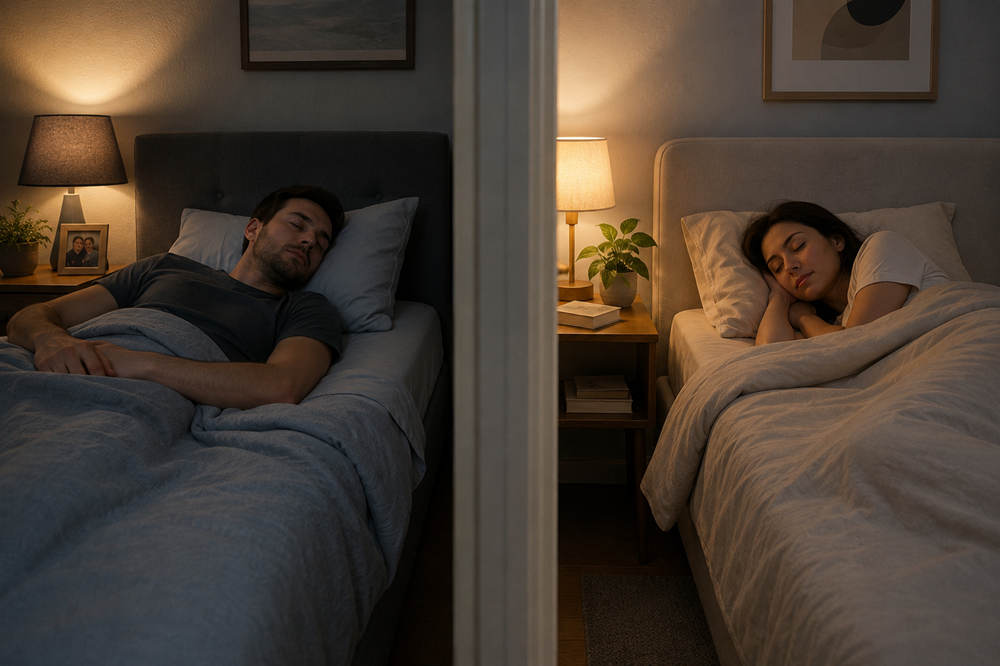
Do Couples Who Sleep Apart Grow Apart?
Sharing a bed is often seen as a sign of a close relationship, so moving into separate beds or bedrooms can feel like a troubling change. However, couples who sleep apart do not automatically grow apart.
The reason behind the arrangement matters more than the arrangement itself. Separate sleeping may help when snoring, movement, different schedules, or incompatible sleep preferences keep one or both partners awake. It becomes more concerning when it reflects rejection, unresolved conflict, or a wider loss of affection.
Do Couples Who Sleep Apart Really Grow Apart?
There is no simple connection between separate bedrooms and an unhappy relationship. Some couples share a bed every night but rarely talk, touch, or spend meaningful time together. Others sleep in different rooms while maintaining a warm and affectionate partnership.
Research has found an association between relationship quality and sleep quality. Relationship stress may make it harder to sleep, while poor sleep can leave partners feeling more irritable and less prepared to handle disagreements calmly. However, this does not prove that sleeping apart itself causes either closeness or distance.
Separate sleeping is most likely to work when it is a mutual decision made to solve a practical problem. It is more likely to hurt when one partner feels pushed away or when the arrangement replaces honest conversations about the relationship.
Why Couples Choose Separate Sleeping Spaces
Many couples begin sleeping apart because sharing a bed is preventing someone from resting properly, not because they want less closeness.
Snoring and Nighttime Movement
Loud snoring, frequent tossing and turning, blanket pulling, sleep talking, or repeatedly getting out of bed can wake a light sleeper throughout the night. Even when the disturbance is unintentional, repeated sleep loss can lead to frustration.
Snoring should not always be treated as a simple inconvenience. Loud snoring accompanied by breathing pauses, choking, gasping, morning headaches, or excessive daytime sleepiness may be a sign of sleep apnea and should be discussed with a healthcare professional.
Different Schedules and Sleep Preferences
One partner may work late, wake before sunrise, or need several alarms. The other may have a traditional schedule and wake easily when someone enters the room.
Couples can also disagree about room temperature, mattress firmness, lighting, background noise, or whether a television should be on. What seems like a minor preference during the day can become exhausting when it interrupts sleep every night.
Insomnia and Other Sleep Difficulties
A person with insomnia may feel pressure to remain still and quiet beside a sleeping partner. Having another room available can allow them to read, relax, or move around without worrying about waking someone else.
Separate sleeping does not treat persistent insomnia, but it may reduce tension between partners while the underlying sleep problem is being addressed.
Temporary Life Changes
Pregnancy, illness, injury, menopause symptoms, caring for a baby, or recovering from surgery can temporarily change a couple’s routine. Sleeping apart during these periods may simply be the most comfortable and practical option.
Not every separate sleeping arrangement needs to become permanent. Some couples return to sharing a bed once the temporary disruption has passed.
How Sleeping Apart May Help a Relationship
Separate bedrooms are sometimes presented as a sign of failure, but they may help certain couples when sharing a bed is causing exhaustion or repeated nighttime conflict.
Better Rest May Improve Daytime Interactions
Tired people often have less patience and emotional energy. A small disagreement about chores, plans, or money can feel more intense when both partners have slept poorly.
When sleeping separately allows both people to rest, they may feel calmer and more present during the day. The possible benefit comes from improved sleep rather than physical separation itself.
It Can Remove a Source of Resentment
Being awakened by snoring, movement, alarms, or a partner arriving home late can become a nightly source of irritation. The disturbed partner may begin blaming the other person for something they cannot fully control.
Separate sleeping spaces can remove that immediate conflict. Instead of beginning the morning frustrated and exhausted, both partners may have more energy for each other.
Closeness Can Become More Intentional
Sharing a mattress does not guarantee meaningful connection. Couples can lie beside each other while scrolling on separate phones and barely speaking.
Partners who sleep apart may need to become more deliberate about talking, cuddling, and spending private time together. That effort can help preserve intimacy when both people genuinely participate in it.
Signs That Sleeping Apart Is Creating Distance
The arrangement deserves attention when it is connected to loneliness, avoidance, or an unequal decision. These signs do not automatically mean the relationship is failing, but they indicate that a conversation is needed.
One Partner Did Not Have a Choice
Separate sleeping is unlikely to feel healthy when one person announces the decision without considering the other partner’s feelings. Even when the goal is better sleep, the excluded partner may experience the change as rejection.
Both people should understand why the change is happening and have a voice in how it will work.
It Is Used to Punish or Avoid
Occasionally sleeping elsewhere after a difficult night is not necessarily a serious problem. A larger concern arises when one partner repeatedly uses another room to punish the other, end conversations, or avoid repairing conflict.
Physical distance can provide time to calm down, but it should not become a permanent substitute for resolving disagreements.
Affection and Private Time Have Disappeared
Couples do not need to sleep in the same bed to hug, kiss, cuddle, or have sex. However, separate rooms may contribute to distance when the couple stops creating opportunities for physical and emotional intimacy.
The important question is not simply whether the partners sleep together. It is whether they still feel wanted, valued, and connected.
One Partner Feels Lonely
An arrangement can improve one person’s sleep while leaving the other feeling abandoned. A partner may initially agree because they want to be supportive but later realize that they miss the comfort of ending the day together.
Those feelings should be taken seriously. The arrangement may need to change, or the couple may need new habits that restore a sense of closeness.
The Couple Is Living Separate Lives
Separate bedrooms are more concerning when they are part of a broader pattern. If the couple also eats separately, spends little free time together, avoids meaningful conversations, and shows little interest in affection, the sleeping arrangement may be revealing an existing emotional divide.
How to Sleep Apart and Stay Connected
A separate sleeping arrangement works best when both partners continue investing in the relationship instead of assuming closeness will maintain itself.
Agree on the Purpose
Be specific about the problem you are trying to solve. Rather than saying, “I do not want to sleep with you,” explain that repeated snoring, alarms, movement, or schedule differences are making restful sleep difficult.
This helps separate the sleep problem from the relationship itself. Both partners should also be able to explain what they need to feel comfortable with the change.
Keep a Shared Evening Ritual
Bedtime may be one of the few quiet periods couples have together. Preserve part of that routine even if you eventually move to different rooms.
You might talk about the day, cuddle, read, listen to music, or watch part of a show together. Couples who sleep separately can still protect time for affection and intimacy before moving to their own sleeping spaces.
Protect Everyday Affection
Continue the small forms of touch that make a relationship feel warm: greeting each other with a kiss, sitting close, holding hands, hugging, or relaxing together before bed.
Sexual intimacy may also require more intention. This does not mean following a rigid schedule, but the couple should make sure separate rooms do not quietly become separate romantic lives.
Create Connection Outside the Bedroom
A strong relationship cannot depend entirely on sharing a bed. Meals, dates, walks, conversations, shared hobbies, and small acts of care during the day all contribute to closeness.
Choose at least one regular part of the day that belongs to the relationship. It might be morning coffee, an evening walk, cooking dinner together, or ten minutes of uninterrupted conversation.
Check In About the Arrangement
Do not assume that an agreement continues to work simply because neither person has complained. Ask occasionally whether both partners are sleeping better and still feel connected.
Three questions can help couples evaluate the arrangement:
- Are both of us comfortable with it?
- Are we actually sleeping better?
- Are affection, communication, and shared time still present?
When the answer to all three is yes, separate sleeping is unlikely to be the central relationship problem. When one answer is no, the couple knows what needs attention.
Do Not Let the Label Define the Relationship
The phrase “sleep divorce” is commonly used to describe partners sleeping in separate beds or rooms, but it can make a practical arrangement sound like the beginning of a breakup.
Couples do not have to use that term if it feels negative or misleading. Calling it a separate sleep arrangement—or simply describing it as the routine that works for the household—may feel more accurate.
Other Ways to Reduce Sleep Disruptions
Couples who want to continue sharing a bedroom may be able to solve the problem without moving into completely separate rooms.
- Use separate blankets so each person can control warmth and avoid blanket pulling.
- Try a larger bed to create more room between sleepers.
- Use two mattresses or two beds in the same room to reduce movement transfer.
- Add white noise, earplugs, blackout curtains, or individual reading lights.
- Use a vibrating watch alarm instead of a loud phone alarm.
- Prepare clothes and toiletries in advance when one person wakes much earlier.
- Choose separate bedding when partners have different temperature preferences.
Try one change at a time. This makes it easier to identify whether the main disturbance is noise, movement, light, temperature, or an incompatible schedule.
When to Seek Medical or Relationship Support
Separate sleeping can reduce nighttime disruption, but it does not address every underlying problem.
Persistent snoring, unusual breathing during sleep, ongoing insomnia, or significant daytime exhaustion should be discussed with a healthcare professional. Moving the other partner to another room may hide the disturbance without addressing a possible sleep disorder.
Relationship support may be helpful when separate sleeping is connected to unresolved resentment, repeated rejection, avoidance, or a continuing loss of intimacy. Couples counseling can provide a more structured place to discuss the arrangement when conversations at home repeatedly end in blame or withdrawal.
The Bottom Line
Couples who sleep apart do not inevitably grow apart. Separate bedrooms may help when they improve sleep, reduce nightly frustration, and are chosen together.
The arrangement is more concerning when one partner feels rejected, affection has faded, or physical separation is being used to avoid deeper relationship problems.
A relationship is not defined by whether two people share a mattress. It is shaped by how they communicate, show affection, spend time together, and respond to each other’s needs. When both partners feel rested and connected, sleeping in different rooms can simply be the routine that works best for them.