Why Do Couples Start to Look Alike? What Science Actually Says
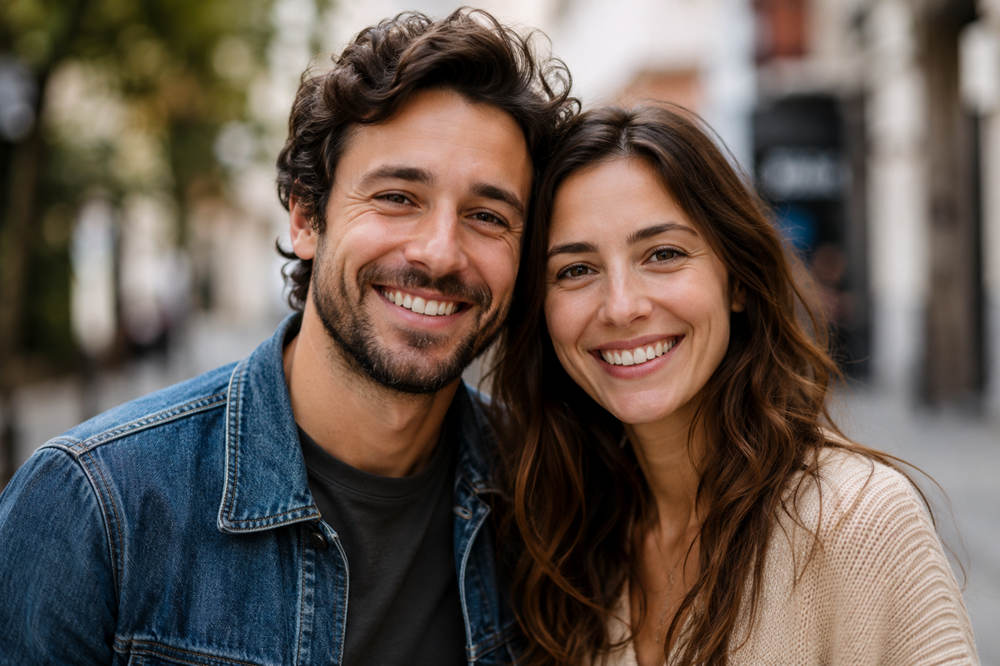
You may have noticed a long-term couple with the same warm smile, similar glasses, or expressions that seem perfectly matched. Sometimes the resemblance is strong enough that strangers assume they are siblings.
Couples can look alike, but that does not necessarily mean their faces have gradually changed to match. Research suggests that many partners already share certain visible qualities when their relationship begins. Over time, coordinated styles, similar expressions, shared routines, and the way couples are photographed can make that resemblance more noticeable.
Do Couples Actually Become More Alike?
Probably not in the way people often imagine. There is little evidence that years of marriage gradually reshape two people’s facial structures until they begin to look the same.
What appears to be physical convergence is usually a combination of two separate effects. First, people may choose partners who already share some of their characteristics. Second, life together can influence changeable parts of appearance, including clothing, grooming, facial expressions, posture, and general presentation.
A couple may therefore appear more alike after many years without developing matching eyes, noses, jawlines, or other underlying facial features.
Why Couples May Look Similar From the Beginning
Relationships do not form between randomly selected people. Attraction matters, but so do age, location, social circles, culture, education, lifestyle, and the opportunities people have to meet one another.
People Often Choose Partners With Similar Traits
The tendency to form relationships with people who share certain characteristics is known as assortative mating. A large 2023 analysis of partner similarity found positive correlations across many traits, although the strength of those relationships varied considerably.
Partners were particularly likely to be similar in areas such as age, education, political views, religious attitudes, and some lifestyle behaviors. Similarity in physical measurements was generally weaker, but the broader pattern shows that people often pair with someone whose background or way of life resembles their own.
This does not mean people consciously search for a partner with the same face. Facial resemblance may be one small part of a much larger pattern of choosing someone who feels familiar, compatible, or socially close.
Couples Are Frequently Close in Age
Age strongly affects how a face is perceived. Skin texture, facial fullness, hair, and other visible qualities change throughout adulthood.
Because many partners are at a similar stage of life, they may share the broad visual signs associated with that age group. Two people of similar ages can therefore appear more alike than two people separated by several decades, even when their individual facial features are quite different.
They Often Meet in the Same Social Environments
Many couples meet through school, work, friends, neighborhoods, cultural communities, dating platforms, or shared interests. Each environment brings together a limited group of people rather than a random sample of the entire population.
Someone who meets a partner through a local running club, for example, may find a person with a similar age, activity level, lifestyle, and way of dressing. People who meet at college may share an educational background and be at a comparable life stage.
These similarities can create a matching overall appearance before the relationship has had time to influence either partner.
Why the Resemblance May Seem Stronger Over Time
Although facial structure does not appear to converge, several visible details can change during a relationship. Together, they can make a couple look increasingly coordinated.
Partners Influence Each Other’s Style
Couples often exchange opinions about clothing, hairstyles, glasses, makeup, facial hair, and accessories. One partner may introduce the other to a favorite store, suggest a different haircut, or encourage a more casual or polished style.
They may also dress for the same activities and occasions. A couple who spends weekends hiking may adopt similar practical clothing, while partners who attend formal events together may develop a coordinated wardrobe.
These choices do not change their faces, but matching colors, frames, hairstyles, or grooming can emphasize features they already share.
They Develop Similar Expressions and Body Language
Partners pay close attention to each other during conversation. Over time, they may begin to mirror smiles, gestures, posture, head movements, and reactions without deliberately copying one another.
A shared expression can create a strong visual resemblance. Two people laughing at the same joke may narrow their eyes, raise their cheeks, or tilt their heads in similar ways. In that moment, their faces can appear much more alike than they would in separate neutral photographs.
This is primarily an effect of expression and presentation. It does not show that repeated smiling or emotional closeness has permanently changed the structure of either face.
Shared Routines Can Shape Overall Appearance
Couples who live together often eat some of the same meals, spend their free time together, and follow overlapping sleep, travel, or exercise schedules. They may also experience the same household environment and periods of stress.
Those shared circumstances could contribute to similarities in weight, fitness, posture, complexion, or general energy. The effects will not be identical because genetics, health, work, and individual habits continue to influence each partner differently.
Shared routines are therefore a possible explanation for changes in overall appearance, not proof that couples’ facial features merge over time.
Couple Photos Highlight Matching Qualities
Most people do not compare couples using clinical photographs taken under controlled conditions. They see wedding pictures, vacation photos, anniversary portraits, and social media posts.
In these images, partners usually stand close together under the same lighting. They may wear coordinated clothing, turn toward the camera at similar angles, and smile at the same moment. Couples also tend to share photographs in which both people look relaxed and comfortable.
These choices naturally draw attention to matching expressions and styles while making differences less noticeable.
People Expect Couples to Resemble Each Other
Knowing that two people are romantically involved can affect how observers interpret their faces. Once a relationship is known, people may search for a shared smile, face shape, apparent age, or expression that confirms the connection.
A 2018 study of facial resemblance tested whether couples still looked alike after external cues were removed from their photographs. Researchers excluded features such as hair, glasses, makeup, ears, necks, and clothing.
Observers still rated real couples as more facially similar than randomly created pairs. The study also found that similar perceived age and perceived personality contributed to resemblance judgments. This suggests that looking alike is partly about how observers interpret faces, not simply whether two people share the same physical measurements.
What Research Says About Facial Convergence
The idea that married couples physically grow alike became widely known after a small study published in 1987. It compared photographs of couples taken near the beginning of marriage with photographs taken 25 years later.
The Original Facial-Convergence Theory
The 1987 study on spousal appearance included 12 married couples. Judges perceived the spouses as more similar in their later photographs, and the researchers proposed that repeated emotional mimicry might help explain the change.
According to that theory, partners regularly respond to events with similar emotions and facial movements. Decades of using facial muscles in comparable ways might eventually leave similar lines or other visible marks.
The explanation was memorable and matched the popular image of an older couple sharing the same gentle smile. However, the sample was extremely small, and the finding was not successfully replicated in later research.
What the Larger Study Found
A much larger 2020 study of spousal facial similarity revisited the question using photographs of 517 couples. For each spouse, the researchers collected one image taken within two years of the wedding and another taken 20 to 69 years later.
They measured resemblance using both human judges and facial-recognition technology. The results showed that spouses tended to look similar near the beginning of marriage. However, their faces did not become progressively more alike as the years passed.
Human judges actually rated the later faces as slightly less similar, although the difference was small and was not reproduced by the facial-recognition system. The reliable finding was not that couples grew together or apart in appearance, but that the initial resemblance remained relatively stable.
What the Research Cannot Tell Us
The 2020 study was considerably larger than the earlier work, but it still had limitations. Its sample consisted of white, heterosexual married couples because the researchers could not collect sufficiently large comparison groups of non-white or same-sex couples.
The photographs also came from public online sources, including newspaper anniversary announcements, search results, and genealogy profiles. They were not taken specifically for a controlled long-term study, so lighting, image quality, expressions, clothing, and camera angles varied.
The results therefore provide strong evidence against facial convergence within the studied sample, but they should not be treated as a final answer for every population or every kind of relationship.
Does Looking Alike Say Anything About Compatibility?
Facial resemblance is not a reliable sign of relationship happiness. Couples who look similar are not automatically more compatible, and partners with very different appearances are not less connected.
Some resemblance may reflect shared age, background, lifestyle, or personal style. Those factors can help two people meet and may give them common experiences, but they do not reveal how the partners communicate or treat each other.
Trust, affection, respect, emotional safety, and the ability to manage disagreements matter far more than whether two faces appear to match.
Final Thoughts
Couples can look alike, but current evidence does not suggest that years together gradually transform their facial structures.
The resemblance often begins before the relationship becomes serious. Partners may be similar in age, background, lifestyle, or overall appearance when they meet. As the relationship develops, shared styling, expressions, routines, and photographs can make those similarities easier for other people to notice.
So when a long-term couple seems to share the same smile, life together may have influenced how they dress, pose, and express themselves. Their basic facial resemblance, however, was probably present much earlier.