Cabo San Lucas Travel Guide for Couples: Where to Stay, What to Do, and When to Go
Cabo San Lucas offers several very different vacations within one destination. Couples can stay near a lively swimming beach, base themselves beside the marina, retreat to a private Pacific-facing resort, or choose a quieter property along the Tourist Corridor.
The right experience depends largely on location. This guide covers the practical choices that matter most, including when to visit, where to stay, which beaches are suitable for swimming, how to get around, and how to balance resort time with excursions.
Cabo San Lucas at a Glance
Cabo San Lucas sits at the southern end of Mexico’s Baja California Peninsula. Together with San José del Cabo and the resort-lined Tourist Corridor between them, it forms the wider destination known as Los Cabos.
Cabo San Lucas is the more energetic of the two main tourism centers. Its marina, downtown streets, beach clubs, restaurants, and nightlife make it a natural choice for couples who want activity within easy reach. San José del Cabo has a quieter historic center, galleries, and a more relaxed evening atmosphere.
Cabo San Lucas is particularly well suited to couples looking for:
- Warm weather and resort pools
- Boat trips, snorkeling, sailing, or whale watching
- A mix of beach time and nightlife
- A short international getaway with relatively simple planning
- A choice between walkable neighborhoods and secluded resorts
The destination may be less appealing to couples seeking consistently low prices, quiet traditional streets, or beaches where swimming is possible everywhere. Some areas feel highly developed, and many oceanfront properties face water that is better admired than entered.
Three to five days is a practical length for a first visit. A long weekend works for a resort-centered stay, while four or five days provides enough time for a boat excursion, a beach day, another outdoor activity, and an evening or afternoon beyond central Cabo.
Best Time to Visit Cabo San Lucas
Cabo receives visitors throughout the year, but the balance of weather, crowds, prices, and seasonal activities changes significantly from one period to another.
December Through April
Winter and early spring generally bring comfortable conditions for outdoor dining, boating, sightseeing, and walking around town. Evenings can feel cooler on the water, so a light layer is useful for sunset cruises and open-air dinners.
This is also the main whale-watching season, with the best viewing opportunities typically occurring from December through April. Sightings remain dependent on wildlife and sea conditions.
The advantage of pleasant weather comes with higher demand. Hotels, popular restaurants, and smaller excursions can fill earlier around Christmas, New Year’s, spring break, and school holidays.
May, June, and November
These transitional months can offer a useful compromise for couples who want warm beach weather without the heaviest winter crowds. May and early June become progressively hotter, while November falls near the end of the wetter season.
Prices are not automatically low, especially during weekends and special events, but couples may find more availability than during peak winter. These periods work well when whale watching is not a priority.
July Through October
Late summer and early fall are hotter and more humid, with a greater possibility of rain and tropical weather. The official eastern Pacific hurricane season runs from May 15 through November 30, with most historical tropical cyclone activity occurring between late June and early October.
Lower resort prices can make this period attractive, but bookings should allow some flexibility. Review cancellation terms and travel-insurance coverage carefully because a forecast alone may not qualify for reimbursement.
Schedule physically demanding activities in the morning, then leave the hottest part of the day for a pool, shaded lunch, or spa visit.
Where to Stay in Cabo San Lucas
Accommodation location affects almost every part of a Cabo trip. A central hotel can reduce transportation costs and make evenings more spontaneous, while a remote resort may offer greater privacy and stronger on-site amenities.
Médano Beach
Médano Beach is the most convenient base for couples who want a central swimming beach with restaurants, bars, water activities, and the marina nearby. Many hotels in this area allow guests to spend most of the trip without renting a car.
The atmosphere is active rather than secluded. Vendors, boats, music, and beach clubs create a social setting, especially near the busiest waterfront restaurants. Couples who prefer early nights should check recent room-location reviews and ask about evening noise.
Best for: first-time visitors, swimming access, walkability, and an active beachfront atmosphere.
The Marina and Downtown
A marina or downtown stay places boat departures, restaurants, shops, and nightlife within a compact area. It is especially convenient for couples planning several water-based excursions because many operators depart from the harbor.
Hotels here may offer fewer resort facilities than large beachfront properties, but they can provide better value for travelers who expect to spend much of the day exploring.
The atmosphere varies by street. Some blocks remain busy late into the night, while others feel relatively calm, so check the hotel’s exact position rather than relying only on a downtown label.
Best for: excursions, dining variety, nightlife, and couples who prioritize location over a private resort setting.
Pedregal and the Pacific Side
Pedregal rises into the hills west of downtown and includes private villas, residential properties, and upscale resorts. The higher elevations provide dramatic ocean views and a stronger sense of separation from central Cabo.
The tradeoff is convenience. Steep roads make casual walking difficult, and most trips into town require a vehicle. Pacific-facing properties may also overlook exposed coastline where swimming is restricted or unsafe.
Best for: privacy, villa stays, special occasions, and couples who plan to spend substantial time at their accommodation.
The Tourist Corridor
The Tourist Corridor connects Cabo San Lucas with San José del Cabo and contains many of the region’s large resorts, golf courses, spas, and oceanfront developments.
This area suits couples who want a quiet resort retreat and do not need to walk into town each evening. Distances between properties can be substantial, and leaving the resort usually requires a taxi, private driver, bus, or rental car.
Check the precise location before booking. A hotel marketed as being in Los Cabos may be much closer to San José del Cabo than to central Cabo San Lucas.
Best for: honeymoons, golf trips, resort amenities, and quiet evenings.
Cabo San Lucas Beaches and Swimming Conditions
Not every beach in Los Cabos is suitable for swimming. Protected bays and coves generally offer calmer conditions, while exposed Pacific-facing beaches can have strong currents, steep shore breaks, and powerful waves. Conditions still vary by day, so follow posted flags and local instructions.
Médano Beach
Médano Beach is one of the most practical swimming beaches in central Cabo San Lucas. Its protected position usually produces gentler water than the exposed Pacific coastline.
Hotels, restaurants, restrooms, beach clubs, and equipment rentals are close by. The same convenience also makes it busy, particularly near water-sports operators and popular venues.
Walk farther along the bay for a somewhat quieter setting, but continue to observe beach flags before entering the water.
Lover’s Beach
Lover’s Beach sits beside the rock formations at Land’s End and is accessible only by boat. Its Sea of Cortés side can be relatively sheltered, but water conditions are not guaranteed.
The beach has no road access and few facilities. Boarding and leaving a water taxi may require stepping into shallow water and moving between boats, which may be difficult for travelers with limited mobility or balance concerns.
Arrange a collection time with the boat operator and carry water, sun protection, and only essential belongings.
Divorce Beach
Divorce Beach lies on the Pacific side of the same narrow landform as Lover’s Beach. The open-ocean waves and currents make it a place for scenery rather than swimming.
The contrast between the two sides is an important reminder that nearby beaches can have very different water conditions.
Chileno Bay
Chileno Bay is a sheltered beach along the Tourist Corridor. Its generally calmer water makes it popular for swimming and snorkeling, while its atmosphere is more relaxed than central Médano Beach.
The beach is accessible by road, although couples staying in central Cabo will need a rental car, taxi, bus, or arranged excursion. Weekends can be busier with local families and visitors.
Santa Maria Bay
Santa Maria Bay is another protected cove along the Corridor. Its reef and clear morning water make it a common snorkeling stop for boat excursions leaving Cabo San Lucas.
Independent visitors can also arrive by car. Services are more limited than at Médano Beach, so bring drinking water, shade, and anything else needed for a few hours by the water.
Best Things to Do in Cabo San Lucas for Couples
See El Arco and Land’s End by Boat
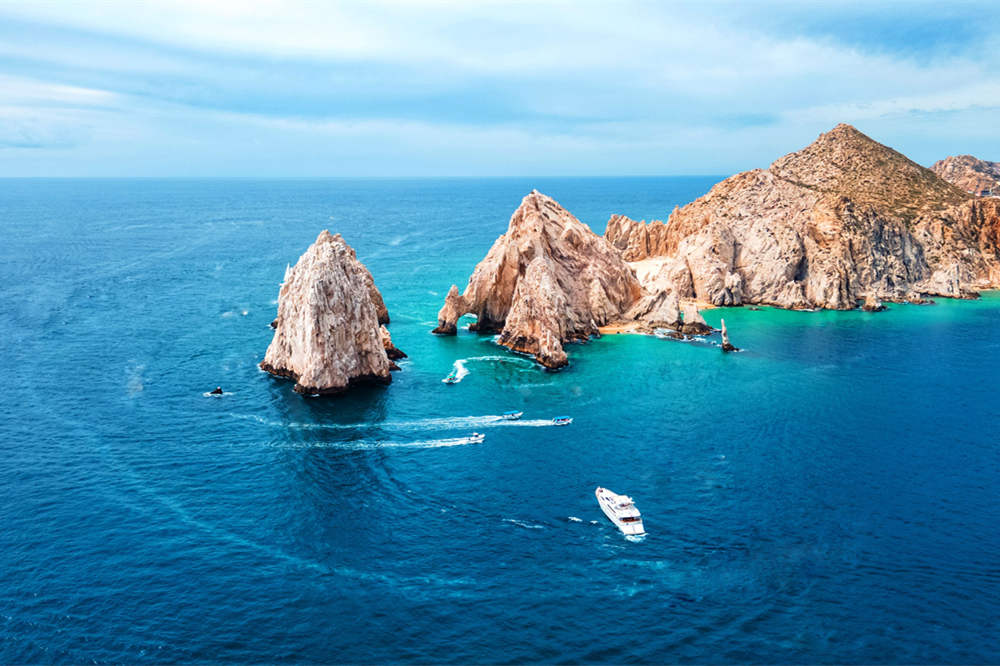
El Arco is the granite arch at the tip of the Baja Peninsula and Cabo San Lucas’s most recognizable natural landmark. Because it is approached from the water, a boat ride is one of the easiest ways to experience it.
Water taxis and glass-bottom boats offer short sightseeing trips. Sailing tours, catamarans, and private charters extend the experience with drinks, meals, snorkeling, or more time offshore.
Choose according to atmosphere rather than duration alone. A short boat ride is sufficient for seeing the rock formations, while a longer cruise makes sense when the time on the water is the main activity.
Take a Sunset Cruise
Sunset cruises range from lively group catamarans with music and open bars to smaller sailing boats designed for a quieter evening. Read the operator’s description and recent reviews to understand the likely mood.
A shared sailing trip suits most couples, while a private charter offers more control over timing, music, food, and stops. Private options are significantly more expensive and are most worthwhile when privacy is central to the occasion.
Go Snorkeling or Diving
Boat tours commonly visit Santa Maria Bay, Chileno Bay, or Pelican Rock. Morning departures often provide calmer water and better visibility, although conditions can change.
Before booking, ask about group size, shade, flotation equipment, experience requirements, and the amount of time spent in the water. A long tour may include considerable transportation or sailing time rather than a longer snorkeling session.
Watch Whales in Season
Whale-watching tours operate on vessels ranging from small inflatable boats to large catamarans. Smaller boats can feel more immediate but are often bumpier. Larger vessels provide more space and stability but may carry bigger groups.
Choose an operator that follows wildlife-viewing rules and does not advertise touching, feeding, or aggressively pursuing animals. Couples concerned about seasickness may prefer a morning tour on a larger vessel.
Try a Land-Based Adventure
The desert surrounding Cabo supports a different set of activities, including horseback riding, guided hiking, off-road tours, surfing, and canyon excursions.
Horseback riding and hiking suit couples looking for a slower change of scenery. Surf lessons are more physically demanding and depend on suitable conditions. Off-road tours appeal to travelers who enjoy speed and activity but can involve heat, noise, and dust.
Check for separate charges before booking. Transportation, park access, equipment insurance, lockers, and photographs may not be included in the advertised price.
Eating and Drinking in Cabo San Lucas

Downtown and the Marina
Downtown and the marina provide the broadest dining variety within a walkable area. Couples can choose between casual taco shops, seafood restaurants, contemporary Mexican kitchens, waterfront dining, cocktail bars, and late-night venues.
Restaurants directly on the marina often charge more for their location. Walking a few blocks inland can reveal smaller dining rooms and more casual pricing.
Médano Beach
Médano Beach is convenient for lunch, drinks, and sunset dining without leaving the waterfront. Some restaurants become louder during the afternoon, so couples seeking a calmer meal may prefer breakfast, lunch, or an early dinner.
Beach clubs may require a minimum spend for loungers or reserved seating. Confirm the policy before settling in for the day.
Resort Dining
Resort restaurants offer convenience and polished settings, especially for couples staying far along the Tourist Corridor. Prices are often higher than in town, and a remote location can make outside dining less spontaneous.
An all-inclusive plan may be useful for a resort-centered trip, but it is less attractive for couples who want to explore independent restaurants. Compare the full package price with the likely cost of meals and drinks rather than assuming one option is automatically better value.
What to Try
Cabo menus commonly feature fish tacos, ceviche, shrimp, grilled catch, smoked marlin, and other seafood influenced by Baja cooking. Regional Mexican dishes and produce-driven contemporary menus are also widely available.
A varied food plan often works better than eating every meal at the same type of venue. Combine simple breakfasts and taco lunches with one or two more elaborate dinners.
Check whether prices are listed in Mexican pesos or U.S. dollars. When paying by card, review the currency and amount shown on the terminal before approving the transaction.
Choosing the Right Nightlife
Central Cabo is known for clubs and crowded late-night bars, but couples do not need to build the evening around that scene. The marina has open-air bars and restaurants suited to a relaxed drink, while rooftops and hotel lounges can offer a quieter atmosphere.
Beach clubs are often most active in the afternoon and around sunset. Couples staying at a resort may prefer an on-site bar when they do not want to arrange transportation afterward.
Getting to Cabo San Lucas and Getting Around
Arriving at Los Cabos International Airport
Most international visitors arrive at Los Cabos International Airport, known by the airport code SJD. It is located near San José del Cabo rather than central Cabo San Lucas, so the onward transfer is a meaningful part of the arrival day.
Private transfers provide the simplest direct journey. Shared shuttles usually cost less for one or two travelers but may stop at several hotels. Authorized taxis are also available.
Arrange transportation before arrival when staying at a private villa or distant resort, and save the meeting instructions somewhere accessible without mobile data.
Walking Around Central Cabo
Médano Beach, the marina, and much of downtown are close enough to explore on foot. Heat, uneven pavements, curbs, traffic, and limited shade can still make short distances more tiring than expected.
Travelers with mobility limitations should ask hotels about step-free routes, elevator access, distances across the property, and the condition of nearby pavements. Large resorts may require considerable walking even when guests rarely leave the grounds.
Taxis, Rideshare Services, and Private Drivers
Taxis are practical for dinners and shorter trips beyond the central area. Confirm the fare before departure when a meter is not used.
Rideshare availability and pickup procedures may vary by location. Hotels, restaurants, and resorts may have designated collection points or their own transportation rules.
A private driver can be useful for couples planning several stops in one day, especially when combining beaches, restaurants, and San José del Cabo.
Public Buses
The Ruta del Desierto bus system connects key points between Cabo San Lucas and San José del Cabo and can be useful for budget-conscious travelers.
The bus is less convenient with large suitcases or when a resort sits far from the highway. Confirm the nearest stop and expected walking route before relying on it.
Renting a Car
A rental car is unnecessary for a trip centered on Médano Beach, the marina, and organized excursions. It becomes more useful when visiting several Corridor beaches, San José del Cabo, Todos Santos, or restaurants outside the central area.
Review the complete insurance terms rather than comparing only the initial rental rate. Also check hotel parking and avoid planning to drive after drinking.
Visiting San José del Cabo
San José del Cabo offers a different experience from Cabo San Lucas, with a historic center, galleries, restaurants, and a quieter evening pace.
Allow at least half a day rather than traveling there for one quick stop. Combining an afternoon walk with dinner makes better use of the journey along the Tourist Corridor.
How Much Does a Cabo San Lucas Trip Cost?
Cabo can accommodate several travel styles, but beachfront accommodation, private tours, and resort dining can raise the total quickly. Instead of relying on a fixed daily estimate, build a budget around the choices that affect the trip most.
Accommodation
Downtown hotels and smaller properties away from the beach are generally the most economical. Médano Beach commands higher rates for its combination of swimming and walkability, while Pacific-side and Corridor resorts charge for privacy, views, and facilities.
Compare the complete rate, including taxes, resort charges, service fees, and mandatory add-ons. A lower advertised room price may not produce a lower final cost.
Food and Drinks
Casual breakfasts, taco shops, and smaller local restaurants can help control spending. Oceanfront dining, imported wine, cocktails, tasting menus, and hotel restaurants increase the meal budget.
Couples staying in an isolated resort should account for transportation whenever they plan to eat elsewhere.
Activities
Shared sightseeing boats and group snorkeling trips usually cost less than private sailing, diving, or fishing charters. Choose one or two priority experiences rather than filling every day with paid excursions.
Confirm whether the advertised price includes transportation, taxes, conservation charges, equipment, food, drinks, and gratuities.
Transportation
A central hotel can reduce daily transportation spending, even when its nightly rate is slightly higher. Corridor and Pacific-side stays often require additional rides for dinners, shopping, and marina departures.
Include airport transportation in both directions when comparing hotel packages.
Commonly Overlooked Expenses
- Resort and service fees
- Airport transfers
- Gratuities for hotel staff, drivers, guides, and restaurant servers
- Excursion taxes or conservation charges
- Beach-club minimum spending requirements
- Travel insurance
- Foreign transaction or currency-conversion fees
- Equipment, lockers, or excursion photographs
A Four-Day Cabo San Lucas Itinerary for Couples
This itinerary assumes four nights in Cabo, allowing four usable days without treating the final morning as a full sightseeing day.
Day 1: Arrival, the Marina, and Dinner
Keep the arrival day simple. Check in, unpack, and walk around the marina or Médano Beach before dinner near the hotel.
A flexible first evening prevents flight or transfer delays from disrupting a prepaid activity.
Day 2: El Arco and a Beach Afternoon
Take a morning boat trip around Land’s End and El Arco. Add a stop at Lover’s Beach only when conditions and mobility needs make it practical.
Return to Médano Beach for lunch and a relaxed afternoon. Spend the evening downtown or choose a quieter dinner away from the busiest nightlife blocks.
Day 3: Choose One Major Excursion
Use the third day for the trip’s main activity. Depending on the season and your interests, choose snorkeling, whale watching, sailing, diving, surfing, horseback riding, or a desert excursion.
Avoid placing two substantial tours on the same day. Keeping the evening open provides time to recover and prevents the itinerary from feeling rushed.
Day 4: Resort Time or San José del Cabo
Couples who want a slower trip can spend the day at the beach, pool, or spa. Those ready to explore can visit San José del Cabo in the afternoon and stay for dinner.
Todos Santos is better treated as a separate day trip on a longer stay rather than being combined with a relaxed final day.
Safety and Practical Travel Tips
- Use established transportation. Arrange airport and late-night rides through authorized providers, recognized services, hotels, or restaurants.
- Keep valuables controlled. Carry only what you need and store passports, backup cards, and excess cash securely.
- Stay in active areas after dark. Avoid isolated beaches, unfamiliar roads, and poorly lit streets.
- Prepare for heat and sun. Bring a hat, suitable sun protection, and more drinking water than you expect to need.
- Save essential details offline. Keep your hotel address, transportation confirmation, insurance information, and emergency contacts accessible without internet service.
- Review entry documents before flying. U.S. citizens traveling internationally by air need a passport book; a passport card is not valid for international air travel.
- Check current official guidance. As of July 2026, the U.S. Department of State lists Baja California Sur at Level 2: Exercise Increased Caution due to terrorism and crime, with no specific restrictions for U.S. government employees in the state. Review the latest Mexico travel advisory shortly before departure because conditions and guidance can change.