
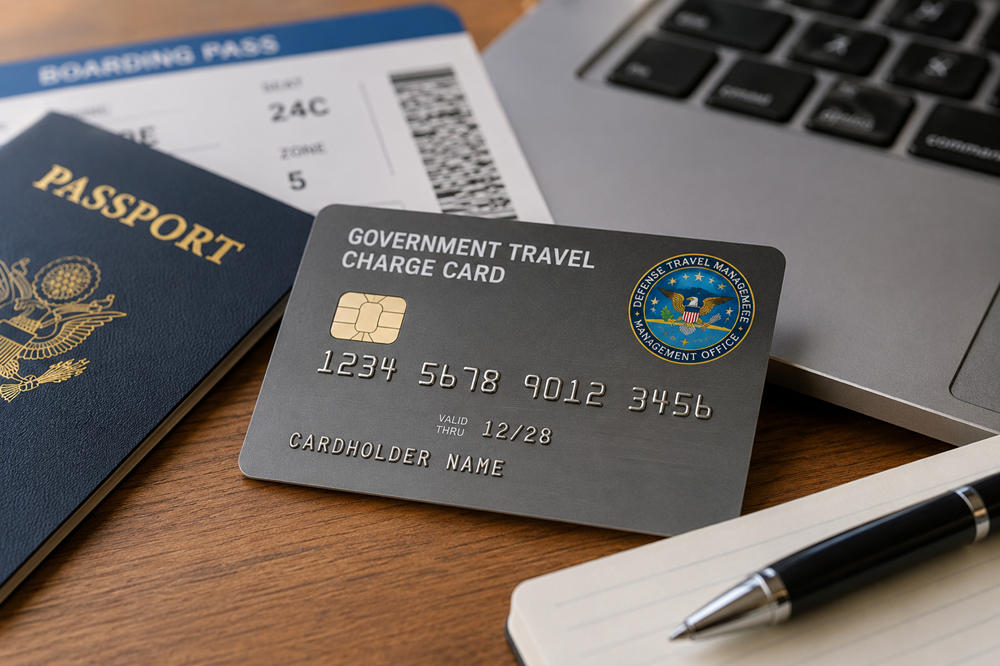
Which Situation Will Result in an Individual Being Issued a Restricted Travel Card?
An individual is issued a restricted Government Travel Charge Card when their FICO credit score is below 660. A restricted card is also issued when an applicant declines the soft credit check but successfully completes DD Form 2883, the alternate creditworthiness assessment.
If the applicant refuses the credit check and does not successfully complete the alternate assessment, an individually billed travel card will not be issued. These rules apply to the Government Travel Charge Card program administered by the Defense Travel Management Office. Other federal agencies may use different procedures within the broader GSA SmartPay program.
Why Creditworthiness Is Reviewed
Federal agencies must evaluate the creditworthiness of new applicants before issuing an individually billed government travel card. The assessment helps determine whether the traveler qualifies for a standard account or should receive an account with lower default limits.
For the DTMO program, the card vendor performs a soft credit check. Unlike a hard inquiry associated with applying for a personal loan or credit card, this screening does not reduce the applicant’s credit score.
The resulting score is used only to determine the type of account issued. It is not disclosed to the applicant or the applicant’s Agency Program Coordinator during the application process.
What Happens When an Applicant Declines the Credit Check?
Declining the soft credit check does not automatically disqualify someone from receiving a travel card. The applicant may instead complete DD Form 2883, Alternate Credit Worthiness Evaluation.
The form asks the applicant to certify information related to financial responsibility. To qualify for a restricted card through this process, the applicant must complete the required responses affirmatively.
An applicant who cannot successfully complete the form may authorize a soft credit check and reapply. The account type will then depend on the credit score returned by the card vendor.
Someone who refuses the credit check and does not successfully complete DD Form 2883 will not receive an individually billed Government Travel Charge Card. That outcome is a denial rather than the issuance of a restricted account.
Standard and Restricted Travel Cards Compared
Both account types are designed to pay authorized expenses during official government travel. Their main difference is the level of credit available when the account is opened.
| Account feature | Standard card | Restricted card |
|---|---|---|
| Creditworthiness requirement | FICO score of 660 or higher | FICO score below 660, or an approved DD Form 2883 assessment |
| Default credit limit | $7,500 | $4,000 |
| Default cash limit | $250 | $250 |
| Default retail limit | $250 | $100 |
The cash and retail figures are limits for each monthly billing cycle. They are separate from the card’s overall available credit.
These amounts are default settings rather than permanent limits for every traveler. The limits may be adjusted when documented mission requirements justify a different amount.
How a Restricted Travel Card Works
A restricted card has the same physical appearance as a standard Government Travel Charge Card. The distinction is applied through the account’s limits rather than through a visible label on the card.
The account is issued in open status. After receiving the card, the traveler must verify receipt and establish a personal identification number before using it.
A restricted card remains valid for authorized official travel expenses. It is not a disciplinary card, nor does it mean the traveler has been excluded from the GTCC program. The lower default credit and retail limits are simply additional account controls.
If the available credit will not cover an upcoming trip, the traveler should contact the Agency Program Coordinator before departure. With confirmation of a valid mission requirement, the appropriate program officials may temporarily increase the limits on a restricted account.
Under current GTCC regulations, a temporary increase for a restricted account may remain in place for no more than six months. Standard-account increases may remain in place for up to 12 months.
Can a Restricted Account Be Upgraded?
A restricted cardholder may later request an upgrade to a standard account. The cardholder must agree to another soft credit check and meet the minimum credit-score requirement for a standard card.
An upgrade is not automatic simply because the card has been used responsibly. The new creditworthiness assessment determines whether the account qualifies for standard status.
Who Can Help With a Restricted Card?
The Agency Program Coordinator is the primary contact for questions about an application or an existing account. The coordinator can explain local procedures, review account limits, correct account information and help address anticipated travel costs.
Travelers should contact their coordinator when they need help with:
- Completing or checking a GTCC application
- Using the alternate creditworthiness assessment
- Confirming required cardholder training
- Requesting a temporary limit adjustment
- Applying to upgrade a restricted account
- Resolving an account or transaction problem
Because individual agencies and military components may add their own administrative requirements, travelers should also follow the instructions provided by their organization.
The Bottom Line
A FICO credit score below 660 results in the issuance of a restricted travel card under the DTMO Government Travel Charge Card program. The same account type is issued when an applicant declines the soft credit check but successfully completes DD Form 2883.
The restricted card can still be used for authorized official travel, although it begins with lower default limits. Refusing both available methods of evaluating creditworthiness results in no individually billed travel card being issued.