Is Airbnb Better Than Hotels? How Couples Should Choose
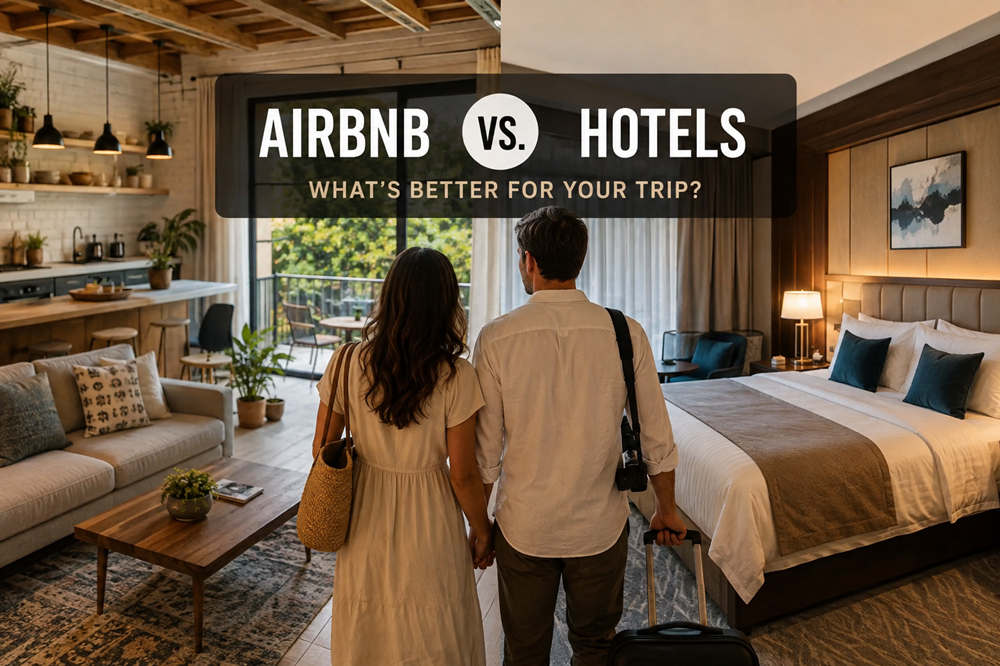
Airbnb is often better for longer stays, extra space, kitchens, and private living areas, while hotels usually have the advantage for short trips, on-site service, amenities, and straightforward convenience. Neither is automatically the better choice. For couples, the right answer depends on the destination, length of stay, total cost, location, and how you want the trip to feel.
Airbnb vs. Hotels at a Glance
Airbnb and hotels solve different travel needs. This quick comparison shows where each commonly has an advantage, although individual properties can differ considerably.
| Factor | Airbnb | Hotel | Typical Edge |
|---|---|---|---|
| Living space | Entire-place rentals may include several rooms | Standard rooms are usually more compact | Airbnb |
| Kitchen | Common in apartments and entire homes | Usually limited outside suites or extended-stay properties | Airbnb |
| Private living areas | Potentially excellent with an entire-place rental | Bedroom is private, but many facilities are shared with other guests | Airbnb |
| Housekeeping | Generally limited during the stay | Often available, though frequency varies | Hotel |
| On-site help | Depends on the host or property manager | Often available from hotel staff | Hotel |
| Facilities | Highly property-specific | May include a pool, gym, restaurant, bar, or spa | Hotel |
| Long stays | Extra space and household facilities can be useful | Easy service but sometimes less living space | Often Airbnb |
| Short stays | May involve property-specific arrival procedures | Often designed for quick arrivals and departures | Often Hotel |
| Consistency | Varies from listing to listing | Often more standardized, particularly within hotel brands | Hotel |
One important distinction is that Airbnb is a booking platform rather than a single type of accommodation. Its listings can include entire places, private rooms, shared rooms, and hotel rooms, so comparing a particular property is more useful than assuming every Airbnb is a private house.
Is Airbnb Cheaper Than a Hotel?
Sometimes, but not consistently. The only reliable comparison is the total price for the same dates.
A rental can involve the nightly price plus charges such as a cleaning fee, Airbnb service fee, extra-guest fee, pet fee, and applicable taxes. A hotel may have mandatory property charges as well as optional costs such as parking, breakfast, or other services.
Price displays have become more transparent. Airbnb made total-price display standard globally in 2025, showing the cost of a stay including fees before taxes from the beginning of the search process. In the United States, the Federal Trade Commission’s lodging-fee rule, effective May 12, 2025, also requires advertised prices for short-term lodging to prominently include most mandatory charges. Government charges and genuinely optional extras can still be treated separately under the rule.
That makes old advice about comparing a hotel’s nightly rate with an Airbnb’s headline price less useful. Instead, put two actual properties side by side and calculate what the entire stay will cost.
Trip length can change the result. A one-time cleaning fee has more impact per night on a weekend stay than a ten-night trip. On a longer vacation, however, having a kitchen or laundry facilities could reduce spending elsewhere.
Also consider costs created by location. A cheaper rental far from the places you want to visit could become the more expensive option after several days of parking fees, rideshares, or transit fares.
Airbnb Often Wins on Space and Privacy
Extra living space is one of the strongest reasons to consider an Airbnb, particularly when booking an entire place.
Instead of spending a week primarily in one bedroom, a couple might have a kitchen, living room, dining area, separate bedroom, balcony, yard, or laundry facilities. That can make a noticeable difference when you plan to spend mornings at home, work remotely, cook occasionally, or take slower days between sightseeing.
Do check the listing type carefully. An entire-place Airbnb generally means you have the accommodation to yourself without shared interior spaces, whereas a private-room booking can involve sharing areas such as the kitchen, living room, or bathroom.
Hotels are not necessarily cramped, either. Suites, aparthotels, and extended-stay properties can offer kitchens and separate living spaces. When room to spread out is important, compare square footage and layout rather than accommodation labels alone.
Hotels Often Win on Service and Convenience
The main hotel advantage is not simply having a room cleaned. It is having an established service operation around your stay.
Depending on the property, that can include front-desk assistance, luggage storage, maintenance staff, housekeeping, restaurants, room service, gyms, pools, spas, and concierge help. If something in the room stops working, there is usually a clear person or department to contact.
That convenience becomes particularly valuable on short trips. After a late flight, couples may care much more about a simple arrival and somewhere to leave their luggage the next morning than about having a full kitchen.
Hotels can also make spontaneous schedule changes easier. Some properties can hold bags before check-in or after checkout, provide an alternative room when one is available, or answer transportation and neighborhood questions in person.
None of these services is guaranteed, so check what a particular hotel actually provides—especially at small hotels, limited-service properties, and accommodations without 24-hour reception.
Which Is More Romantic: Airbnb or a Hotel?
Both can be romantic, but in different ways.
An Airbnb can work beautifully when privacy and the accommodation itself are part of the getaway. A mountain cabin, coastal cottage, apartment with a terrace, or secluded home gives couples somewhere they may genuinely want to spend an evening rather than treating the room as a place to sleep.
A hotel suits a different version of romance: fewer responsibilities. A good boutique hotel or resort might place a restaurant, cocktail bar, spa, pool, beach facilities, or room service within easy reach. You can go out for the day and return without thinking much about the practical side of maintaining your space.
For a honeymoon, anniversary, or weekend away, consider what you actually want from the accommodation. If privacy and independence sound appealing, a rental may fit better. If being looked after is part of the treat, a hotel may create the more relaxing trip.
Location May Matter More Than Airbnb vs. Hotel
A great property in the wrong place can make a trip unnecessarily difficult.
Hotels are commonly found around city centers, airports, resort districts, transportation hubs, and major attractions. Vacation rentals can open up residential neighborhoods, rural areas, beach communities, mountain towns, and locations with relatively few conventional hotels.
Neither pattern is inherently better.
A residential apartment can give couples a quieter base with neighborhood cafés and grocery stores nearby. A downtown hotel might let you walk almost everywhere and return easily between activities.
Before booking, map the property against the places you will visit most. Look at realistic travel times rather than distance alone, especially in cities where traffic, parking, ferries, or infrequent public transportation can turn a short distance into a long journey.
House Rules, Cancellation, and What Happens When Something Goes Wrong
Vacation rentals can involve more property-specific instructions than hotels, so read the listing rather than assuming every stay works the same way.
Airbnb requires guests to respect the host’s standard house rules and designated check-in and checkout times. However, hosts may not charge guests simply for failing to perform specific cleaning or checkout tasks. Guests are expected to leave the property in a reasonable condition rather than perform the host’s standard turnover cleaning.
Airbnb also makes host-provided checkout instructions available before booking, which is useful if you want to see what will be expected before committing. Detailed check-in instructions normally become available 48 hours before arrival.
Cancellation policies deserve equal attention. Airbnb home cancellation terms vary by listing and policy, while hotels commonly offer multiple rate types with different refund conditions. Compare similar products—a flexible hotel rate against a flexible rental, for example—rather than judging flexibility from the cheapest rate available.
Every Airbnb home booking currently includes AirCover for guests. Airbnb says that when a serious covered problem cannot be resolved by the host, it may help the guest find a similar property at comparable pricing, depending on availability, or provide a full or partial refund. Guests generally need to report a reservation problem within 72 hours of discovering it and should document the issue where possible. AirCover is not travel insurance and does not cover every disruption that can affect a vacation.
When an Airbnb Makes More Sense
Start with Airbnb when the way you will live in the accommodation matters as much as where you sleep.
- Longer stays: A kitchen, laundry facilities, and a separate living room become more valuable after several days.
- Cabin or countryside trips: A distinctive private property may be central to the experience.
- Trips with another couple: Multiple bedrooms plus shared living space can work well for four travelers.
- Slow vacations: A rental makes sense when you expect to spend substantial time reading, cooking, relaxing, or enjoying the property.
- Food-focused stays: A usable kitchen can be helpful when you want breakfast at home, buy ingredients from local markets, or have dietary needs.
Before paying extra for a larger place, ask whether you will genuinely use those features. There is little reason to rent a three-room apartment if you will leave after breakfast and return only to sleep.
When a Hotel Makes More Sense
Start with hotels when you want the accommodation to require as little attention as possible.
- Weekend breaks: For one or two nights, convenience may matter more than household facilities.
- Late arrivals: A suitably staffed hotel can simplify arrival after a long flight or drive.
- Resort vacations: Pools, restaurants, spas, beach facilities, and organized services may be a major part of the trip.
- Fast-paced city trips: A central hotel can work well when most of your time will be spent sightseeing.
- Loyalty-program travelers: Points, elite benefits, or free-night awards can change the value calculation.
A hotel is particularly attractive when having someone available to help is more useful to you than having a larger private living space.
Airbnb or Hotel for Different Couples Trips?
The best choice changes with the style of vacation. These are useful starting points rather than fixed rules.
| Type of Trip | Good Starting Point | Why |
|---|---|---|
| Two-night romantic weekend | Hotel | Convenience and service can leave more time for the getaway itself. |
| Honeymoon | Either | Choose a resort for pampering or a private rental for independence and seclusion. |
| Week-long city stay | Compare both | A rental offers living space, but an exceptionally central hotel may save substantial travel time. |
| Road-trip overnight | Hotel | A simple arrival, sleep, and departure usually suits an overnight stop. |
| Beach vacation | Either | A rental can provide private space and a kitchen; a resort can provide facilities and service. |
| Mountain getaway | Airbnb | A cabin or house can make the property part of the destination. |
| Short first visit to an international city | Often Hotel | Central location and on-site assistance can simplify an unfamiliar destination. |
| Longer neighborhood-based city stay | Often Airbnb | Extra living facilities may matter more when staying in one place for an extended period. |
| Trip with another couple | Often Airbnb | Separate bedrooms with common living areas can combine privacy and shared time. |
How to Compare an Airbnb and Hotel Properly
Instead of deciding that you prefer Airbnbs or hotels in general, compare a few real properties for the trip in front of you.
- Use identical dates. Prices and availability can vary dramatically by day.
- Compare the total cost. Include taxes shown during booking, mandatory charges, parking, and extras you are realistically likely to buy.
- Map both properties. Check travel time to the places you expect to visit most often.
- Compare equivalent cancellation terms. A refundable booking should not be judged against a heavily restricted rate solely on price.
- Read recent reviews. Look for repeated comments about noise, beds, cleanliness, check-in, location, host communication, or hotel service.
- Check arrival and departure logistics. Make sure the arrangement works with your actual flight, train, ferry, or driving schedule.
- Verify important amenities. If your trip depends on parking, an elevator, air conditioning, laundry, a hot tub, or another feature, confirm it before booking.
- Consider accessibility needs directly. Do not assume that a property is suitable from photographs or a general description.
Then consider how you picture an ordinary evening on the trip. If you imagine buying something from a local market and having dinner on your own terrace, a rental may add meaningful value. If you picture returning from sightseeing and heading downstairs for dinner without another logistical thought, a hotel probably fits the trip better.
So, Is Airbnb Better Than Hotels?
Airbnb is better for some trips, not travel in general.
Choose an Airbnb when extra living space, a kitchen, privacy, or spending time at the property will meaningfully improve the vacation. Choose a hotel when service, an easy arrival, on-site facilities, and a convenient short stay matter more.
For couples, the smartest approach is to make the decision again for every destination. Compare actual properties, their complete prices, locations, rules, and amenities rather than becoming loyal to one accommodation type. The better stay is the one that fits how the two of you intend to spend this particular trip.