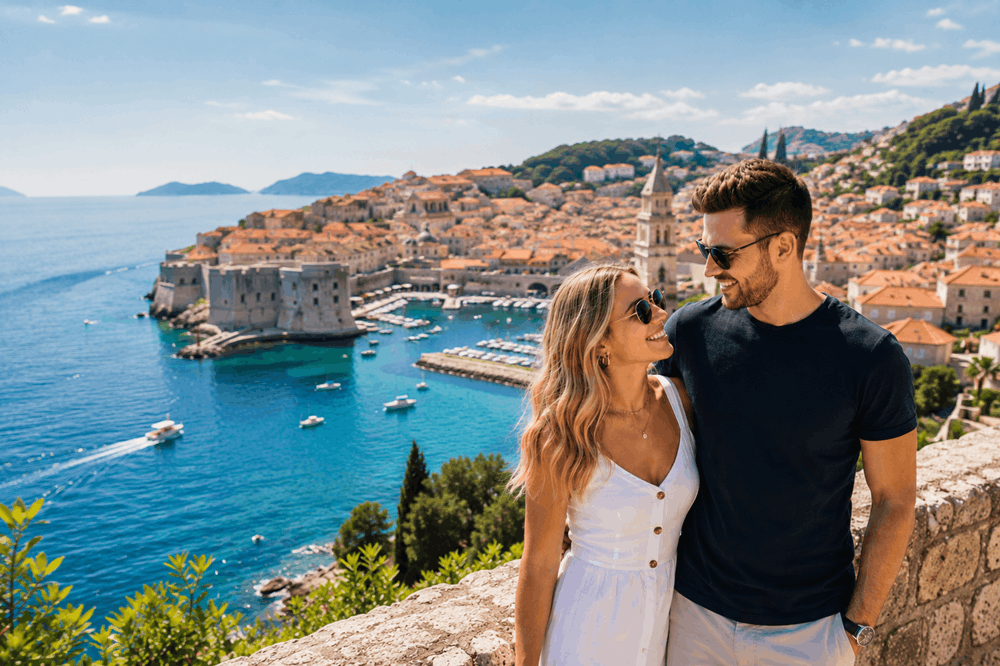
Croatia Travel Guide for Couples: 10-Day Itinerary
Croatia offers couples an unusually varied trip within a relatively compact country. You can walk through fortified medieval cities, travel between islands by ferry, swim in the Adriatic, taste local wine, explore waterfalls, and finish the journey in a lively European capital.
This 10-day Croatia itinerary is designed for couples visiting for the first time. It follows a practical south-to-north route through Dubrovnik, Korčula, Split, Šibenik, Krka National Park, Plitvice Lakes, and Zagreb.
The schedule includes nine nights and avoids changing accommodation every day. It still covers several distinct parts of Croatia, so couples seeking a slower honeymoon may prefer to extend it to 12 or 14 days.
Editorial note: This itinerary was created using current information from Croatian tourism authorities, ferry operators, national parks, and other official sources. Schedules, prices, opening hours, and access rules can change, so verify essential details before booking.
Croatia itinerary at a glance
Trip length: 10 days and nine nights
Best for: History, islands, food, beaches, wine, and nature
Starting point: Dubrovnik
Finishing point: Zagreb
Currency: Euro
Main transportation: Passenger ferries followed by a short car rental
Recommended season: Late spring or early fall for a balance of warm weather and manageable crowds
Where you will stay
- Nights 1–2: Dubrovnik
- Nights 3–4: Korčula
- Nights 5–6: Split
- Night 7: Šibenik
- Night 8: Near Plitvice Lakes
- Night 9: Zagreb
How you will travel
- Dubrovnik to Korčula: Passenger ferry
- Korčula to Split: Passenger ferry
- Split to Šibenik: Bus or rental car
- Šibenik to Krka: Rental car
- Krka to Plitvice: Rental car
- Plitvice to Zagreb: Rental car
TP Line’s current 2026 seasonal route connects Dubrovnik, Korčula, Hvar, Milna, and Split. The published schedule lists Dubrovnik to Korčula at about two hours and Korčula to Split at a little over three hours, but travelers should confirm their exact date through the official TP Line timetable. (TP-Line)
Is Croatia a good destination for couples?
Croatia is a strong choice for couples who want both relaxation and exploration.
A single itinerary can combine historic streets, scenic ferry journeys, island beaches, local food, national parks, and quiet evenings beside the water. The country works particularly well for couples who do not want to spend an entire vacation inside one resort.
Croatia can suit:
- Honeymooners seeking a mix of romance and activity
- Couples planning an anniversary trip
- Food and wine travelers
- Partners who enjoy swimming, walking, and kayaking
- History and architecture enthusiasts
- Couples interested in island hopping
- Travelers combining cities with nature
There are a few practical challenges. Historic centers often contain stairs and uneven stone streets, the most popular destinations can become crowded in summer, and island transportation requires advance planning.
Couples who prefer a relaxed trip should treat this itinerary as a starting point rather than a list of mandatory attractions.
When is the best time for couples to visit Croatia?
For many couples, the most comfortable periods are late May through June and September into early October.
These months may offer warm coastal conditions without the demand usually associated with July and August. They can also be better for walking through cities and national parks.
Peak summer may still be the right choice when your priorities are:
- Hot weather
- Warm sea temperatures
- Frequent seasonal ferry connections
- Nightlife and summer events
- The widest selection of boat excursions
The tradeoff is greater demand for hotels, restaurants, parking, ferries, and major attractions.
Outside summer, ferry frequency and island businesses may be more limited. Confirm transportation before reserving nonrefundable accommodation.
Currency, Schengen status, and entry requirements
Croatia adopted the euro and joined the Schengen area on January 1, 2023. (European Central Bank)
Passport and visa requirements depend on nationality, length of stay, and individual circumstances. Travelers should review the Croatian Ministry of Foreign and European Affairs’ current visa requirements before departure. Croatia applies Schengen rules, including the general 90-days-in-any-180-day-period limit for many non-EU short-term visitors. (template.gov.hr)
10-Day Croatia Itinerary for Couples
Day 1: Arrive in Dubrovnik
Use your arrival day to settle in rather than committing to timed attractions.
After checking into your accommodation, walk toward Dubrovnik’s Old Town and explore without a strict route. The first evening is best spent becoming familiar with the gates, harbor, main streets, and quieter lanes beyond the busiest pedestrian areas.
Find somewhere for dinner, then return to the Old Town after sunset. The stone streets and buildings take on a different atmosphere once many daytime visitors have departed.
Where to stay in Dubrovnik
Stay near the Old Town when convenience is your priority. Consider Lapad or another district outside the walls when you prefer:
- Easier vehicle access
- A quieter neighborhood
- Beach access
- Fewer stairs
- Potentially better-value accommodation
Before booking inside the historic center, check how far you must carry your luggage from the nearest vehicle drop-off point.
First-evening idea
Keep it simple:
- Walk through the Old Town
- Share a drink or dessert
- Watch the sunset near the water
- Choose one relaxed dinner
There will be time for Dubrovnik’s major sights the following day.
Day 2: Dubrovnik’s walls, streets, and coastline
Start early with a walk along Dubrovnik’s city walls. The elevated route provides views across the Old Town’s rooftops, fortifications, and the Adriatic.
Buy tickets through the official Dubrovnik city walls website or compare admission with the Dubrovnik Pass. The official pass includes entry to the city walls, participating museums and galleries, and public transportation. (Dubrovnik Pass)
After the walls, choose one main afternoon activity rather than trying to complete everything:
- Visit Lokrum
- Join a sea-kayaking tour
- Explore museums in the Old Town
- Swim at a nearby beach
- Visit a panoramic viewpoint
- Enjoy a slow lunch and an unplanned afternoon
Romantic upgrade
A sunset boat trip or dinner overlooking the Adriatic makes a memorable final evening in Dubrovnik.
Reserve ahead during the busiest travel months, but leave enough time between the activity and dinner so the evening does not feel rushed.
Day 3: Travel to Korčula
Take a morning passenger ferry from Dubrovnik to Korčula Town.
The ferry journey is part of the experience, with views of the coast and islands along the route. Arrive at the boarding point early and keep passports, medication, tickets, and valuables in a personal bag.
Once you reach Korčula, check into your accommodation and explore the historic center. Korčula Town is compact enough for a relaxed afternoon and evening.
Its medieval center is among the best-preserved island towns in the Mediterranean. Korčula is also known for its wine traditions, particularly the local Grk and Pošip varieties. (Visit Korčula | Korčula)
Why Korčula works for couples
Korčula suits couples who want:
- A historic island town
- A slower atmosphere than major mainland cities
- Wine and local food
- Cycling and walking
- Small coves and swimming areas
- Quiet evenings near the harbor
Have dinner in town, then walk through the historic lanes after dark.
Day 4: Beaches, wine, and island time
Spend a full day experiencing Korčula rather than using it as a base for another long excursion.
Choose two or three activities:
- Visit a nearby beach or cove
- Rent bicycles
- Arrange a local wine tasting
- Explore villages outside Korčula Town
- Join a short boat trip
- Have a long seafood lunch
- Wander through the Old Town without an itinerary
A balanced day might include cycling or sightseeing in the morning, swimming during the afternoon, and dinner in Korčula Town.
Couples interested in wine can arrange transportation to a winery rather than driving themselves. Korčula’s wine culture includes the native white varieties Grk and Pošip, which are closely associated with different parts of the island. (Visit Korčula | Korčula)
Beach note
Many Croatian beaches are pebbled, rocky, or reached by steps. Water shoes can make entering the sea more comfortable.
Day 5: Ferry to Split
Travel from Korčula to Split by passenger ferry.
After arriving, check in and walk toward the Riva waterfront and Diocletian’s Palace. Split’s historic center grew within and around the Roman emperor’s former palace, which remains part of the living city rather than functioning as a closed archaeological complex.
The palace and surrounding historical center are on the UNESCO World Heritage List, and parts of the palace have remained continuously inhabited for centuries. (Visit Split | Split)
Spend your first afternoon walking through:
- The Peristyle
- Historic gates
- Narrow palace passages
- The waterfront
- Markets and neighboring streets
Finish with dinner away from the busiest waterfront tables, then return to the Riva for an evening walk.
Day 6: Explore Split and Marjan
Begin early in the historic center before spending the afternoon around Marjan.
Marjan provides walking paths, viewpoints, greenery, and a calmer contrast to central Split. The city’s official tourism information describes it as a place for recreation, natural paths, and views over Split. (Visit Split)
Suggested schedule
Morning: Diocletian’s Palace and surrounding streets
Late morning: Coffee, markets, or museums
Afternoon: Marjan and a nearby swimming area
Evening: Dinner in a quieter neighborhood
Avoid adding a full-day excursion unless it replaces something you value less. Split deserves at least one complete day, especially on a trip that already includes an island and two national parks.
Day 7: Continue to Šibenik
Travel from Split to Šibenik by bus or collect a rental car for the inland portion of the trip.
A rental car becomes useful at this stage because it simplifies the route through Krka, Plitvice, and Zagreb. There is little benefit to renting one earlier while staying in pedestrian centers and traveling by passenger ferry.
After reaching Šibenik, explore its historic center and choose one fortress or viewpoint.
Šibenik is surrounded by four major fortresses and has a historic center containing churches, palaces, monasteries, museums, galleries, and narrow streets suited to exploring on foot. (Visit Šibenik | Šibenik)
Where to stay in Šibenik
Choose accommodation based on how you are traveling:
- Historic center: Best for atmosphere and evening walks
- Near accessible parking: Best with a rental car and larger luggage
- Waterfront location: Best for views and a quieter setting
- Outside the city: Best for an early start toward Krka
Confirm parking before booking a property deep inside the old center.
Day 8: Krka National Park and overnight near Plitvice
Check out of your Šibenik accommodation and drive to Krka National Park.
For a first visit, focus on Skradinski Buk rather than trying to cover every section of the park. The official Krka ticket information estimates about two hours for the Skradinski Buk area, excluding the time needed to reach it. Other park locations may require an additional one to three hours. (NP Krka Webshop)
Allow roughly half a day when accounting for:
- Parking and entrance transportation
- Walking
- Photographs
- Rest stops
- Food
- An optional boat experience
Check current entrances, access information, and tickets through the official Krka National Park webshop.
Wear supportive shoes with good grip. Boardwalks, steps, and paths can be wet or uneven.
Important swimming note
Do not plan your Krka visit around photographs from older articles showing visitors swimming beneath Skradinski Buk. Rules have changed, and current park conditions and permitted activities should always be checked directly with the national park.
Where to stay that night
After Krka, continue to accommodation near Plitvice Lakes.
This is an important part of the itinerary. Staying near Plitvice makes it possible to use an early timed entrance the following morning without beginning the day with a long drive.
Choose accommodation close to the entrance listed on your ticket or along a simple route to it.
Day 9: Plitvice Lakes and Zagreb
Reserve an early entrance to Plitvice Lakes National Park.
Plitvice is Croatia’s oldest and largest national park. Its system of lakes and tufa barriers was added to the UNESCO World Heritage List in 1979. (Nacionalni park “Plitvička jezera”)
The park uses dated and timed tickets. Visitors must validate their ticket at the entrance selected during purchase and within the designated arrival period. Buy through the official Plitvice Lakes e-ticket system. (Nacionalni park “Plitvička jezera”)
Choose your route in advance
Plitvice has several sightseeing programs of different lengths. Consider:
- Your walking ability
- Weather
- Available daylight
- Your entrance location
- The drive to Zagreb afterward
Do not automatically choose the longest route. A moderate itinerary can still provide extensive lake, waterfall, forest, and boardwalk views.
What to bring
- Supportive walking shoes
- Water
- Weather protection
- A light extra layer
- A small daypack
- A charged phone or camera
- Your downloaded ticket
Swimming is prohibited
Swimming is prohibited throughout the national park. Visitors must remain on marked paths and follow the park’s conservation rules. (Nacionalni park “Plitvička jezera”)
After completing your route, drive to Zagreb and return the rental car that evening or the following morning.
Check whether your rental agreement includes a one-way fee for collecting the car near Split and returning it in Zagreb.
Day 10: Zagreb and departure
Use your final day according to your flight time.
With a later departure, walk through central Zagreb, have breakfast or lunch, and see part of the city before traveling to the airport.
With an early flight, stay somewhere with straightforward airport access and avoid planning morning sightseeing.
Leave a generous buffer for:
- Traffic
- Fueling the rental car
- Vehicle return
- Airport check-in
- Security procedures
- Unexpected delays
Do not combine a full morning at Plitvice with a tightly timed international flight from Zagreb on the same day.
Korčula or Hvar: Which Is Better for Couples?
Korčula is the recommended island for this itinerary, but Hvar can be substituted when its atmosphere or ferry schedule better suits your trip.
Choose Korčula for:
- Quieter evenings
- Historic-town atmosphere
- Local wine
- Cycling and walking
- A slower pace
- Small beaches and coves
Choose Hvar for:
- A livelier harbor
- More nightlife
- A wider selection of boat excursions
- Easier access to the Pakleni Islands
- A broader range of upscale hotels
- A more social summer atmosphere
The better island is the one that fits your preferred pace and confirmed transportation dates.
Where to Stay in Croatia as a Couple
Dubrovnik
Stay near the Old Town for sightseeing convenience. Choose Lapad or another area outside the walls for quieter surroundings, beaches, and easier access.
Korčula
Korčula Town is the easiest base when arriving by passenger ferry. Rural and coastal properties elsewhere on the island offer more privacy but may require transportation.
Split
The historic center is convenient for a short first visit. Accommodation closer to Marjan may provide easier access to greenery and swimming.
Šibenik
Stay near the old center for atmosphere, but confirm parking when traveling by car.
Plitvice
Choose accommodation near your ticketed entrance. This matters more than finding the absolute cheapest room.
Zagreb
Stay centrally when you have time to explore. Choose a location with convenient airport access when departing early.
Should Couples Rent a Car in Croatia?
You do not need a car for the full trip.
The most practical arrangement is to use ferries between Dubrovnik, Korčula, and Split, then rent a car for Šibenik, Krka, Plitvice, and Zagreb.
A car is especially useful for:
- National parks
- Rural accommodation
- Flexible departure times
- Transporting luggage inland
- Reaching Zagreb without multiple connections
A car is less useful inside:
- Dubrovnik’s Old Town
- Korčula Town
- Central Split
- Other pedestrian historic centers
Book early when you require an automatic transmission, a particular vehicle size, or permission to cross borders during a longer regional trip.
Croatia Budget for Two
The following are editorial planning estimates, not live quotes.
They assume:
- Two adults sharing one room
- Nine nights
- Travel during the shoulder season
- Economy flights excluded
- Two passenger-ferry journeys
- A rental car for approximately three days
- National-park tickets
- Meals, local transportation, and modest sightseeing
- No private yacht charter or luxury resort stay
Value-focused trip
Approximately €1,800–€2,700 for two
This may include:
- Guesthouses or simple apartments
- Casual restaurants and some groceries
- Standard ferry tickets
- A compact rental car
- Self-guided sightseeing
- Limited paid excursions
Comfortable midrange trip
Approximately €3,200–€4,800 for two
This allows for:
- Well-reviewed, conveniently located accommodation
- Restaurant meals
- Park and museum admission
- A rental car with greater flexibility
- A winery visit or boat excursion
- One or two special dinners
Upscale trip
Approximately €6,000 or more for two
This may include:
- Premium hotels
- Sea-view rooms
- Private transfers
- Fine dining
- Private or small-group boat trips
- Spa treatments
- Flexible booking conditions
July and August accommodation can cost substantially more. Before setting your final budget, compare live hotel, ferry, car-rental, and attraction prices for your dates.
Also check:
- Parking charges
- City taxes
- Luggage fees
- Fuel
- Rental-car deposits
- One-way vehicle-return fees
- Travel insurance
What to Pack for Croatia
Pack for walking, swimming, and frequent transfers.
Useful items include:
- Comfortable walking shoes
- Water shoes
- Lightweight daypack
- Refillable water bottle
- Swimsuit
- Sun protection
- Light rain jacket
- Quick-drying towel
- Portable charger
- European plug adapter when required
- Compact luggage
Large suitcases become inconvenient on ferries, stairs, cobbled streets, and pedestrian-only lanes.
Each person should carry their own passport, medication, payment method, and essential travel information rather than keeping everything in one bag.
Common Croatia Itinerary Mistakes
Trying to cover the entire country
Croatia includes several distinct regions. Ten days is enough for this focused route, not for Dubrovnik, several islands, Istria, Zagreb, Zadar, and every major national park.
Booking accommodation before checking ferry routes
Confirm that your island transfers operate on your travel dates before committing to nonrefundable hotels.
Changing hotels every night
Checking out, moving luggage, traveling, and checking in can consume much of the day. Two-night stays in Dubrovnik, Korčula, and Split make this itinerary more manageable.
Renting a car in Dubrovnik
A car adds parking costs and little value during the ferry-based portion of the trip. Renting later is usually simpler.
Depending on outdated park articles
National-park tickets, entrances, transport arrangements, and activity rules can change. Use official Krka and Plitvice information when making final plans.
Filling every hour
Some of the best shared travel moments come from an unscheduled swim, a long meal, or an evening walk. Leave room for them.
Frequently Asked Questions
Is 10 days enough for Croatia?
Ten days is enough for a first trip covering Dubrovnik, one island, Split, Šibenik, Krka, Plitvice, and Zagreb.
It is a moderately active route. Add two to four days when you want more beach time or fewer travel days.
Is Croatia suitable for a honeymoon?
Yes. Croatia combines historic towns, islands, waterfront accommodation, swimming, wine, and private excursions.
Couples seeking a restful honeymoon may prefer to spend more nights in fewer destinations than this itinerary suggests.
Can you travel through Croatia without a car?
The coastal portion can be completed using ferries and buses. A car is not essential in Dubrovnik, Korčula, or Split.
A rental car makes the national-park portion much easier, especially when traveling from Krka to Plitvice and onward to Zagreb.
Is Korčula or Hvar more romantic?
Korčula generally feels quieter and more intimate. Hvar offers more nightlife, excursions, and upscale accommodation.
Either can be romantic when its atmosphere matches the couple.
Can you swim at Krka or Plitvice?
Swimming is prohibited within Plitvice Lakes National Park.
Do not plan a Krka visit around swimming at Skradinski Buk. Check the park’s current rules and use Croatia’s coastal beaches for swimming instead.
Is Dubrovnik worth visiting despite the crowds?
Yes. Staying for two nights allows you to explore early in the morning and again after many daytime visitors have left.
Should you fly into Dubrovnik and out of Zagreb?
An open-jaw flight is ideal for this route because it avoids retracing the country. Compare the total cost with a round-trip flight, including any additional ground transportation.
Final Thoughts
Croatia is especially rewarding for couples who want different experiences within one trip.
This route moves from Dubrovnik’s fortified streets to Korčula’s island atmosphere, Split’s living Roman center, Šibenik’s fortresses, and two of Croatia’s most celebrated national parks. Zagreb provides a practical and interesting final stop rather than forcing you to return south.
The itinerary works because each destination has a clear purpose. Dubrovnik provides history and drama. Korčula creates space to slow down. Split offers energy and culture. Šibenik connects the coast with the national parks. Krka and Plitvice provide two distinct encounters with Croatia’s landscapes.
Reserve the important transfers and timed entrances, but do not schedule every moment. The most memorable part of the trip may be the experience you did not plan.