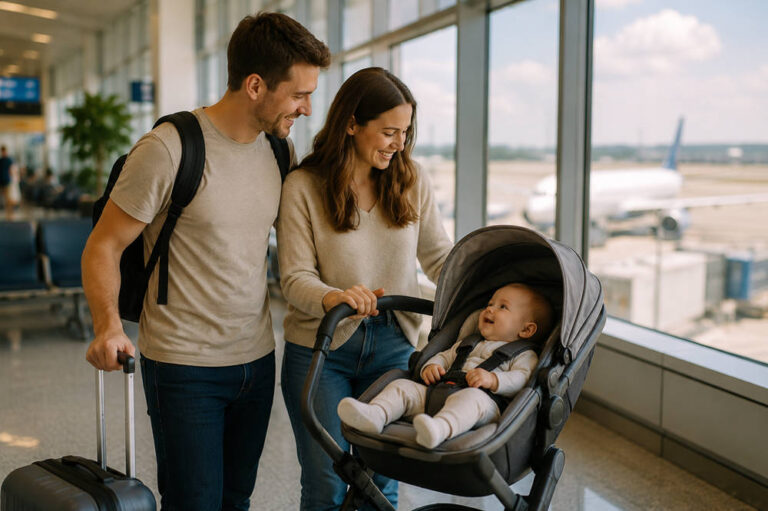

What Is the Safest Way to Travel? A Practical Guide for Couples
For most long-distance journeys, a scheduled commercial flight is among the safest ways to travel. Regulated trains and established coach services can also be sensible choices. The safest trip, however, depends on more than the main transportation method. Couples should assess the entire route, including transfers, arrival times, road conditions, operator standards, health needs, weather, and access to help if plans go wrong.
What Is the Safest Way to Travel?
Scheduled commercial aviation has a strong safety record because it operates within systems of crew training, maintenance requirements, air traffic control, standardized procedures, regulatory oversight, and formal accident investigation.
In its March 2026 report covering the 2025 calendar year, the International Air Transport Association recorded 51 accidents among approximately 38.7 million commercial flights. Flying is not risk-free, but the number of flights completed safely helps put highly publicized aviation incidents into perspective.
That does not mean a flight is automatically the best choice for every journey. A direct daytime train between two city centers may create a safer and simpler itinerary than a flight involving a distant airport, several connections, and a long road transfer after midnight.
Transportation risk can also be measured in different ways, including per journey, per hour, or per passenger-mile. Rather than relying on one universal ranking, couples should compare the realistic door-to-door options available for their particular trip.
How Different Ways of Traveling Compare
Scheduled commercial flights
A flight with a scheduled commercial airline operating under the relevant aviation regulations is usually a strong choice for a long domestic or international journey. It can also reduce the amount of time travelers spend driving on unfamiliar roads.
Not every aircraft operation should be treated as equivalent. Private aircraft, sightseeing flights, air taxis, and some charter services may follow different operating rules and oversight systems. Research the individual operator before booking a small-aircraft transfer or scenic flight.
Passengers should pay attention to the safety briefing, locate the nearest exits, follow crew instructions, and keep their seat belts fastened whenever seated. The Federal Aviation Administration warns that turbulence can occur without enough notice for an unrestrained passenger to buckle up.
Trains
Regulated passenger rail can be a practical choice between well-connected cities. It removes the need to drive, follow unfamiliar traffic rules, or concentrate on the road for several hours. Rail stations are also often closer to city centers than airports.
Check more than the train schedule before booking. Consider whether the station has elevators, staffed waiting areas, secure luggage storage, reliable taxis, and public transportation at the planned arrival time.
A modern intercity rail network is not comparable to every train service worldwide. Vehicle condition, track standards, overcrowding, boarding procedures, and regulatory oversight differ between destinations.
Intercity buses and coaches
An established coach company with professional drivers and maintained vehicles may offer a safer alternative to renting a car. This can be particularly useful when the route is unfamiliar or one partner would otherwise have to do all the driving.
Look for clearly identified vehicles, working seat belts, established terminals, reasonable schedules, and transparent company information. A licensed intercity coach should not be treated as equivalent to an informal minibus, an unmarked shuttle, or an overloaded van.
Overnight buses may reduce accommodation costs, but they can introduce other concerns, including driver fatigue, poor passenger sleep, limited visibility, and arrival before local transportation begins operating.
Rental cars
A rental car provides flexibility, especially in rural areas, but places most safety decisions in the travelers’ hands. Risks may include fatigue, distraction, unfamiliar signs, opposite-side driving, mountain roads, poor lighting, severe weather, and different expectations among local drivers.
Road exposure deserves particular attention. The World Health Organization estimates that road crashes cause approximately 1.16 million deaths worldwide each year. More than half involve pedestrians, cyclists, and motorcyclists.
The CDC’s guidance for travelers recommends wearing seat belts and avoiding unfamiliar or rural roads at night. Couples should also avoid planning a demanding drive immediately after an overnight flight.
Before a road trip, decide how driving will be shared and how often to stop. Either partner should be able to request a break without having to prove that the driver is dangerously tired. When visibility, weather, or road conditions deteriorate, changing the plan is usually wiser than protecting the original schedule.
Motorcycles, scooters, bicycles, and walking
Motorcycles and scooters leave travelers physically exposed in a collision. They are especially risky when the rider lacks experience, receives minimal instruction, or is unfamiliar with local traffic behavior.
A helmet is essential, but protective equipment does not make an inexperienced scooter ride comparable to traveling inside a regulated train or coach. Couples should not rent a motorcycle simply because it is inexpensive or widely used by other visitors.
Walking and cycling can be reasonable in places with sidewalks, protected lanes, controlled crossings, and predictable traffic. Use greater caution where roads lack shoulders, drivers do not routinely yield, or streets are poorly lit. Travelers should consciously check the direction of approaching traffic in countries that drive on the opposite side from home.
Ferries and tour boats
Licensed ferries, cruise ships, small commercial tour boats, and informal water taxis operate under different conditions. Before boarding, look for overcrowding, visible damage, missing life jackets, unclear passenger limits, and a lack of basic safety instructions.
Weather matters particularly on small vessels. A responsible operator should be willing to delay or cancel when conditions become unsuitable. Couples should leave when an operator dismisses obvious weather concerns or cannot provide appropriate safety equipment.
Evaluate the Complete Door-to-Door Route
The safest main segment does not always create the safest complete journey. Problems often arise during the connections before departure or after arrival.
A flight might land at a secondary airport two hours from the destination, while a train arrives within walking distance of the hotel. A lower-priced evening ticket may require an unmarked taxi after public transportation stops. A direct route may be preferable to a complicated itinerary with several rushed transfers.
When comparing options, map every stage:
- Travel from home to the departure point
- Waiting time at terminals or stations
- The main flight, rail, coach, ferry, or driving segment
- Connections between services
- Transportation from the arrival point to the accommodation
- The time of day each stage occurs
Fewer transfers are not automatically safer, but each transfer creates another point where delays, lost luggage, closed services, fatigue, or separation can disrupt the plan. Allow enough connection time to move without running or accepting a questionable last-minute alternative.
Research the Destination Before Choosing Transportation
Transportation conditions vary widely between countries and regions. Review current information about road quality, local traffic laws, demonstrations, severe weather, natural hazards, public transportation, taxi practices, and areas where visitors are advised to take extra care.
The U.S. Department of State’s International Travel Checklist directs travelers to destination advisories, local laws, health information, entry requirements, embassy contacts, and emergency planning resources. Travelers from other countries should consult their own government’s foreign-travel guidance as well.
National guidance may not describe every local difference. Conditions can change between city neighborhoods, border regions, islands, mountain areas, and rural routes. A destination may be broadly suitable for tourism while a specific road or overnight service requires extra caution.
Seasonal conditions can also alter the best option. A road that is easy in summer may be hazardous during winter. Ferries may face frequent cancellations in a windy season, while flooding, wildfires, extreme heat, hurricanes, or monsoons can interrupt several transportation systems at once.
Couples should also check whether local laws or social conditions affect them personally. In some destinations, consensual same-sex relationships or marriages are criminalized or not legally recognized. This may influence accommodation choices, public behavior, insurance coverage, and emergency planning.
Create a Shared Safety Plan
Traveling with a partner provides useful backup only when both people can access the information and resources needed to manage the trip. One partner should not be the sole holder of every reservation, payment card, document, and local contact.
Share essential information
Both travelers should have access to:
- Accommodation names and addresses
- Transportation reservations
- Copies of passports or identification
- Travel insurance details
- Emergency and embassy contacts
- Important medical information
- At least one independent payment method
Keep backup cards and some emergency money in separate secure places. If one wallet or bag disappears, the couple should still be able to pay for transportation, contact the accommodation, and identify themselves.
Plan for separation
Choose a recognizable meeting point at large airports, stations, events, and attractions. Agree on how long to wait and where to go next if phone service fails.
Download offline maps and save screenshots of tickets, addresses, and booking details. Both partners should know the hotel name and location without depending on a single phone or account.
Agree on a no-argument safety rule
Either partner should be able to pause an activity or leave a situation that feels unsafe. The concern can be discussed after reaching a secure place.
This rule is useful when facing an unmarked vehicle, an aggressive guide, an isolated street, worsening weather, or an operator whose equipment does not look reliable. A traveler should not have to prove that harm is certain before requesting another option.
Reduce Risk During the Journey
Once the itinerary is underway, a few consistent habits can prevent avoidable problems:
- Use seat belts and appropriate child restraints whenever they are available.
- Confirm the driver, vehicle, and license plate before entering a rideshare.
- Use marked taxis or transportation arranged through a reliable airport, hotel, or established service.
- Keep passports, medication, keys, and essential electronics in carry-on luggage.
- Avoid displaying cash or reorganizing valuables in crowded public areas.
- Follow official weather and transportation alerts during the trip.
- Do not let a tight schedule pressure either partner into speeding or skipping needed rest.
Plan the return journey before drinking alcohol, especially at remote restaurants, beach clubs, festivals, vineyards, or rural attractions where transportation may be limited later in the evening.
Consider Health and Accessibility Needs
Transportation safety is only one part of a safe trip. Heat, altitude, food and water, insects, medication rules, motion sickness, and access to medical care can determine whether an itinerary is suitable.
Check destination-specific health guidance well before departure. Some vaccines and preventive medicines require advance planning. Carry enough regular medication for the trip, along with a reasonable supply for unexpected delays, and verify whether the destination restricts any of it.
Travel insurance should be reviewed rather than assumed. Check whether the policy covers medical treatment, evacuation, preexisting conditions, planned activities, and the destinations on the itinerary.
Accessibility details also need direct verification. Ask airlines, rail companies, hotels, and transfer providers about level boarding, elevators, accessible bathrooms, mobility assistance, service-animal rules, and space for mobility devices. Accessibility laws and infrastructure can differ significantly between destinations.
The best transportation method may therefore depend on the travelers themselves. A direct flight may be easier than several rail changes for someone with limited mobility. A winding bus route may be unsuitable for severe motion sickness. Long periods of immobility may require medical advice for some travelers.
How to Evaluate an Operator
Customer reviews can reveal patterns, but a high star rating is not proof of safe operation. Service quality, punctuality, and friendliness are different from licensing, maintenance, training, and insurance.
Before booking a coach, shuttle, ferry, small flight, or organized tour, ask:
- Is the operator licensed or registered with the relevant authority?
- Can its insurance and operating status be independently verified?
- Are the vehicle, driver, pilot, guide, or vessel clearly identified?
- Are appropriate seat belts, helmets, life jackets, or restraints available?
- Is there visible damage, overcrowding, or missing safety equipment?
- Are pickup points and emergency procedures clearly explained?
- Do recent reviews repeatedly mention speeding, fatigue, unsafe weather decisions, or poor maintenance?
For interstate passenger carriers in the United States, the Federal Motor Carrier Safety Administration’s carrier search allows travelers to review registration, insurance status, and available safety information.
In other destinations, check the relevant transportation regulator or ask an official tourism office how commercial operators are authorized. Do not rely solely on a company’s own statement that it is licensed.
Balance Statistics With Each Partner’s Needs
The statistically strongest option may still be difficult for one traveler. Fear of flying, disability, pregnancy, age, motion sickness, medical conditions, sensory needs, and previous travel experience can all affect whether an itinerary is manageable.
The goal is not to let fear control every decision, nor to dismiss a partner’s concerns because a transportation method performs well statistically. Look for the option that combines responsible operation with a journey both people can complete without unreasonable physical or emotional strain.
Budget also influences the available choices. Couples who cannot afford the most direct itinerary can still reduce risk by favoring daytime arrivals, allowing realistic connection times, researching operators, and spending strategically on reliable transfers.
A Simple Safety Checklist for Couples
- Map the complete route, including transfers to and from terminals.
- Check current destination, weather, health, and transportation guidance.
- Use established operators and verify licensing where possible.
- Avoid unnecessary nighttime road travel and driving while tired.
- Choose an itinerary that suits both partners’ health, mobility, and comfort needs.
- Make sure each traveler can access money, documents, reservations, and emergency contacts.
The Bottom Line
Scheduled commercial flying is generally among the safest ways to travel long distances. Regulated trains and established coaches can also be good choices, particularly when they reduce complicated transfers or unfamiliar driving.
For couples, the safest journey is usually the one that uses reliable operators, limits avoidable road exposure, works for both travelers’ needs, and remains manageable from the first departure to the final accommodation.