Honeymoon Packing List: What Couples Actually Need to Bring
Your honeymoon packing list should make the trip easier, not turn into another exhausting wedding task. The right suitcase depends on where you are going, how long you will be away, what you plan to do, and how often you are willing to rewear or wash clothes.
Instead of packing for every imaginable situation, start with the essentials, coordinate shared items with your partner, and then add destination-specific gear. This checklist covers the documents, clothing, toiletries, electronics, health items, and honeymoon extras worth considering without encouraging you to bring half your closet.
Honeymoon Packing List at a Glance
Use this as your first-pass checklist, then customize it for your destination and itinerary.
- Passport or required government-issued ID
- Visas or other entry documents, if required
- Flight, hotel, rental car, train, ferry, and activity confirmations
- Wallet, payment cards, and some appropriate backup payment method
- Prescription medications
- Phone and charging cable
- Portable charger
- Travel adapter or plug converter when needed
- Underwear and socks
- Everyday outfits
- Sleepwear
- One or two nicer outfits if your plans call for them
- Comfortable walking shoes
- Destination-specific footwear
- Swimwear if appropriate
- Light layers or weather protection
- Toothbrush and personal toiletries
- Sunscreen
- Glasses or contact-lens supplies
- Basic first-aid supplies
- Sunglasses and hat when appropriate
- Small day bag
- Headphones or earbuds
- Camera, e-reader, or other optional electronics
- Laundry bag
You probably will not need everything on this list. A tropical resort stay, a European city honeymoon, and a mountain road trip call for very different suitcases.
Travel Documents and Important Information
Documents deserve more attention than almost anything else you pack because replacing a forgotten shirt is easy. Replacing a passport at the airport is not.
For an international honeymoon, check the entry requirements for every country on your itinerary well before departure. Passport-validity requirements vary by destination, and some countries require your passport to remain valid for months beyond your trip. The U.S. State Department’s international travel checklist also recommends keeping copies of important documents separate from the originals.
Depending on your trip, your document folder may include:
- Passport
- Driver’s license or another accepted ID
- Visa or electronic travel authorization
- Flight confirmations
- Hotel reservations
- Rental car details
- Train or ferry tickets
- Tour and activity confirmations
- Travel insurance information
- Health insurance details
- Emergency contact information
- Copies of important travel documents
Keep the most important originals with you rather than buried in checked luggage.
Check Your Travel Name Before the Honeymoon
This is especially important for newlyweds. If one partner plans to change their name after marriage, do not assume the change automatically carries over to airline reservations or travel documents.
Your airline booking information should match the government-issued identification you will actually use for travel. For example, Delta instructs passengers to make the passenger name on a reservation match the government-issued ID presented for travel.
If you are leaving shortly after your wedding and your passport or ID still uses your previous name, review your airline and destination requirements before changing reservations or documents. Avoid starting name-change paperwork at a time that could leave you without the identification needed for the trip.
What to Pack in Your Honeymoon Carry-On
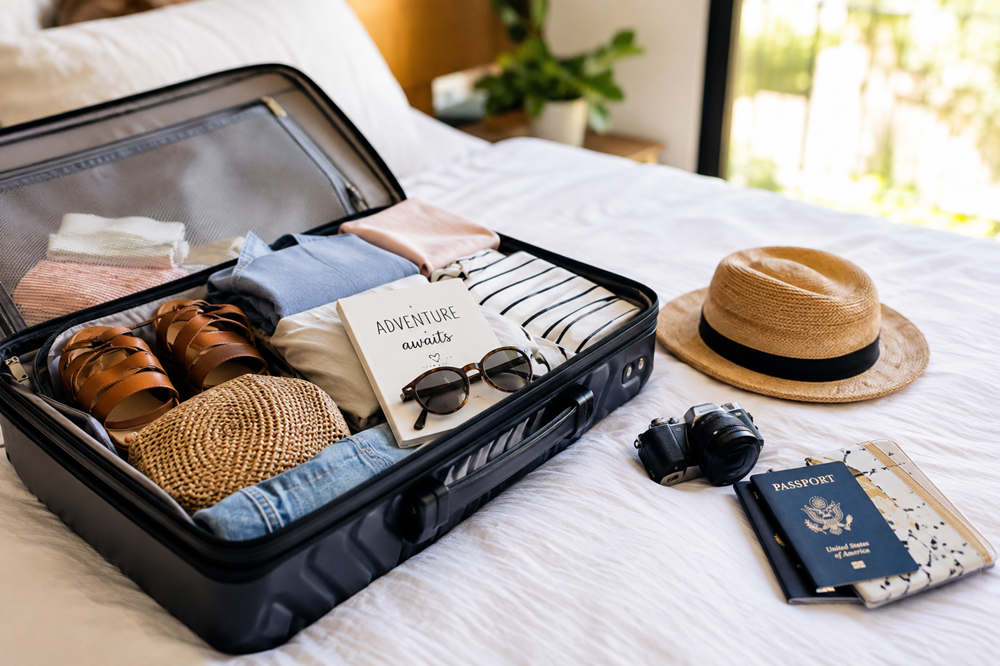
Think of your carry-on as the bag that needs to get you through the first day of your honeymoon even if your checked suitcase does not arrive with you.
Keep these items accessible:
- Passport and identification
- Wallet and payment cards
- Prescription medication
- Phone
- Charging cable
- Portable charger
- Headphones
- Travel confirmations
- Glasses or contact-lens essentials
- One change of underwear and clothing
- A few essential toiletries
- Any particularly valuable or sentimental items
For flights departing through U.S. airport security, TSA’s current liquids rule generally limits carry-on liquids, gels, creams, aerosols, and pastes to containers of 3.4 ounces (100 milliliters) or less, with the containers fitting in one quart-size bag per passenger. Medically necessary liquids have separate provisions, so check the rules if you need to carry them.
One easy-to-miss detail concerns portable chargers. The FAA requires spare lithium batteries and power banks to remain in carry-on baggage rather than checked luggage. If your carry-on is gate-checked, remove the power bank before handing over the bag.
Clothing to Pack for a Honeymoon
The easiest way to overpack is to choose clothes one piece at a time. Instead, build a small wardrobe in which most tops work with most bottoms and several pieces can serve more than one purpose.
Everyday Outfits
Start with the days when you will actually need ordinary clothes. A resort honeymoon might require very little beyond lightweight casual wear, while a city trip could involve long sightseeing days and changing weather.
Consider packing:
- Mix-and-match tops
- Comfortable shorts, pants, skirts, or dresses
- A light sweater or overshirt
- Underwear
- Socks
- Sleepwear
Choose fabrics and colors you are happy to repeat. Nobody you meet on vacation is keeping track of how many times you wore the same pair of pants.
Dinner and Date-Night Clothes
Check your actual plans before packing several formal outfits. One versatile dress, collared shirt, smart pair of trousers, or other polished outfit may cover multiple dinners.
If your resort, cruise, restaurant, or venue has a dress code, confirm it before leaving. Otherwise, pack according to your own style rather than an imaginary idea of what honeymooners are supposed to wear.
Active Clothes
Add technical or athletic clothing only when your itinerary needs it. Hiking, cycling, kayaking, workouts, horseback riding, and other excursions may justify moisture-wicking clothing or sturdier layers. A week spent by the pool probably does not.
Shoes and Accessories
Shoes consume suitcase space quickly, so choose them according to your itinerary rather than trying to cover every possible occasion.
A typical honeymoon might require:
- Comfortable walking shoes
- Sandals or another casual pair
- Dressier shoes only if you have plans that call for them
Beach vacations may need water-friendly footwear. Hiking honeymoons may require proper trail shoes or boots. For a city honeymoon with hours of walking each day, comfort should usually take priority over bringing multiple fashionable options.
Useful accessories can include sunglasses, a hat, belt, scarf, compact umbrella, jewelry, and a small crossbody bag or daypack. Leave expensive jewelry at home if losing it would overshadow the trip.
Toiletries and Personal Care
Before packing full-size versions of everything in your bathroom, check what your hotel or resort already provides. Shampoo, conditioner, body wash, hair dryers, robes, and similar basics may already be waiting for you.
Your personal toiletry kit might include:
- Toothbrush and toothpaste
- Deodorant
- Skin-care products
- Hair-care products
- Comb or brush
- Shaving or grooming supplies
- Makeup, if used
- Menstrual products
- Contact lenses and solution
- Sunscreen
- Lip balm
Decanting products into small reusable containers can save space, particularly when both partners use the same products.
Medications and Travel Health Essentials
Pack prescription medication early rather than leaving it for the final rushed morning. The CDC advises travelers to bring enough prescription and over-the-counter medicine for the trip plus extra in case travel delays extend the time away.
A basic personal travel health kit might contain:
- Prescription medications
- Regularly used over-the-counter medications
- Adhesive bandages
- Any personally necessary medical supplies
- Sunscreen
- Insect repellent where relevant
- Hand sanitizer
Do not assume a medication that is routine at home can legally enter every country. Rules differ by destination, and even some over-the-counter medicines may be restricted abroad. Review the State Department’s medicine and health guidance and the destination country’s requirements before an international honeymoon.
If either partner has a medical condition, allergy, mobility need, or medication requiring refrigeration or other special handling, plan around that before deciding how to divide the luggage.
Electronics and Travel Tech
A honeymoon does not need to become a traveling electronics store. Bring what supports the trip and leave unnecessary devices at home.
Useful options include:
- Phones
- Charging cables
- Portable charger
- Headphones or earbuds
- Camera
- E-reader or tablet
- Smartwatch charger
- Travel plug adapter
For international trips, check the plug type and electrical standards at your destination. A plug adapter changes the physical connection; it does not necessarily convert voltage, so check whether your devices support the local voltage before using them.
Couples can often share charging equipment when their devices use compatible cables, which is an easy way to reduce clutter.
Honeymoon Extras Worth Packing
The honeymoon-specific items worth bringing are usually the ones that have an actual purpose rather than simply saying “honeymoon” on them.
You might enjoy packing:
- A small surprise for your partner
- A journal for recording the trip
- A favorite book
- A compact camera
- An outfit reserved for one special evening
- A small meaningful item from the wedding
- A reusable water bottle
- A packable laundry bag
If matching shirts, newlywed accessories, or other themed items make you happy, bring them. Just do not feel that they are required for the trip to feel like a honeymoon.
What Couples Can Share Instead of Packing Twice
Packing together has one major advantage: plenty of items do not need to appear in both suitcases.
Depending on your habits, you may be able to share:
- Toothpaste
- Sunscreen
- Insect repellent
- First-aid supplies
- Hair tools
- Some skin-care or shower products
- Travel adapters
- Compatible charging cables
- Laundry supplies
- A beach bag or daypack
Decide who is carrying each shared item before you pack. Otherwise, you may discover at your destination that you brought two bottles of sunscreen and no charging adapter.
If you are checking luggage, it can also be useful to split a few essentials between suitcases. Putting all of one person’s clothing in one checked bag can leave that partner with almost nothing if the bag is delayed.
Honeymoon Packing Lists by Destination
Your master list covers the essentials. The destination determines what gets added.
Beach or Tropical Honeymoon
For warm-weather islands, coastal resorts, and tropical escapes, consider adding:
- Swimsuits
- Cover-ups
- Sandals
- Sun hat
- Lightweight breathable clothing
- Sunscreen
- Insect repellent
- Water shoes when needed
- Dry bag for boat or water activities
A light sweater or layer can still be useful for airplanes, air-conditioned restaurants, and cooler evenings.
European or City Honeymoon
City trips usually reward compact packing because stairs, trains, cobblestones, and hotel changes can make heavy luggage frustrating.
Prioritize:
- Comfortable walking shoes
- Versatile layers
- A compact day bag
- Rain protection when appropriate
- One smart-casual evening outfit
- Travel adapter if required
Choose clothing that transitions easily from sightseeing to dinner rather than packing separate wardrobes for daytime and evening.
Cold-Weather Honeymoon
Cold destinations require more luggage volume, so focus on effective layering rather than numerous bulky outfits.
Depending on conditions, add:
- Thermal base layers
- Insulating midlayers
- Weather-resistant outerwear
- Warm socks
- Gloves
- Hat
- Appropriate boots
Check the forecast close to departure because “cold” can mean very different things in a mountain town, northern city, or winter resort.
Adventure Honeymoon
For hiking, diving, skiing, camping, or other active trips, build your packing list from the booked activities.
Possible additions include:
- Hiking shoes or boots
- Technical clothing
- Daypack
- Reusable water bottle
- Rain shell
- Sun protection
- Activity-specific equipment
Before carrying bulky gear across the country or around the world, check whether the tour operator or destination provides rentals. Renting can make sense for large items you will use only once or twice.
Multi-City Honeymoon
When your honeymoon involves several stops, the best packing strategy is often to bring less.
Choose a small collection of interchangeable clothing, comfortable footwear, and luggage you can manage without help. Laundry access halfway through a two-week itinerary can be more valuable than bringing two weeks of entirely separate outfits.
How Much Clothing Should You Pack?
There is no ideal number that works for every honeymoon. Instead, count the types of days on your itinerary.
Ask yourselves:
- How many travel days do we have?
- How many active days?
- How many dinners require nicer clothing?
- Will we have access to laundry?
- Can several pieces be reworn?
- Will the weather require multiple layers?
A seven-night beach honeymoon with laundry access may require surprisingly little. A seven-night trip combining cities, hiking, and a formal event may require more.
Start with outfits for the activities you know you will do. Then add a modest buffer rather than packing an entirely separate “just in case” wardrobe.
What Not to Pack for Your Honeymoon
Removing unnecessary items is often more useful than finding more things to add.
Consider leaving behind:
- Several pairs of shoes with nearly identical purposes
- Full-size toiletries your accommodation provides
- Expensive jewelry you would worry about losing
- Clothes that do not work with anything else you packed
- Bulky equipment you can easily rent
- Duplicate electronics
- Large quantities of “just in case” supplies available at your destination
You are packing for a trip, not preparing to become self-sufficient indefinitely. Most ordinary forgotten items can be bought once you arrive.
A Simple Packing Strategy for Couples
- Review the itinerary. Identify beach days, hikes, special dinners, transfers, and other activities that require particular clothing or equipment.
- Check the weather. Use seasonal expectations when planning, then check the short-range forecast again shortly before departure.
- Confirm baggage rules. Airline size, weight, and baggage allowances can differ by carrier, route, and fare.
- Make individual lists. Each partner should identify personal clothing, medication, toiletries, and equipment.
- Compare the lists. Remove items that can reasonably be shared.
- Pack carry-on essentials first. Documents, medication, valuables, power banks, and a few basics should not accidentally disappear into checked luggage.
- Build outfits rather than counting garments. Choose pieces that work together across several days.
- Do one final document check. Confirm passports, IDs, reservations, payment cards, medication, and phones before leaving home.
Final Honeymoon Packing Check
When the suitcases are zipped and you are about to leave, forget the minor items for a moment and check the things that are hardest to replace.
- Passport or required ID
- Wallet
- Payment cards
- Phone
- Prescription medication
- Travel documents
- Chargers
- House and car keys
Everything else is secondary. A thoughtfully packed honeymoon suitcase should give you what you need without making every airport, train platform, hotel transfer, or rental car feel like a luggage-moving exercise.
The best honeymoon packing list is not the longest one. It is the one built around the trip the two of you are actually taking. Coordinate what you can share, protect the essentials, dress for the activities you have planned, and leave enough room in the suitcase to enjoy traveling together rather than managing your belongings.