Average Honeymoon Cost: What Couples Spend and How to Budget
The latest widely cited U.S. honeymoon benchmark is about $5,300 per couple, based on spending reported by couples who married in 2024. That number is useful for perspective, but it is not a target every couple needs to match.
A shorter domestic trip could cost less than $3,000, while a European honeymoon, remote island stay, or luxury resort trip can easily reach $10,000 or more. Your destination, travel dates, trip length, accommodations, and priorities will matter far more than the national average.
The best approach is to use the average as a starting point, then build a honeymoon around what the two of you actually value and can comfortably afford.
How Much Does the Average Honeymoon Cost?
The latest honeymoon spending data from The Knot puts the average cost at $5,300. The figure comes from an internal study of nearly 17,000 couples who married in 2024. Couples spent about seven days on their honeymoon on average.
Recent reported averages have stayed within a fairly narrow range:
- 2022: $5,100
- 2023: $5,700
- 2024: $5,300
There is an important distinction between an average honeymoon cost and what your own trip is likely to cost. An average can be influenced by high-spending trips and does not tell us what the exact middle couple spent. It is better treated as a national benchmark than as a recommended budget.
It is also worth remembering that the $5,300 figure reflects 2024 honeymoon spending, not a guaranteed 2026 price. Airfare, hotels, and other travel costs change continually, so couples planning now should check live rates for their actual dates.
Honeymoon Budget Ranges by Trip Style
Trip style provides more useful context than one national number. Current honeymoon planning estimates from Zola place many honeymoons somewhere between $3,000 and $8,000, although individual trips can fall well outside that range.
| Honeymoon Style | Broad Planning Range for Two |
|---|---|
| Lower-cost or shorter honeymoon | Under $3,000 |
| Typical honeymoon | $3,000–$8,000 |
| Domestic beach trip | $3,000–$5,000 |
| Caribbean all-inclusive | $4,000–$8,000 |
| European city honeymoon | $5,000–$10,000 |
| Luxury international honeymoon | $8,000–$15,000+ |
These figures are planning ranges, not package quotes. A couple traveling during peak season and booking premium flights could spend substantially more than another couple visiting the same destination during a quieter month.
Where Does the Honeymoon Money Go?
Rather than starting with one large total, divide your honeymoon into a few main expense categories. That makes it much easier to see where you want to spend more and where you are comfortable cutting back.
Transportation
Transportation includes flights as well as everything required to reach and move around your destination: airport transfers, trains, ferries, rental cars, taxis, rideshares, fuel, parking, and tolls.
For long-haul honeymoons, airfare can dramatically change the total. Remote islands may require an additional ferry, seaplane, or regional flight after the main international journey.
Accommodation
Your hotel or resort is often one of the largest individual expenses. Costs depend on the number of nights, location, room category, season, taxes, resort fees, and what is included in the rate.
Think about how you intend to use the property. Couples planning quiet resort days may value a beachfront room or private pool more than couples who expect to leave after breakfast and return at night.
Food and Drinks
Dining can range from casual local meals to tasting menus and elaborate resort restaurants. Decide whether food itself is a major part of the honeymoon experience or simply something you need to budget for between other activities.
At an all-inclusive resort, many meals and drinks may already be built into the accommodation price. When comparing properties, look at total expected spending rather than the nightly room rate alone.
Activities and Experiences
Boat trips, spa treatments, snorkeling, diving, cooking classes, tours, attraction tickets, shows, and private excursions can quickly add to the total when every day is scheduled.
Choosing a few experiences that genuinely excite both partners often works better than filling the itinerary simply because it is a honeymoon. Unscheduled beach time, neighborhood walks, and slow mornings can be just as valuable.
The Four Biggest Factors That Change Honeymoon Costs
1. Destination and Distance
Where you travel affects both the cost of getting there and what you spend after arrival. A destination with inexpensive hotels may still produce an expensive honeymoon if reaching it requires long-haul flights and complicated transfers.
When comparing destinations, price the complete journey rather than looking only at hotel rates.
2. Time of Year
Peak season, holidays, major events, and the destination’s most desirable weather can increase demand for flights and rooms. Shoulder season can sometimes provide a better balance between weather, crowds, availability, and price.
Seasonality is destination-specific, so the cheapest month is not necessarily a good month to visit. Check local weather patterns before moving your dates solely to save money.
3. Length of the Trip
Every additional night usually means another hotel charge plus more meals and daily spending. A ten-night honeymoon therefore costs more than a seven-night trip even when transportation remains the same.
With a fixed amount to spend, couples can compare a shorter trip with upgraded accommodations against a longer trip with simpler lodging.
4. Travel Standard
Economy versus business class, a simple hotel versus a private villa, public transportation versus private transfers, and casual dining versus fine dining can each shift the final total significantly.
You do not have to keep the same spending level throughout the trip. A standard room for most nights followed by two nights somewhere special may be more meaningful than paying premium prices for the entire stay.
Three Sample Honeymoon Budgets
These examples are CouplesCoordinates planning examples, not survey averages, package prices, or quotes for a particular destination. They show how three very different totals could be divided.
Example 1: $3,000 Honeymoon
| Transportation | $750 |
| Accommodation | $1,100 |
| Food and drinks | $500 |
| Activities | $350 |
| Insurance and miscellaneous expenses | $300 |
| Total | $3,000 |
|---|
This type of budget may suit a mini-moon, road trip, affordable domestic destination, or shorter stay reached with relatively inexpensive transportation.
Example 2: $5,500 Honeymoon
| Transportation | $1,400 |
| Accommodation | $1,900 |
| Food and drinks | $900 |
| Activities | $750 |
| Insurance and miscellaneous expenses | $550 |
| Total | $5,500 |
|---|
This sits close to the latest published $5,300 benchmark. It might support a week-long trip while still requiring choices about where the money matters most. One couple might choose a better hotel and fewer tours; another might do exactly the opposite.
Example 3: $10,000 Honeymoon
| Transportation | $2,800 |
| Accommodation | $3,600 |
| Food and drinks | $1,400 |
| Activities | $1,400 |
| Insurance and miscellaneous expenses | $800 |
| Total | $10,000 |
|---|
A larger budget could support long-haul airfare, upgraded accommodation, a longer trip, or several premium experiences. It does not require upgrading everything. Even at this price level, choosing two or three priorities can create better value than automatically purchasing the most expensive option available.
Honeymoon Expenses That Are Easy to Forget
Small expenses can become a meaningful part of the total if they are left out of the original plan. Check for:
- Baggage and seat-selection fees
- Airport transportation or parking
- Resort fees and local tourism taxes
- Rental-car insurance, fuel, tolls, and parking
- Tips and service charges
- Travel insurance
- Passport or visa-related expenses when applicable
- Foreign transaction, ATM, or mobile-data costs
- Pet boarding, house sitting, or other at-home expenses
Airline fees deserve particular attention because the advertised fare may not represent the full amount you eventually pay.
How Much Should You Spend on Your Honeymoon?
Instead of asking whether you can reach the national average, decide what amount fits comfortably alongside your wedding expenses, savings, housing plans, debt payments, and other priorities after marriage.
Then talk about what each of you wants from the trip. Useful questions include:
- What total can we comfortably pay without expensive debt?
- Which matters more to us: destination, hotel, food, activities, or trip length?
- Would we rather take a shorter upscale trip or stay away longer with simpler accommodations?
- Is there one experience we would genuinely regret missing?
- Which upgrades matter to one partner but not the other?
This conversation can prevent a common budgeting problem: spending heavily on something simply because it is traditionally associated with honeymoons rather than because either partner particularly wants it.
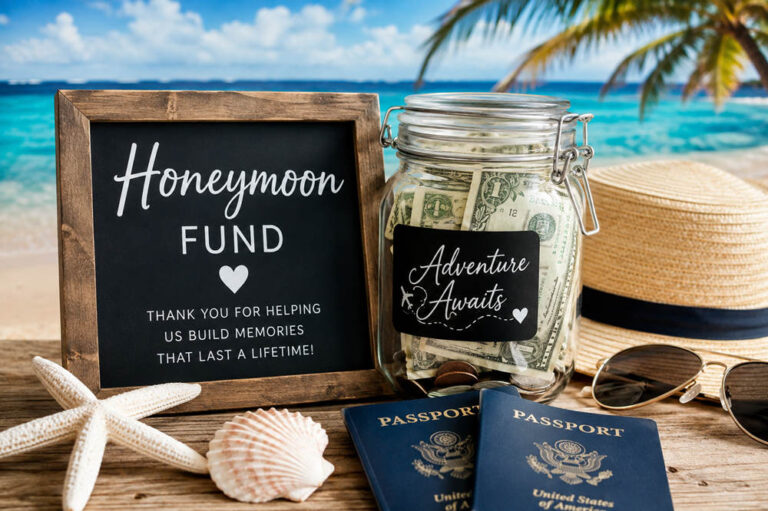
Couples also use different ways to pay. The Knot found that 74% of surveyed couples used their own savings toward the honeymoon. Among couples who established a wedding registry, 23% created a honeymoon fund.
Neither approach determines what your own trip should cost. What matters is returning home without turning the honeymoon into a financial burden.
How to Spend Less Without Making the Honeymoon Feel Cheap
The biggest savings usually come from changing a few expensive decisions rather than constantly trying to save small amounts during the trip.
- Consider shoulder season. You may find better availability and pricing while still getting suitable weather.
- Compare similar destinations. If you mainly want warm beaches, mountains, or a historic European atmosphere, several places may deliver the experience at different price levels.
- Stay in fewer places. Cutting a city or island can remove an entire flight, train journey, ferry, or private transfer.
- Pick your splurges together. Decide in advance which one or two upgrades deserve more of the budget.
- Compare all-inclusive and separate costs. Include meals, drinks, transfers, and activities rather than looking only at the hotel rate.
- Check nearby departure dates. A small change in schedule can sometimes produce very different flight or room prices.
- Use existing points responsibly. Miles and hotel points can reduce cash costs, but accumulating rewards is not worthwhile if doing so creates high-interest debt.
- Leave room for free time. Not every honeymoon day needs a paid excursion.
Live prices matter particularly in 2026. Recent U.S. travel price data showed overall travel costs running above the previous year, with airfare rising much more sharply than lodging. That is another reason to price your actual honeymoon instead of assuming an older national average will match today’s booking conditions.
When Is Spending More on a Honeymoon Worth It?
Extra spending makes the most sense when it solves a real problem or improves something both partners care about.
A direct flight that removes two connections may give you an extra usable day together. A more expensive hotel may be worthwhile if the resort itself is the main point of the trip. A private tour could make sense for an experience you have wanted to do for years.
An upgrade is less compelling when you are buying it primarily because honeymoons are expected to be luxurious. Before paying more, ask one simple question: What will this extra money actually improve for us?
If both of you can answer that easily, the splurge may be worthwhile. If neither of you can, the money might be better used elsewhere.