What Is Dark Romance? A Beginner’s Reading Guide for Couples
Dark romance is a branch of romance fiction that combines a central love story with morally complicated characters, dangerous circumstances, or disturbing relationship dynamics. Depending on the book, it may involve obsession, violence, manipulation, crime, captivity, trauma, coercion, or an extreme imbalance of power.
Many dark romance books are written for adult readers and contain explicit sexual material or graphic scenes. The intensity varies widely, however. Some titles feel closer to romantic suspense, while others deliberately explore subjects that many readers will find upsetting.
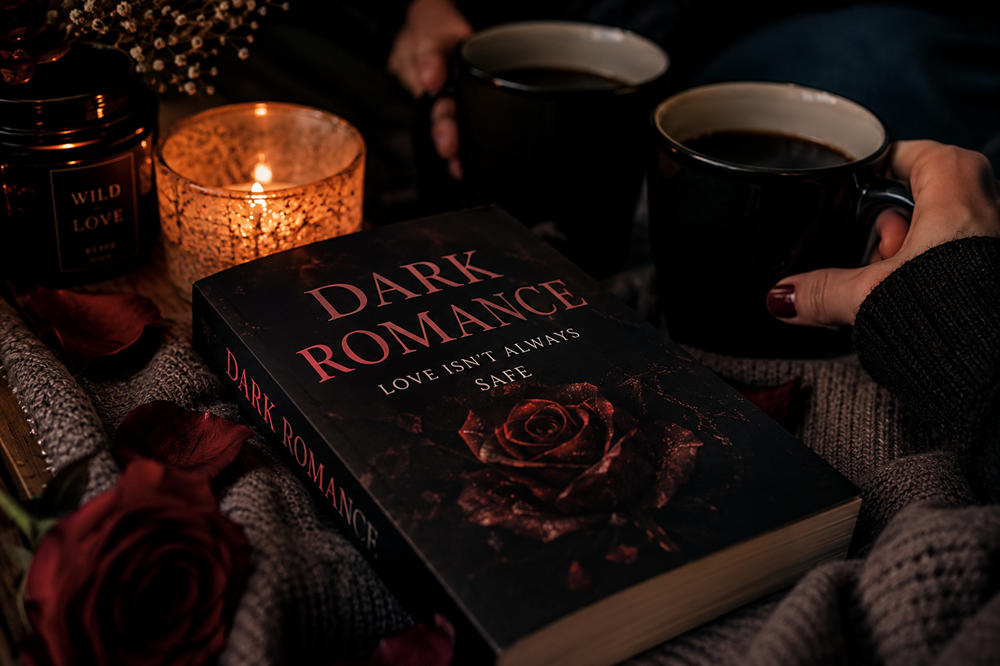
For couples who both enjoy emotionally intense fiction, reading the same book can become an unusual at-home date or a simple two-person book club. The key is choosing the title together, checking its content carefully, and remembering that fictional fascination is not the same as approval of harmful behavior in real life.
What Is Dark Romance?
Dark romance is a romance subgenre in which the main relationship develops through troubling circumstances or involves behavior that would be frightening, harmful, or unacceptable outside fiction.
The darkness can come from the characters, their relationship, the setting, or the conflict surrounding them. A story might follow a criminal antihero, an obsessive love interest, a captive trying to regain control, or two characters connected by revenge and past trauma.
Even with those darker elements, the romantic relationship remains central. The Romance Writers of America describes romance fiction as having two basic elements: a central love story and an emotionally satisfying, optimistic ending.
When a dark story is marketed strictly as romance, readers generally expect the central relationship to receive that kind of emotional resolution, even when the journey is disturbing. Marketing labels are not always applied consistently, though, so some books described casually as dark romance may sit closer to horror, psychological fiction, or tragedy.
What Makes a Romance Dark?
A brooding character, gothic house, black cover, or gloomy atmosphere is not enough on its own. The label usually reflects the nature of the relationship or the subjects the story explores.
Common elements include:
- Morally gray or openly villainous love interests
- Obsession, possessiveness, or stalking
- Manipulation and psychological control
- Captivity or forced proximity without genuine freedom
- Crime, organized crime, or dangerous secret groups
- Revenge and betrayal
- Violence or threats of violence
- Trauma, grief, and survival
- Major differences in status, authority, or physical power
- Dubious or absent consent
These are possibilities rather than requirements. A book may contain one of them or several. One title might build tension around a dangerous criminal world while keeping the central relationship relatively consensual. Another may make control, coercion, or captivity part of the relationship itself.
This variation is why the words “dark romance” alone do not tell readers enough about what they are about to encounter.
Why Is Dark Romance Popular?
Readers are drawn to dark romance for different reasons, so there is no single explanation for the genre’s popularity.
Some enjoy its high emotional stakes. The characters are often placed in extreme situations where desire, fear, loyalty, and survival become difficult to separate. That intensity can make the plot feel unpredictable compared with a quieter relationship story.
Others are interested in morally complicated characters. A conventional romantic lead may be easy to admire, but a darker character asks the reader to decide what can be understood, what can be forgiven, and where the line should be drawn.
The genre can also provide a fictional space for exploring danger, vulnerability, control, or taboo fantasies without wanting those situations in real life. Readers may be curious about a scenario precisely because it is safely contained within an imagined story.
For some people, the appeal is simpler: they like suspense, dramatic conflict, explicit romance, or books that provoke a strong reaction. None of these motivations applies to every reader, and enjoying the genre does not automatically reveal anything about a person’s real-world wishes or values.
How Dark Romance Differs From Similar Genres
Dark romance overlaps with several other categories. The clearest distinction is usually what drives the plot and whether the romantic relationship itself contains the darkest material.
| Genre | Primary Focus | Key Distinction |
|---|---|---|
| Contemporary romance | A relationship in a modern-day setting | “Contemporary” identifies the time period, not the darkness level. A contemporary romance can also be dark. |
| Romantic suspense | A romance unfolding alongside danger, crime, or investigation | The main threat often comes from an outside antagonist rather than from within the central relationship. |
| Gothic romance | Mystery, isolation, family secrets, old buildings, and an ominous atmosphere | A gothic story can feel dark without including coercive or extreme romantic dynamics. |
| Erotic romance | A love story in which explicit sexual development is central | Explicit content alone does not make a romance dark. |
| Horror with romantic elements | Fear, dread, violence, monsters, or survival | The horror conflict may be more important than the love story, and an optimistic romantic resolution is not guaranteed. |
A book can belong to more than one category. Dark romance may also be contemporary, gothic, paranormal, historical, erotic, or suspenseful.
Why Couples Might Read Dark Romance Together
Dark romance can give couples more to discuss than a straightforward story in which both readers react in roughly the same way.
One partner may sympathize with a morally complicated character while the other finds that character impossible to forgive. They may disagree about whether the author examined harmful behavior thoughtfully or used it only to create excitement. Those differences can lead to an interesting literary conversation without either person needing to reach the same conclusion.
Sharing a book also creates a common experience that can fit around everyday schedules. Couples can read separately, listen to an audiobook during a drive, or reserve one evening a week for reading and conversation.
A frequently cited study on couples examined participation in novel—meaning new or unfamiliar—and emotionally engaging shared activities. It found associations between exciting shared activities and experienced relationship quality. The study did not examine novels, book clubs, or dark romance, so it does not prove that reading this genre improves a relationship. It offers only broad support for trying an engaging activity together.
Check Content Warnings Before Choosing a Book
Content warnings are especially useful in dark romance because two books using the same genre label may have completely different levels of intensity.
A title may include sexual violence, domestic abuse, torture, stalking, self-harm, suicide, child abuse, pregnancy-related trauma, substance abuse, graphic death, or other distressing material. The Penguin beginner’s guide to dark romance similarly advises readers to review warnings because the themes and severity vary throughout the genre.
Do not rely only on a dramatic cover or a short retailer description. Check the author’s website, the publisher’s page, the opening pages of the book, and several reader descriptions. No source is guaranteed to list every sensitive element, but comparing a few can provide a more accurate picture.
Before making a selection, each partner can privately identify subjects that are off-limits and subjects that require more information. A book should be chosen only when both people are comfortable with its known content.
How to Choose a Dark Romance You Will Both Enjoy
The best starting point is not necessarily the most famous or extreme title. Look for a story that connects with interests you already share.
Start with a familiar type of story
Dark romance can appear in fantasy, paranormal, historical, contemporary, dystopian, and crime-centered fiction. Couples who already enjoy fantasy may prefer a darker romantasy, while mystery readers may be more comfortable beginning with romantic suspense.
Compare specific content rather than darkness ratings
Descriptions such as “mild,” “medium,” and “extreme” are subjective. Instead of relying on a numerical rating, look for the actual themes, relationship dynamics, and types of violence involved.
Separate darkness from explicitness
A book can be psychologically disturbing without containing detailed sexual scenes. Another may be highly explicit while presenting less threatening conflict. Consider both qualities independently.
Choose a manageable commitment
A standalone novel is usually easier for a first shared read than a long series. Book length also matters when one partner reads much faster than the other.
Select a practical format
Separate print or ebook copies allow both people to read independently. An audiobook works well for road trips or quiet evenings, provided both partners are comfortable hearing intense or explicit scenes aloud.
How to Start a Two-Person Dark Romance Book Club
- Nominate a few books. Each partner can suggest two titles that fit the agreed limits.
- Read the descriptions and warnings. Compare the themes before making the final choice.
- Set spoiler checkpoints. Divide the book into thirds, quarters, or natural parts.
- Pick a realistic pace. A modest weekly target is often easier than a strict completion date.
- Decide when to discuss it. Talk after every checkpoint or plan one conversation after finishing.
- Alternate future choices. Taking turns keeps one person’s preferences from shaping every selection.
You do not need to read at exactly the same speed. The faster reader can pause at the agreed checkpoint or read something else while waiting.
Dark Romance Discussion Questions for Couples
The most interesting questions usually focus on storytelling and character choices rather than whether either reader personally approves of the fictional relationship.
- Which character did you understand most, even when you disagreed with their behavior?
- Did the story examine harmful actions critically or use them mainly for excitement?
- Which moment changed your opinion of a main character?
- Did the relationship feel believable within the fictional world?
- Which behavior crossed a line for you as a reader?
- Did the power imbalance serve a clear purpose in the story?
- Which scenes created suspense, and which simply made you uncomfortable?
- Could the plot have worked without its darkest material?
- Did the ending feel earned?
- Would you read another book using the same trope?
- How would the story change if the characters had more equal power?
- Would the book still be compelling without the romance?
Neither partner should feel expected to connect a reaction to a private experience. It is perfectly reasonable to say that a scene did not work without explaining why.
Fiction Is Not a Healthy Relationship Model
Enjoying morally difficult fiction does not mean wanting its events to happen. Readers routinely engage with stories about murder, betrayal, war, monsters, and disaster without approving of those things.
Dark romance can similarly create a controlled imaginary space for exploring danger, fear, power, vulnerability, and desire. That freedom does not turn harmful real-world behavior into a sign of unusually passionate love.
The National Domestic Violence Hotline defines relationship abuse as a pattern of behavior used to gain or maintain power and control over an intimate partner. Stalking, threats, isolation, intimidation, sexual coercion, financial control, and physical violence should therefore be recognized differently in real life than they are experienced as fictional plot devices.
Couples can discuss a book’s darker elements without judging each other’s tastes. The useful boundary is between what makes a fictional story compelling and what both partners expect from a respectful relationship.
How to Turn the Book Into a Couples Activity
For a quiet night at home
Set aside a phone-free reading hour, read the opening chapter aloud, or listen to part of the audiobook while preparing dinner. Drinks or snacks inspired by the setting can add atmosphere without turning the evening into an elaborate production.
For a date outside the house
Meet at a café to discuss the latest section, browse a bookstore for your next selection, or visit a library and choose from the available titles together.
For a trip
Bring an ebook on a flight, listen to an audiobook during a road trip, or read for an hour during a quiet evening at your hotel. Agree on spoiler checkpoints before leaving if one partner is likely to move ahead quickly.
After finishing
Compare your predictions, rate the plot and characters separately, or choose a film with a similar setting or atmosphere. You can also decide which trope or subgenre to try next.
When Another Genre May Suit You Better
Dark romance is not the right shared activity when the material causes distress, one partner has no interest in the genre, or conversations about the book consistently become unpleasant rather than engaging.
A less intense alternative may preserve the parts you enjoy. Romantic suspense offers danger and mystery, gothic romance provides atmosphere and secrets, and fantasy romance can deliver high stakes without focusing on coercive relationship dynamics. Historical romance, paranormal romance, or a lighter enemies-to-lovers story may also give you plenty to discuss.
Changing genres is not a failed book-club experiment. It simply helps you find the type of shared reading experience that suits both people.
Final Thoughts
Dark romance combines a central love story with dangerous situations, morally complicated characters, or unsettling relationship dynamics. Its content ranges from mildly disturbing to extremely graphic, so the genre label should be treated as a starting point rather than a complete description.
For couples who are both curious about it, reading dark romance together can create suspense, debate, and a memorable alternative to another evening in front of the television. Choose a book that interests both of you, discuss the story without judging each other’s reactions, and keep a clear distinction between compelling fiction and healthy real-world behavior.
The right first book is not the one that tests your limits most aggressively. It is the one you are both genuinely interested in opening.